The Accident That Never Happened
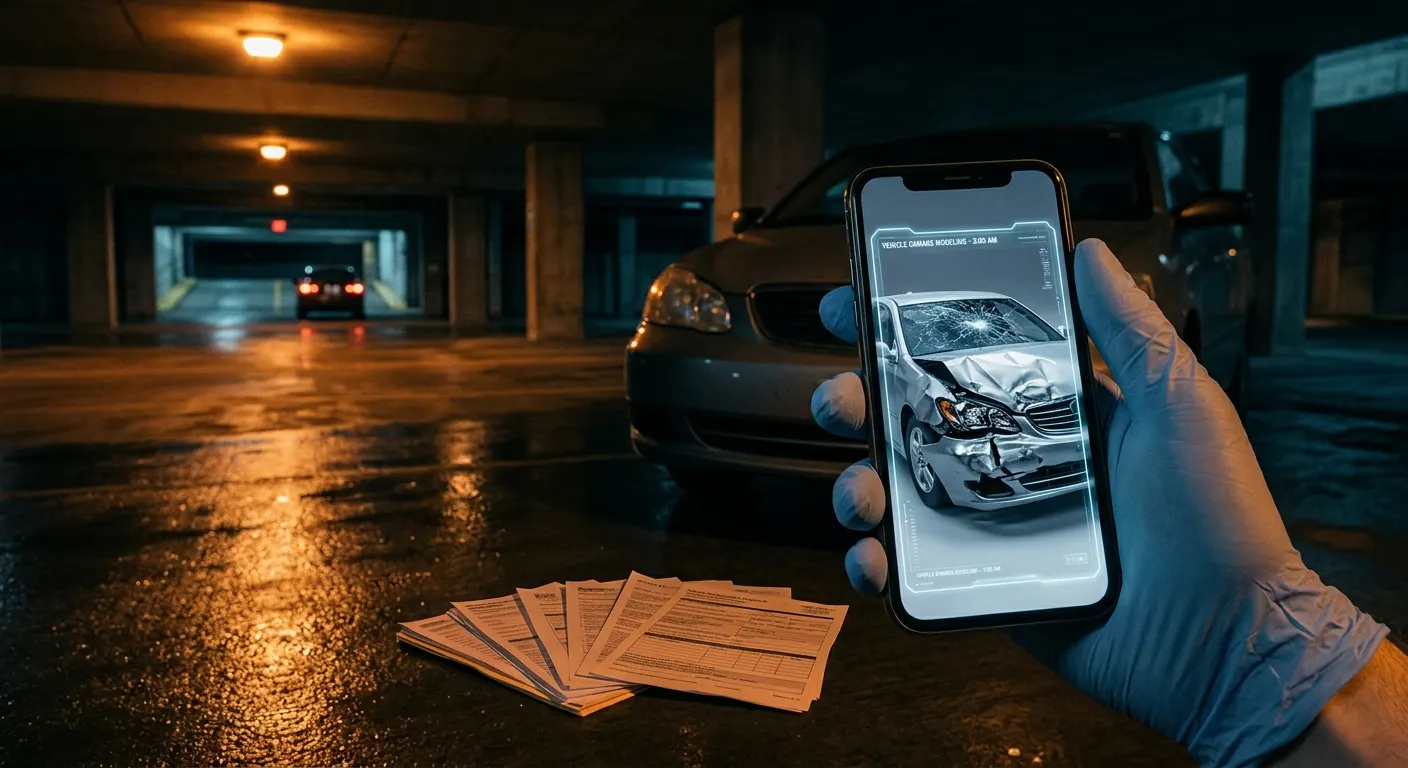
It begins with a smartphone and a free AI image editor. A fraudster wants to file a claim for a damaged bumper. In the past, they would have had to actually damage the car — or stage a collision. In 2026, they open an app, describe what they want, and within minutes have a photorealistic image of crumpled metal, shattered glass, and skid marks on wet asphalt.
The accident never happened. The damage does not exist. But the claim looks completely real — and in many cases, it gets paid.
This is the new frontier of insurance fraud, and it is growing faster than the industry can respond. Advanced generative AI has made fabricating evidence of accidents, injuries, and property damage trivially easy. And that ease is costing honest consumers real money.
How AI Fraud Works — Step by Step
Understanding the mechanics of AI-powered insurance fraud helps explain why it is so difficult to detect and prosecute.
Fabricated Accident Photos
Consumer-grade AI tools — including widely available image generators and editing platforms — can now produce photorealistic images of vehicle damage, flooded interiors, fire damage, or structural collapse within minutes. A fraudster armed with a smartphone and a subscription to a commercial AI service can generate convincing “before” and “after” photos of damage that never occurred.
The images are not obviously fake. According to research cited in a March 2026 Verisk State of Insurance Fraud Study, human detection of AI-manipulated insurance photos is only accurate about 50% of the time — no better than random chance. Even experienced claims adjusters who routinely review hundreds of damage photos perform at the same level as a coin flip when confronted with sophisticated AI-generated imagery.
Forged Medical and Police Documents
Beyond photos, AI can generate synthetic medical reports, emergency room discharge summaries, physician statements, and police incident reports. Advanced large language models can produce documents that match the formatting, terminology, and tone of legitimate reports with minimal effort.
A claimant who needs a physician’s note supporting a whiplash injury — when no injury actually occurred — can generate a convincing facsimile without visiting a doctor. This extends the fraud from property claims into personal injury claims, which tend to be far more valuable.
Staged Crash Videos
Video has historically been treated as stronger evidence than photos, but generative AI video tools have made this distinction less reliable. Criminals are now submitting synthetic or AI-manipulated dash cam footage and bystander videos as supporting evidence for claims. Some operations generate geolocation metadata and timestamp data that matches the alleged incident.
Organized Fraud Rings
While many cases involve individual fraudsters, AI tools have also empowered organized fraud rings that file claims at scale. A single operation can generate dozens of fake claims per week using automated workflows. The economics are simple: if even a fraction of claims are paid before detection, the operation is profitable.
The Numbers — How Big Is This Problem?
The data coming out of 2025 and early 2026 is striking.
Admiral Insurance reported £86.8 million in fraudulent claims detected in 2025 — a 71% increase from the £50.9 million detected in 2024. The company attributes much of the increase to AI-manipulated evidence.
According to the March 2026 Verisk State of Insurance Fraud Study:
- 98% of insurers report that AI-powered editing tools are fueling an increase in digital fraud
- 99% of insurers say they have encountered manipulated or AI-altered documentation in the claims process
- Only 32% of insurers feel very confident about detecting deepfakes in claims
- Fewer than 43% of insurers feel confident assessing the authenticity of media evidence at scale
The problem is not confined to auto insurance. Health insurers are also reporting a surge in AI-generated synthetic claims. A 2026 study published in the National Institutes of Health’s PMC database documented how AI-generated injury videos are being used to inflate health insurance claims.
Who’s Doing This — and Why Now?
The answer to “why now” is simple: the technology became accessible. Two years ago, producing photorealistic fake imagery required specialized software and significant technical skill. Today, it requires neither.
According to the 2026 Verisk study, more than one-third of consumers (36%) admitted they would consider digitally altering a claim image or document — even if doing so violates insurer rules. Among Gen Z respondents, the figure jumped to 55%.
That is not a small fringe. It represents a significant portion of the population treating AI-enhanced insurance fraud as a gray area rather than a serious crime. Deepfake-related insurance fraud incidents are projected to rise more than 160% in coming years, driven by automated bot networks that can process and submit fraudulent claims faster than manual fraud teams can review them.
The Premium Problem — Why Honest Consumers Pay the Price
Insurance fraud is not a victimless crime. Every fraudulent claim that gets paid raises costs for the insurer — and insurers pass those costs on through premium increases.
69% of consumers surveyed in the Verisk study believe fraudulent activity will lead to higher premiums for all policyholders over time. They are correct. When fraud losses spike by 71% in a single year, as Admiral experienced, that cost flows through to every policy renewal.
The impact is felt most acutely in regions with concentrated fraud activity. If a specific geography becomes a hotspot for staged accidents or fabricated property damage claims, insurers may increase rates in that area for all policyholders — regardless of individual driving records or claims history.
How Insurers Are Fighting Back
The insurance industry is not sitting still, but the battle is genuinely difficult.
AI vs. AI is the emerging paradigm. Insurers are deploying their own machine learning systems to detect patterns in fraudulent claims — metadata inconsistencies, image artifacts from AI generation, document formatting anomalies invisible to the human eye. Deepfake detection tools trained on specialized datasets can achieve high accuracy in controlled settings, but real-world performance drops significantly: 50 to 65% accuracy on actual insurance claims media.
Digital forensics and metadata analysis are also being incorporated into claims review. Every digital file contains metadata — information about when and how it was created. AI-generated images often carry forensic signatures that trained tools can identify, even when the image itself appears flawless.
Regulatory movement is accelerating. Several state insurance regulators are now requiring insurers to implement digital fraud detection programs and report AI-related fraud incidents. The National Association of Insurance Commissioners is developing model standards.
How to Protect Yourself and Report Fraud
If you are involved in a real accident:
- Document everything yourself — photos, videos, witness contacts — so you have genuine evidence that your claim is authentic
- Report the accident to police immediately, even for minor incidents; a legitimate police report is a powerful authentication tool
- Keep records of all medical visits, treatments, and communications with your insurer
Be wary of post-accident solicitations:
- Anyone who approaches you after a minor accident and strongly encourages you to use a specific body shop, medical provider, or attorney may be connected to organized fraud operations
- Do not sign blank medical forms or authorization documents
Report fraud:
- The National Insurance Crime Bureau (NICB) operates a fraud reporting line at 1-800-TEL-NICB (1-800-835-6422)
- The FBI investigates insurance fraud; report at tips.fbi.gov
Protect your own accounts:
- Be cautious about sharing photos of your vehicle or home on public social media — fraudsters have used publicly available images to build fake claims involving real vehicles and real properties
- Review your Explanation of Benefits documents carefully; if your health insurer lists a treatment you never received, report it immediately
The technology that fraudsters are using will continue to improve. But awareness — and strong reporting systems — remain among the most powerful tools consumers have.