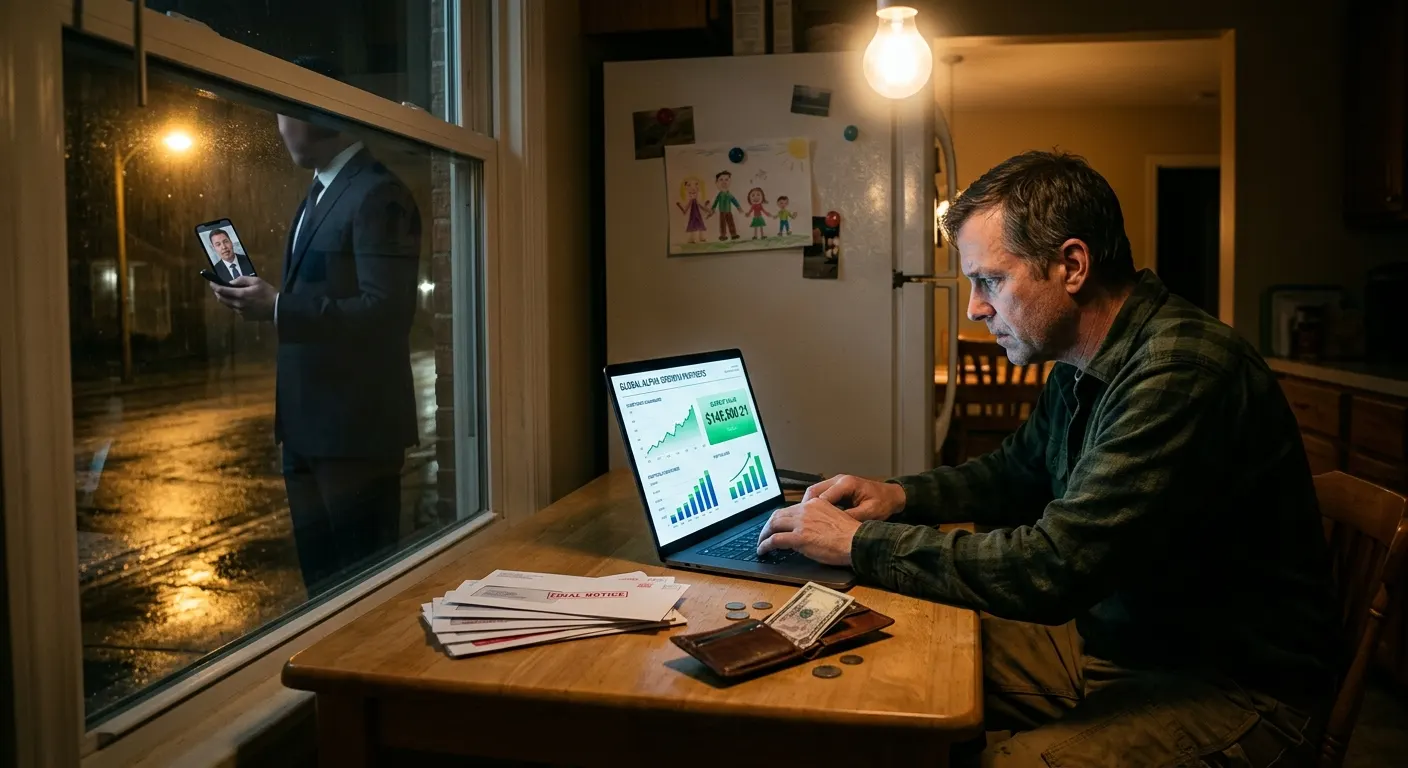
Deborah Friesen wasn’t looking for an investment. The Acton, Ontario woman was watching craft videos online when an ad interrupted: Prime Minister Mark Carney, apparently on camera, telling Canadians about a cryptocurrency platform that could make them easy money with “no risk.”
The video was an AI-generated deepfake. The platform was a fraud. And by the time the scheme had run its course, Friesen had lost $83,000 — first $13,000 through the fake ad, then another $70,000 to a scammer who spent months patiently talking her into it.
“I couldn’t stop crying,” she told CP24, which reported her story this week.
She is not an outlier. The same report notes a senior from Sault Ste. Marie who lost $900,000 to a similar scheme — two Ontario residents, nearly a million dollars, and a fraud operation whose most important employee was software impersonating the Prime Minister.
The Scam Comes in Two Acts
The deepfake ad is the part that makes headlines. But look closely at the sequence of Friesen’s loss, because it shows how these operations actually extract most of their money.
Act one is the ad. A fabricated video of a trusted public figure — a prime minister, a central banker, a famous investor — endorses a trading platform. It plays in the ad slots of ordinary content: craft videos, news clips, social feeds. The production quality is now good enough that the usual advice (“look for glitchy lips”) frequently fails. Friesen invested $13,000 on the strength of it. For the scammers, that first deposit isn’t the payday — it’s the qualification round. It identifies her as someone who trusts the pitch and has money to move.
Act two is the relationship. After the initial investment, a scammer contacted Friesen directly and kept contacting her — daily conversations, rapport built over months, the same patient trust-farming that powers romance and pig-butchering fraud. The conversation eventually moved to WhatsApp, off the original platform and away from anything moderated. Then came the bigger asks, and another $70,000 went out. When the money stopped coming, the scammer vanished.
That structure matters because the deepfake is only the top of the funnel. Victims who don’t spot the fake ad are handed off to a human (or increasingly, AI-assisted) operator who works them for everything else. The $13,000 bought the scammers a customer; the grooming extracted the remaining $70,000.
The Prime Minister Is the Bait, Not the Point
Carney is simply the latest public figure to be conscripted into fraud. Deepfake celebrity-endorsement scams have become a global template: the same script has run with national figures in markets around the world, and our own coverage this year has documented the identical pattern in Taiwan, where deepfaked business celebrities front investment ads on LINE, and in Ireland, where AI-generated endorsements pushed fake investment platforms on social media.
Political and financial figures are the preferred bait for a simple reason: their faces are shorthand for legitimacy about money. A prime minister who used to run two central banks is nearly perfect casting for a fake investment ad — which is presumably why the scammers chose him.
The scale of the AI shift is measurable. Identity-verification firm Sumsub’s 2026 fraud trends research puts deepfakes at roughly 11% of global fraudulent activity. A Gallup–Stop Scams Alliance survey of 5,173 U.S. adults found that 12% of successful scams in 2025 involved AI or deepfakes. Those numbers will not be going down: generating a convincing sixty-second video of a public figure now costs a scam operation almost nothing and can be re-rendered endlessly to evade ad-platform takedowns.
”Do Not Ever Invest on Anything That Arises Out of Social Media”
Cybersecurity expert Claudiu Popa, founder of the KnowledgeFlow Cybersafety Foundation, offered CP24 a rule blunt enough to survive contact with a good deepfake: “Do not ever invest on anything or in any situation that arises out of social media.”
Note what that rule doesn’t require: it doesn’t ask you to detect the fake. It concedes that the video may be flawless and moves the defense somewhere the scammer can’t reach — the channel itself. A legitimate investment opportunity does not need to find you in the ad break of a craft video, and a real prime minister does not endorse trading platforms at all.
Popa’s other recommendations work the same way, building human circuit-breakers into financial decisions: keep a speed-dial list of trusted family and friends to consult before any major purchase or investment, and build a family “safety net” — an agreement that big money moves get a second opinion before they happen. Scams of this kind depend on isolation; the months of daily contact Friesen received were partly about becoming the voice she consulted instead.
If You’ve Already Sent Money
Canadian victims should move quickly on three fronts: contact your financial institution immediately (some transfers can be recalled or frozen if caught early), report to local police, and file a report with the Canadian Anti-Fraud Centre. Report even if recovery seems hopeless — victim reports are how these ad campaigns and payment rails get mapped and taken down.
Expect one more danger: victims who report or post about their losses are routinely re-targeted by recovery scammers claiming they can get the money back for an upfront fee. Anyone who contacts you promising recovery is running act three of the same play.
Protecting Yourself
Treat every celebrity investment endorsement as fraudulent by default. Public officials and central bankers do not promote crypto platforms. If the pitch features a famous face, the pitch is the evidence.
Don’t rely on spotting the fake. Modern deepfakes routinely pass casual inspection. Judge the channel and the claim, not the pixels: unsolicited ad, guaranteed returns, “no risk” — any one of those settles the question.
Verify platforms with regulators, not search results. In Canada, check registration through the Canadian Securities Administrators’ National Registration Search before moving a dollar. An unregistered trading platform is not an investment; it’s a destination for your money.
Watch for the second act. If you’ve put money into any platform and someone then befriends you, messages daily, or moves the conversation to WhatsApp or Telegram, you are being groomed for the larger loss. The friendliness is the product.
Slow every big decision down. Adopt Popa’s safety net: no major transfer without a call to a trusted person first. Scammers manufacture urgency because delay is fatal to them — make delay your policy.