Shoppers in Highlands Ranch, Colorado are being warned about a charity scam operating in the parking lots of local grocery and hardware stores — where suspects approach victims, collect card payments, and charge significantly more than agreed.
The Douglas County Sheriff’s Office issued the warning after identifying a pattern of incidents at Whole Foods, King Soopers, and Ace Hardware locations in the area.
How the Scam Works
The suspects — described as three males, 25–35 years old, approximately 6’0”–6’1” with long dreadlocks — approach shoppers in parking lots claiming to collect donations for a Boys and Girls Club youth trip or raising money for a nephew’s funeral.
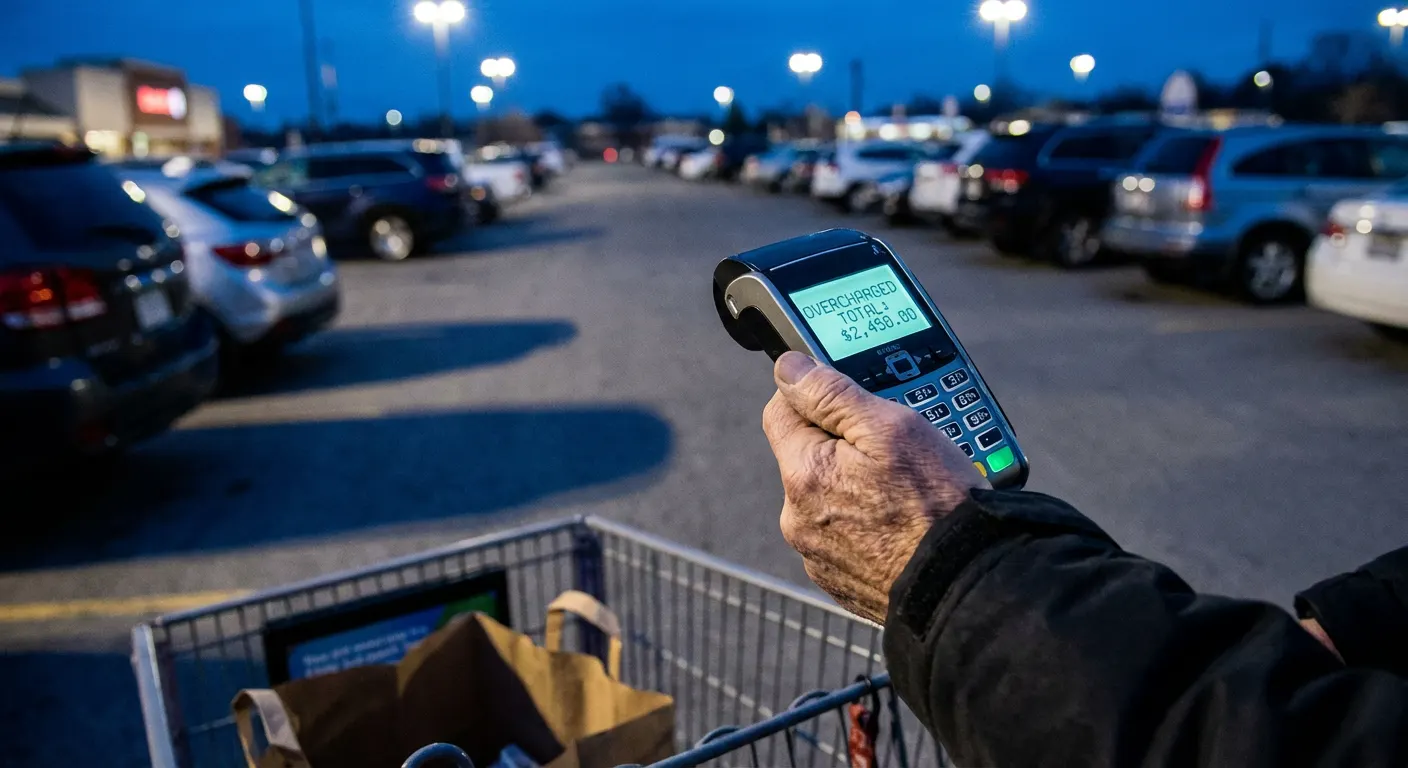
When a shopper agrees to donate and hands over their card, the suspects use a mobile card reader and enter a significantly higher amount than the victim authorized. By the time the victim realizes what happened, the suspects have moved on.
This scam relies on a very specific vulnerability in how mobile card readers work. Unlike a traditional point-of-sale terminal at a store counter — where a customer can clearly see the screen and review their total — a handheld device operated by a stranger can display one amount to the customer and process another. The scammer shows you $10 on the screen, but charges $100 or more. The card taps or swipes, the transaction approves, and the difference only shows up on your statement later.
Why This Scam Is Harder to Dismiss Than It Looks
Most fraud advice focuses on digital threats: phishing emails, fake websites, phone scams. The Highlands Ranch scam is a reminder that in-person fraud is alive, adaptable, and built on the same psychological foundations as any other scheme.
The emotional hooks here are specific and well-chosen. “Boys and Girls Club” is a nationally recognized, well-regarded organization. Most people have positive associations with it. A youth trip is an appealing image — kids getting an experience they wouldn’t otherwise have. And a nephew’s funeral triggers immediate empathy, a desire to provide comfort to someone in apparent grief.
Neither story requires verification on the spot. You’re standing in a parking lot, you’ve just finished shopping, and someone is asking for $10 to $20 for something that sounds good. The social awkwardness of demanding documentation before donating is exactly what the scammers count on.
The Bigger Picture: In-Person Charity Scams Are a Documented Pattern
The Highlands Ranch case is not isolated. Charity fraud in all its forms is a significant and underreported problem. The FTC has consistently identified charity-related fraud as one of the top consumer complaints, particularly during periods of heightened public generosity — after natural disasters, around holidays, and when local tragedies generate news coverage.
What distinguishes the parking lot variant is its low overhead and high mobility. There’s no website to maintain, no phone line to run, no infrastructure to explain away. The entire operation requires three people, a few mobile card readers, and the ability to move between store locations when security notices them.
The use of mobile card reader technology — originally designed to help legitimate small businesses accept payments — has created a new avenue for in-person fraud. The same Square or Stripe reader that allows a food truck to process a payment allows a scammer in a parking lot to do the same, with far less oversight.
For a deeper look at how charity scams operate and how to verify organizations before donating: Charity Scams: Protecting Your Generosity from Fraudsters
What Real Charity Solicitation Looks Like
Legitimate charities do solicit in public — but they follow consistent practices that distinguish them from scams:
- They have official identification: vests, name badges, documentation showing affiliation with the organization
- They can provide the charity’s EIN (Employer Identification Number), which you can verify at guidestar.org or charitynavigator.org
- They do not pressure you for an immediate decision
- They do not ask you to hand over your card — instead, they direct you to a website or provide a receipt for any card transaction
- They have store permission to solicit on the premises — you can confirm this with the store manager
The Highlands Ranch scammers don’t meet any of these criteria. They are operating opportunistically, without store permission, targeting people in transitions (entering or exiting a store) when they’re mentally distracted.
Related reading: Charity Donation Scams: Unmasking Fake Crowdfunding Campaigns and Holiday Fraud
Investigator Advice
Detectives from the Douglas County Sheriff’s Office are advising people to:
- Verify legitimacy — legitimate charities rarely solicit in parking lots without official store approval
- Check the screen — always look at the total on any card reader before you tap, swipe, or insert your card
- Report immediately — if approached by suspicious solicitors, notify store management right away or call the non-emergency line at 303-660-7500
How to Protect Yourself
This scam works because it weaponizes generosity. The emotional hook — helping kids or a grieving family — is designed to override caution. Here’s what to remember:
At the moment of solicitation:
- Never hand your card to a stranger for any reason. If you want to donate, do it directly on the charity’s official website later.
- Read the total on the screen yourself before approving any card transaction — and if the person is angling the screen away from you, that’s a red flag.
- Ask for documentation. A legitimate charity solicitor should be able to hand you a card or flyer that you can use to donate through official channels.
- Pay cash only if you donate at all — and only the amount you choose to give. Never tap or swipe for a stranger.
Protecting your card:
- Enable real-time transaction alerts on your credit and debit cards so you see every charge immediately
- Review your statements regularly — if you notice an unauthorized or inflated charge, dispute it with your card issuer immediately
- Consider using a card with a low limit for in-person purchases, keeping your primary account insulated
If something feels off:
- Walk away. You don’t owe anyone a donation.
- Tell the store manager that there are unsanctioned solicitors in the parking lot
- Call the non-emergency line if the situation feels threatening or the solicitors are persistent
How to Donate Safely to Real Charities
If the story you heard in the parking lot moved you, the right move is to verify the charity and donate through official channels:
- Search the organization at charitynavigator.org or give.org (the BBB Wise Giving Alliance)
- Donate through the charity’s official website, using a secure browser
- Avoid cash donations for organizations you haven’t independently verified
- Be skeptical of any charity that can’t be found in a basic search
The Boys and Girls Club of America has a legitimate website at bgca.org — if you want to support them, that’s where to go.
What to Do If You Were Overcharged
If you believe your card was charged more than you authorized in an encounter like this, take these steps:
- Check your statement — the overcharge may not appear immediately, but will show up within one to two business days. Some mobile card readers process in batches.
- Dispute the charge — contact your credit card issuer or bank and report the unauthorized amount. Under federal consumer protection rules, credit card charges can be disputed within 60 days of the statement date. Debit card disputes have a shorter window — often 2 business days for full protection, though many banks extend this.
- File a report — contact the Douglas County Sheriff’s Office at 303-660-7500 and, for official fraud documentation, the FTC at ReportFraud.ftc.gov.
- Consider a temporary card freeze — if you’re concerned about additional charges, contact your issuer to freeze or cancel the card that was used.
Credit card disputes for fraudulent overcharges have a strong success rate when reported promptly with documentation. Debit card disputes can be more difficult, which is one reason why using a credit card (or cash) for any in-person charity donation is preferable to handing over a debit card.
The Bigger Picture: In-Person Fraud in an Era of Digital Scams
Fraud awareness has improved substantially for phone and email scams — people are more likely to be skeptical of a text message claiming to be the IRS than they were five years ago. In-person fraud exploits that shifted vigilance. When something is happening in front of you, with eye contact and a compelling story, the skepticism we’ve developed for digital contacts doesn’t always activate the same way.
This isn’t a moral failing — it’s a predictable outcome of how humans process social situations. Scammers who operate in parking lots are specifically counting on the social difficulty of saying “no” to a person standing in front of you asking for help. The mobile card reader adds a layer that didn’t exist a decade ago: the ability to process whatever amount they want, regardless of what you agreed to.
The protective habits for in-person fraud are slightly different from digital fraud habits. For digital: pause, verify, don’t click. For in-person: keep possession of your card, read the screen yourself, and default to “I’ll donate online later” when someone solicits you unsolicited in a parking lot.
Tips Requested
Anyone with information about the suspects is urged to contact Metro Denver Crimestoppers at 720-913-STOP (7867), reference case 2025-67962.
Stay sharp. Follow ScamWatch HQ for consumer fraud alerts.