Scammers Have a Playbook. Now You Will Too.
Every year, Americans lose over $10 billion to scams. But here’s what the statistics don’t tell you: scammers aren’t operating randomly. They’ve developed sophisticated systems that target specific industries, exploit predictable patterns, and strike during moments of maximum vulnerability.
This guide changes everything.
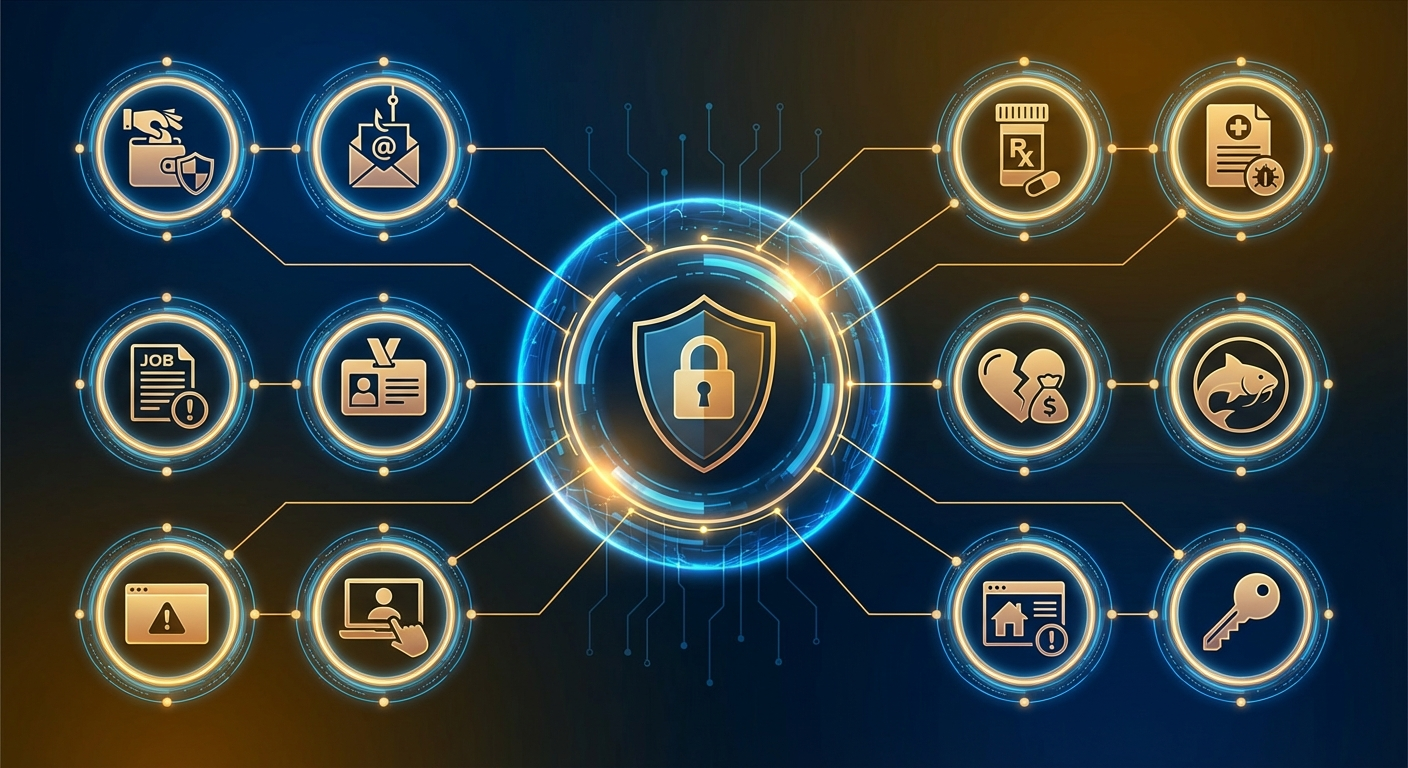
For the first time, we’re pulling back the curtain on the complete scam landscape—revealing the 12 major niche categories scammers exploit, the 9 patterns they follow to time their attacks, and the comprehensive protection strategies that actually work.
Whether you’re protecting yourself, your family, or your business, this is the definitive resource for understanding and defeating modern scams.
🚨 Quick Facts
- $10.3 billion lost to fraud in 2024 (FTC)
- 2.6 million fraud reports filed annually
- 70% of scam attempts now use AI-generated content
- 12 major niches scammers systematically exploit
- 9 predictable patterns trigger scam surges
- Average victim loses $1,500 per incident
Take action now: Bookmark this guide and share it with your network. Knowledge is your first line of defense.
Table of Contents
Part 1: Scam Niches — The 12 Industries Scammers Target
- Financial Services and Products
- Healthcare and Medical Services
- Real Estate and Rental Markets
- Employment and Career Development
- Travel and Leisure
- Tech Support and Digital Services
- Romance and Social Scams
- Educational Services
- Government Impersonation
- Community and Social Services
- Entertainment and Leisure
- Family and Personal Identity
Part 2: Scam Patterns — 9 Triggers That Predict Fraud Surges
- Economic Conditions and Financial Crises
- Natural Disasters and Emergencies
- High-Profile Data Breaches
- Technology Changes and Trends
- Major Political Events and Elections
- Social Behavior and Cultural Shifts
- Media Coverage and Pop Culture
- Academic Calendar Phases
- Government Policy Changes
Part 3: Year-Round Protection Strategies
- Stay Educated and Informed
- Use Technology to Protect Yourself
- Practice Safe Online Behaviors
- Use Financial Tools and Services
- Protect Your Identity
- Develop a Response Plan
- Educate Others
Part 1: Scam Niches — The 12 Industries Scammers Target
Beyond seasonal scams tied to holidays and events, scammers systematically target specific industries and contexts. Understanding these niches helps you recognize threats in every area of your life.
1. Financial Services and Products
The #1 target category for scammers. Financial scams account for the highest dollar losses, with victims often losing life savings.
Investment Scams
Scammers target individuals seeking quick returns or high-yield investments with:
- Ponzi schemes promising unrealistic returns
- Fake cryptocurrency investments (particularly new “coins” or “tokens”)
- Fraudulent stock tips marketed as “insider information”
- Binary options scams with rigged platforms
- Precious metals scams pushing overpriced or fake gold/silver
Red Flags:
- Guaranteed returns (no legitimate investment guarantees returns)
- Pressure to “act now” before the opportunity disappears
- Unregistered investments or unlicensed sellers
- Complex strategies that are difficult to understand
- Difficulty withdrawing funds
Real Example: In 2025, the SEC shut down a crypto investment scheme that promised 500% returns in 90 days. Over 15,000 victims lost a combined $340 million before the fraud was uncovered.
Loan Scams
Fraudsters offer fake loans targeting people with poor credit or urgent financial needs:
- Advance fee loans requiring upfront payments that guarantee “approval”
- Fake payday loans collecting personal information for identity theft
- Phantom debt collectors demanding payment for loans that don’t exist
- Debt consolidation scams charging fees for services never rendered
Warning Signs:
- Guaranteed approval regardless of credit history
- Upfront fees required before loan disbursement
- No physical address or legitimate contact information
- Pressure to wire money or use gift cards
Credit Repair Scams
These scams prey on people with poor credit histories:
- Promising to “fix” credit overnight (impossible)
- Charging fees for disputing items you can dispute yourself for free
- Suggesting you create a new identity (illegal)
- Advising you to dispute accurate negative information
Protection: You can dispute credit report errors yourself for free through the three major bureaus. Legitimate credit counseling agencies are typically nonprofit and don’t charge large upfront fees.
2. Healthcare and Medical Services
Healthcare scams exploit trust in medical institutions and people’s fears about their health.
Medical Equipment Scams
Particularly prevalent during health crises like pandemics:
- Fake sales of masks, ventilators, or testing equipment
- Counterfeit medications sold online
- Fraudulent vaccine offers or fake vaccination cards
- Bogus “miracle cures” for serious diseases
COVID-19 taught us: During the pandemic, the FTC received over 850,000 complaints about pandemic-related scams totaling $720 million in losses.
Health Insurance Scams
Fraudsters pose as insurance agents offering:
- Fake insurance plans at bargain prices
- “Limited time” enrollment periods (outside actual open enrollment)
- Plans that appear legitimate but provide no actual coverage
- Identity theft schemes disguised as enrollment processes
How to Verify: Always confirm insurance plans through your state’s insurance commissioner website or Healthcare.gov.
Medical Billing Scams
These target both patients and healthcare providers:
- For patients: Fake bills for services never received
- For providers: Fraudulent billing services that steal payments
- Balance billing scams: Inflated charges beyond insurance coverage
- Phantom services: Billing for procedures never performed
Protection: Always request itemized bills and compare them against your insurance Explanation of Benefits (EOB). Report discrepancies immediately.
3. Real Estate and Rental Markets
Real estate scams can result in massive financial losses, often targeting people during high-stress life transitions.
Rental Scams
The most common real estate scam, often targeting people relocating or in urgent housing situations:
- Fake listings: Photos stolen from legitimate listings at below-market prices
- Phantom landlords: Scammers posing as property owners
- Wire transfer requests: Demanding deposits before viewing properties
- Duplicate listings: Real properties listed by people who don’t own them
Warning Signs:
- Price significantly below market rate
- Landlord is “out of town” and can’t meet in person
- Pressure to pay quickly before seeing the property
- Request for payment via wire transfer, gift cards, or cryptocurrency
Protection Tip: Always verify ownership through county property records, and never pay before viewing a property in person.
Foreclosure and Mortgage Scams
Targeting homeowners in financial distress:
- Loan modification scams: Charging fees for “assistance” that never materializes
- Equity stripping: Convincing homeowners to sign over their deed
- Rescue scams: Promises to save your home for upfront fees
- Bait and switch: Modifying loan documents at closing
If you’re facing foreclosure: Contact a HUD-approved housing counselor (free) before paying anyone for assistance.
Vacation Rental Scams
Peak activity during travel seasons:
- Fake listings on legitimate platforms
- Properties that don’t exist or aren’t available
- Real listings hijacked with scammer contact information
- Requests to pay outside the booking platform
Protection: Book only through verified platforms, pay through the platform’s payment system, and be wary of requests to communicate or pay off-platform.
4. Employment and Career Development
Job scams exploit people during vulnerable career transitions, often combining financial fraud with identity theft.
Job Offer Scams
- Fake interviews that collect personal information
- Check overpayment scams where you’re sent a check and asked to return part of it
- Equipment purchase scams requiring you to buy supplies from a “specific vendor”
- Reshipping schemes where you unknowingly launder stolen goods
- Data entry jobs that are actually illegal operations
Major Red Flag: Any job requiring you to pay money upfront is almost certainly a scam.
Work-From-Home Scams
The remote work boom created a surge in these scams:
- Envelope stuffing and assembly “opportunities”
- Multi-level marketing disguised as employment
- Fake customer service positions using your bank account for money laundering
- Survey scams promising unrealistic payments
Resume and Career Service Scams
Targeting job seekers:
- Overcharging for basic resume services
- Fake job placement agencies collecting fees but providing no leads
- “Guaranteed placement” promises that never materialize
- LinkedIn Premium or similar service “sponsorships” that steal credentials
Legitimate job searches: Real employers never charge you to apply. Use verified job boards and research companies thoroughly before interviews.
5. Travel and Leisure
Travel scams spike during holiday seasons and summer months when people are planning vacations.
Travel Agency Scams
- Fake agencies offering dramatically discounted packages
- Timeshare presentation scams with fake “free trip” offers
- Airline impersonation with fake booking sites
- Hotel booking scams through unofficial channels
Booking Safety: Use verified airline and hotel websites directly, or well-known booking platforms. Compare prices—if a deal is too good to be true, it is.
Timeshare Scams
Two-sided threat:
- Purchase scams: High-pressure sales of worthless or overpriced timeshares
- Resale scams: Fake agents claiming they have buyers for your timeshare, charging fees upfront
Reality Check: The timeshare resale market is extremely limited. Anyone guaranteeing they can sell your timeshare for an upfront fee is likely a scammer.
Prize and Sweepstakes Scams
- “Congratulations, you’ve won a free vacation!”
- Free cruise offers requiring only shipping fees
- Contest winnings requiring payment to claim
- Vacation vouchers with impossible-to-meet conditions
Universal Rule: You can’t win a contest you didn’t enter. Legitimate sweepstakes never require payment to claim prizes.
6. Tech Support and Digital Services
Tech scams exploit both fear and lack of technical knowledge.
Tech Support Scams
The classic approach:
- Pop-up warnings claiming your computer is infected
- Cold calls from “Microsoft” or “Apple” about detected viruses
- Requests for remote access to “fix” non-existent problems
- Charges for unnecessary services or fake software
2026 Update: Scammers now use AI-generated voices that sound remarkably like legitimate tech support.
Remember: Microsoft, Apple, and other tech companies will never call you unsolicited about computer problems.
Phishing Scams
Targeting individuals through:
- Email phishing: Fake emails from banks, services, or companies
- SMS phishing (smishing): Text messages with malicious links
- Voice phishing (vishing): Phone calls requesting personal information
- Social media phishing: Fake profiles and messages
2026 Trend: AI-powered phishing emails are now nearly indistinguishable from legitimate communications. Always verify requests through official channels.
Online Shopping Scams
- Fake e-commerce sites mimicking legitimate retailers
- Social media marketplace scams on Facebook, Instagram, etc.
- Counterfeit goods from seemingly legitimate sellers
- Non-delivery scams where products never arrive
Protection: Use credit cards (not debit) for online purchases, check seller reviews, and verify website legitimacy before purchasing.
7. Romance and Social Scams
These scams cause both financial and emotional devastation, with average losses exceeding $10,000 per victim.
Romance Scams
The long game:
- Scammers create compelling fake profiles on dating apps
- Build emotional connections over weeks or months
- Eventually request money for “emergencies”
- Common stories: medical bills, travel costs, business investments, customs fees
Warning Signs:
- Refuses video calls or in-person meetings
- Relationship progresses unusually fast
- Stories don’t add up or keep changing
- Financial requests, no matter how small initially
Devastating Statistics: Romance scam victims lost $1.3 billion in 2024 alone. The emotional toll often exceeds the financial damage.
Social Media Impersonation
- Cloned profiles of friends or family requesting money
- Celebrity impersonation for fake giveaways or investments
- Business impersonation for phishing attacks
- Fake customer service accounts responding to complaints
Protection: Verify any financial request through a separate channel (phone call, in-person) before sending money.
Charity Scams
Exploiting goodwill:
- Fake charities emerging after disasters
- Legitimate charity name variations (slight misspellings)
- Fake crowdfunding campaigns for non-existent causes
- Door-to-door solicitation for bogus organizations
How to Verify: Check charities through Charity Navigator, GuideStar, or your state’s charity registration database before donating.
8. Educational Services
Scams targeting students, parents, and professionals seeking education.
Scholarship and Financial Aid Scams
- Application fees for scholarships (legitimate scholarships are free to apply)
- Guaranteed scholarships (no one can guarantee scholarship awards)
- Seminar scams selling “secrets” to financial aid
- FAFSA assistance scams charging for free services
Protection: Use official sources like FAFSA.gov and your school’s financial aid office. Never pay to apply for scholarships.
Fake Educational Institutions
- Diploma mills selling degrees without real education
- Unaccredited schools wasting students’ time and money
- Fake certifications in professional fields
- Test prep scams promising score improvements they can’t deliver
Verification: Check accreditation through the U.S. Department of Education’s database before enrolling in any program.
Online Course Scams
- Courses that don’t exist after payment
- Certificates with no industry recognition
- “Guru” courses with recycled, freely available information
- Subscription traps with hidden recurring charges
Tutoring Scams
- Collecting upfront fees for services never delivered
- Fake credentials and qualifications
- Bait-and-switch with unqualified tutors
- Test-taking fraud disguised as “assistance”
9. Government Impersonation
The most threatening scams, using fear of government authority to coerce victims.
IRS and Tax Scams
Especially prevalent January through April:
- Calls claiming you owe back taxes and face immediate arrest
- Threats of license suspension or deportation
- Demands for immediate payment via gift cards or wire transfer
- Fake IRS websites for “tax payments”
Critical Fact: The IRS will never call demanding immediate payment, threaten arrest, or request gift cards. They communicate primarily through mail.
Social Security Scams
- Claims that your SSN has been “suspended”
- Threats that benefits will be terminated
- Requests to verify your SSN over the phone
- Fake SSA websites for “account updates”
Remember: Social Security will never suspend your number or threaten you by phone.
Grant Scams
- Notifications that you qualify for a “government grant”
- Requests for processing fees or bank information
- Fake government seals and official-sounding names
- Calls claiming you’ve been “selected” for free money
Reality: The government doesn’t call to give you free money. Legitimate grants require applications through official channels.
10. Community and Social Services
Scams that exploit local trust and community connections.
Utility Scams
- Calls threatening immediate service shutoff
- Door-to-door “representatives” demanding payment
- Fake bills with incorrect payment information
- Smart meter and energy audit scams
Protection: Call your utility company directly using the number on your bill—never a number provided by someone claiming to represent them.
Home Repair Scams
Especially targeting seniors:
- Door-to-door offers after storms or natural disasters
- Requiring large upfront payments
- “Leftover materials” from another job at a discount
- No written contracts or legitimate business credentials
Best Practice: Get multiple written estimates, verify contractor licenses, and never pay more than 10-20% upfront.
Fake Community Fundraisers
- Door-to-door solicitation for fake local causes
- School fundraiser impersonation
- Youth sports team scams
- Memorial fund fraud after community tragedies
Verification: Donate directly through established organizations or verify fundraisers with the institutions they claim to represent.
11. Entertainment and Leisure
Scams exploiting excitement around events and entertainment.
Ticket Scams
Most common for:
- Concerts and music festivals
- Sporting events (especially playoffs and championships)
- Theater performances
- Any sold-out events
Common Tactics:
- Fake tickets that won’t scan
- Real tickets sold to multiple buyers
- Counterfeit physical tickets
- Social media sellers who disappear after payment
Safe Purchasing: Buy from official box offices, verified resellers (StubHub, SeatGeek), or use secure payment methods with buyer protection.
Subscription Scams
- Free trials that auto-convert to expensive subscriptions
- Fake streaming service offers
- Magazine subscription renewals for publications you don’t receive
- “Lifetime” subscriptions from companies that disappear
Fake Fan Communities
- Merchandise scams for sports teams, bands, or fandoms
- Fake autographed items
- Counterfeit limited editions
- Fraudulent fan club memberships
12. Family and Personal Identity
Scams that exploit family relationships and personal information.
Grandparent Scams
Emotionally devastating:
- Calls claiming a grandchild is in jail or injured
- Requests for immediate bail or medical payment
- Instructions to keep it secret from other family members
- Use of personal details gathered from social media
Defense: Establish a family code word for emergencies. Always verify through a separate call to known numbers.
Identity Theft Schemes
Multiple vectors for stealing your identity:
- Phishing: Emails and messages requesting personal data
- Data breaches: Stolen information sold on dark web
- Social engineering: Manipulating you into revealing information
- Mail theft: Stealing physical documents
- Skimming: Capturing card data at ATMs or point-of-sale
For comprehensive identity theft protection, see our Complete Identity Theft Protection Guide.
Family Emergency Scams
Beyond grandparent scams:
- Fake kidnapping calls demanding ransom
- Spoofed calls appearing to come from family members’ phones
- AI-generated voice messages mimicking loved ones
- Social media “emergencies” from hacked accounts
2026 Alert: AI voice cloning now requires only seconds of audio to create convincing fake calls. Verify emergencies through alternate channels.
Part 2: Scam Patterns — 9 Triggers That Predict Fraud Surges
Understanding when scams surge allows you to heighten your defenses at the right times. Scammers are opportunistic—they exploit specific conditions and events to maximize their success.
Pattern 1: Economic Conditions and Financial Crises
When economies struggle, scammers thrive.
During recessions, market downturns, or financial uncertainty, scammers prey on financial fears and desperation.
Scam Types That Surge:
- Investment scams (promising “safe” returns during volatility)
- Loan scams (targeting those denied by legitimate lenders)
- Debt relief scams (exploiting people struggling with bills)
- Job scams (preying on the unemployed)
- Foreclosure relief scams (targeting distressed homeowners)
Indicators to Watch:
- Rising unemployment rates
- Stock market volatility
- Increasing household debt levels
- Growing foreclosure rates
- Widespread layoff announcements
How to Track:
Monitor Economic News:
- Bureau of Labor Statistics unemployment reports
- Federal Reserve economic indicators
- Major financial news outlets
Follow Regulatory Alerts:
- FTC consumer alerts
- SEC investor alerts
- CFPB consumer advisories
- State attorney general warnings
Real-World Pattern: During the 2008 financial crisis, foreclosure rescue scams increased 300%. The same pattern repeated during the 2020 pandemic economic disruption.
Pattern 2: Natural Disasters and Emergencies
Scammers exploit empathy and urgency.
Natural disasters trigger immediate scam surges, targeting both victims seeking help and donors wanting to contribute.
Scam Types That Surge:
- Fake charity and disaster relief scams
- Emergency supply scams (price gouging, fake products)
- Insurance scams (fake adjusters, inflated claims)
- Contractor scams (storm chasers offering “repairs”)
- Government impersonation (fake FEMA representatives)
Indicators to Watch:
- Major weather events (hurricanes, floods, wildfires)
- Earthquakes and natural disasters
- Public health emergencies
- Large-scale accidents or industrial disasters
How to Track:
Official Sources:
- National Weather Service
- FEMA disaster declarations
- CDC public health alerts
- Red Cross disaster response pages
Charity Verification:
- Charity Navigator
- BBB Wise Giving Alliance
- GuideStar
- State charity registration databases
Post-Disaster Protection:
- Only donate to established charities with track records
- Be wary of crowdfunding for unknown individuals
- Verify contractors through licensing boards before hiring
- Never pay upfront for disaster repairs
Pattern 3: High-Profile Data Breaches and Cybersecurity Incidents
Stolen data fuels targeted scams.
After major data breaches, scammers use stolen information for sophisticated, personalized attacks.
Scam Types That Surge:
- Phishing emails referencing the breach
- Account takeover attempts
- Identity theft using exposed data
- Fake “protection” service offers
- Tech support scams claiming to help
Indicators to Watch:
- Data breach announcements from major companies
- Unusual login attempts on your accounts
- Credit monitoring alerts
- Phishing emails referencing companies you use
How to Track:
Breach Notification Services:
- Have I Been Pwned
- Firefox Monitor
- Identity theft protection services
- Credit monitoring alerts
Security News:
- Krebs on Security
- Threatpost
- Wired Security
- Company security blogs
Post-Breach Actions:
- Change passwords for affected accounts immediately
- Enable multi-factor authentication
- Watch for targeted phishing using leaked info
- Consider a credit freeze if financial data was exposed
Pattern 4: Technology Changes and Trends
New technology = new attack vectors.
Scammers rapidly adapt to technological changes, targeting users unfamiliar with new platforms.
Scam Types That Surge:
- Cryptocurrency and NFT scams (during crypto booms)
- Fake app and download scams
- New payment platform fraud
- AI-related scams (as AI becomes mainstream)
- Metaverse and virtual world scams
Indicators to Watch:
- Launch of new popular apps or platforms
- Cryptocurrency price surges
- New payment technologies (digital wallets, etc.)
- Viral tech trends
How to Track:
Tech News:
- TechCrunch
- The Verge
- Wired
- Ars Technica
Early Warning Signs:
- Reports of scams on new platforms
- App store warnings
- Security researcher alerts
- Social media discussions of suspicious activity
2026 Alert: AI-generated content has made scams dramatically more convincing. Voice cloning, deepfake videos, and AI-written emails are now standard scammer tools.
Pattern 5: Major Political Events and Elections
Political passion creates vulnerability.
Scammers exploit political emotions, fears, and engagement during election cycles and major political events.
Scam Types That Surge:
- Fake political donation scams
- Voter registration fraud
- Political merchandise scams
- Survey and petition scams (data harvesting)
- Misinformation campaigns with embedded scams
Indicators to Watch:
- Upcoming elections (local, state, national)
- Major political announcements
- Controversial policy debates
- Political rallies and events
How to Track:
Official Sources:
- State election board websites
- FEC (Federal Election Commission)
- Official campaign websites
Verification Steps:
- Donate only through official campaign sites
- Verify voter registration through government portals
- Be skeptical of political surveys asking for personal information
Pattern 6: Trends in Social Behavior and Cultural Shifts
Scammers follow social trends.
Changes in how we work, shop, and live create new scam opportunities.
Scam Types That Surge:
- Work-from-home scams (during remote work trends)
- Wellness and supplement scams
- Diet and fitness product fraud
- Subscription service scams
- Online shopping fraud
Indicators to Watch:
- Shifts in work environments (remote/hybrid trends)
- Popular health and wellness movements
- Changes in shopping habits
- Viral lifestyle trends
How to Track:
Consumer Trends:
- Lifestyle and health news
- Consumer behavior reports
- Social media trending topics
- Online marketplace discussions
Protection Strategy: Be extra cautious with purchases related to trending topics. Scammers create products and services specifically to capitalize on what’s popular.
Pattern 7: Media Coverage and Pop Culture Trends
Viral moments attract scammers.
High-profile media events, celebrity news, and pop culture phenomena create immediate scam opportunities.
Scam Types That Surge:
- Fake merchandise (movies, shows, games)
- Celebrity impersonation and fake endorsements
- Fake streaming sites for popular content
- Concert and event ticket scams
- Giveaway scams tied to celebrities
Indicators to Watch:
- Major movie or TV show releases
- Album drops and concert tours
- Video game launches
- Viral memes and internet phenomena
- Celebrity news and scandals
How to Track:
Entertainment News:
- Official studio and artist announcements
- Verified social media accounts
- Entertainment industry publications
Verification:
- Buy merchandise only from official stores
- Stream content only through legitimate platforms
- Verify celebrity endorsements through official channels
Pattern 8: Phases of the Academic Calendar
Students and parents are seasonal targets.
The academic calendar creates predictable scam patterns targeting students, parents, and educational institutions.
Scam Types That Surge:
Back-to-School (August-September):
- Fake scholarship offers
- Student loan scams
- Textbook scams
Application Season (Fall-Winter):
- College admissions consulting scams
- Fake college representative contacts
- Application fee fraud
FAFSA Season (January-March):
- Financial aid scams
- FAFSA “assistance” fraud
- Fake grant offers
Graduation (May-June):
- Diploma mill marketing
- Fake graduate program recruitment
- Job scams targeting new graduates
How to Track:
Academic Calendars:
- Know key dates for your students’ schools
- FAFSA deadlines and open enrollment periods
- Standardized test dates
Official Resources:
- School financial aid offices
- FAFSA.gov (not .com or other variations)
- State education department websites
Pattern 9: Sudden Changes in Government Policy or Law
New rules create confusion scammers exploit.
Policy changes trigger scam surges as people seek to understand and comply with new requirements.
Scam Types That Surge:
- Tax regulation scams (new tax law “compliance”)
- Immigration scams (policy changes affecting status)
- Healthcare enrollment scams (ACA changes)
- Licensing and certification scams
- Stimulus and benefit program fraud
Indicators to Watch:
- New legislation announcements
- Regulatory changes
- Benefit program modifications
- Tax code updates
How to Track:
Official Government Sources:
- IRS.gov for tax information
- USCIS.gov for immigration
- Healthcare.gov for health insurance
- Official state government websites
Protection: Government agencies communicate primarily through mail, not phone calls or texts. Always verify policy information through .gov websites.
Part 3: Year-Round Protection Strategies
Knowing about scams isn’t enough—you need systematic protection. Here’s your comprehensive defense strategy.
1. Stay Educated and Informed
Understand Common Scams
Knowledge is your first defense. Regularly:
- Read scam alerts from the FTC, BBB, and state agencies
- Follow this site for the latest scam news
- Understand the tactics in each niche category above
- Share information with family and friends
Join Online Communities
Participate in scam awareness communities:
- Reddit r/scams — real-time scam reports and discussions
- BBB Scam Tracker — searchable database of reported scams
- Local community groups discussing neighborhood scams
- Professional groups in your industry
Subscribe to Alerts
Free alert services:
- FTC Consumer Alerts
- FBI IC3 (Internet Crime Complaint Center)
- State attorney general scam alerts
- Your bank’s fraud alert service
2. Use Technology to Protect Yourself
Essential Security Software
Antivirus and Anti-Malware:
- Norton, McAfee, Bitdefender, or Kaspersky
- Enable automatic updates
- Use real-time protection features
- Run regular full-system scans
Multi-Factor Authentication (MFA)
Enable MFA on all accounts that support it:
- Use authenticator apps (Google Authenticator, Authy) over SMS
- Consider hardware security keys for critical accounts
- Back up recovery codes securely
Password Management
Use a password manager:
- LastPass, 1Password, Dashlane, or Bitwarden
- Generate unique, complex passwords for every account
- Enable auto-lock when not in use
- Never reuse passwords
VPN (Virtual Private Network)
Essential for:
- Public Wi-Fi use
- Online banking and shopping
- Any sensitive account access
Recommended providers: ExpressVPN, NordVPN, Proton VPN
3. Practice Safe Online Behaviors
Verify Before You Trust
Every time:
- Hover over links before clicking
- Check URLs for slight misspellings
- Verify sender email addresses
- Confirm requests through official channels
The 5-Minute Rule: Before acting on any urgent request, take 5 minutes to verify through an independent source.
Be Skeptical of Unsolicited Contact
Red flags for any unsolicited message:
- Urgent deadlines
- Threats of negative consequences
- Requests for personal information
- Pressure to keep it secret
- Instructions to pay via gift cards, wire transfer, or crypto
Limit Online Information Sharing
Privacy protection:
- Review social media privacy settings
- Avoid sharing birth dates, addresses, or family details publicly
- Use separate email addresses for different purposes
- Be cautious about location sharing
4. Use Financial Tools and Services
Monitor Financial Accounts
Daily habits:
- Check bank and credit card accounts regularly
- Set up transaction alerts
- Review statements for unauthorized charges
- Check credit reports annually (free at AnnualCreditReport.com)
Virtual Credit Cards
Many banks offer virtual card numbers for online purchases:
- Creates temporary numbers that can be limited or canceled
- Protects your real card number from theft
- Available through many major banks and credit card issuers
Credit Freezes
Proactive protection:
- Free to place and lift at all three bureaus
- Prevents new accounts from being opened in your name
- Lift temporarily when you need to apply for credit
Freeze your credit at:
- Equifax: equifax.com/personal/credit-report-services/
- Experian: experian.com/freeze/center.html
- TransUnion: transunion.com/credit-freeze
5. Protect Your Identity
Identity Theft Protection Services
Consider paid services for comprehensive monitoring:
- LifeLock
- IdentityForce
- IdentityGuard
- Aura
Features to look for:
- Credit monitoring across all three bureaus
- Dark web monitoring for your information
- Social Security number monitoring
- Financial account monitoring
- Recovery assistance if theft occurs
Secure Your Devices
Essential steps:
- Strong passwords or biometric locks on all devices
- Enable device encryption
- Keep operating systems updated
- Use Find My Device features
Secure Document Handling
Physical security:
- Shred documents containing personal information
- Use a locked mailbox for sensitive mail
- Opt for paperless statements when possible
- Store important documents in a safe
6. Develop a Response Plan
Know How to Report
If you’re scammed:
- FTC: ReportFraud.ftc.gov
- FBI IC3: ic3.gov (for internet crimes)
- State Attorney General consumer protection division
- Local police (get a report number for records)
- Your bank (for financial fraud)
Immediate Response Steps
If you think you’ve been scammed:
- Stop all communication with the suspected scammer
- Document everything — save messages, emails, phone records
- Secure your accounts — change passwords, enable MFA
- Contact your bank — if financial information was shared
- Place fraud alerts on your credit reports
- Report the scam to relevant authorities
- Monitor your accounts for unusual activity
Recovery Resources
- IdentityTheft.gov — FTC’s recovery resource with personalized plans
- Consumer Financial Protection Bureau — for financial disputes
- State consumer protection offices
- Identity theft protection service recovery assistance
7. Educate Others
Protect Your Network
Share knowledge with:
- Family members, especially elderly relatives
- Friends who may be less tech-savvy
- Colleagues and professional networks
- Community groups
Key messages:
- If something seems too good to be true, it is
- Legitimate organizations don’t demand immediate payment
- Verify requests through independent channels
- It’s okay to hang up, delete, or ignore suspicious contact
Special Focus: Protecting Seniors
Elderly individuals face elevated risk:
- More likely to answer unknown calls
- May be less familiar with digital scam tactics
- More likely to have retirement savings to steal
- Often targeted by grandparent and romance scams
Help seniors by:
- Setting up call blocking on their phones
- Discussing common scam tactics openly
- Establishing family verification procedures
- Checking in regularly about suspicious contacts
Conclusion: Your Scam Defense System
Scammers are sophisticated, opportunistic, and constantly evolving. But with the knowledge from this guide, you’re now equipped to:
Recognize threats across all 12 major scam niches — from financial fraud to family impersonation schemes.
Anticipate surges by understanding the 9 patterns scammers follow — economic conditions, disasters, breaches, and more.
Defend yourself with systematic protections — technology, behaviors, monitoring, and response plans.
Remember these principles:
- Pause before acting — Urgency is a scammer’s weapon
- Verify independently — Never use contact information provided in suspicious messages
- Trust your instincts — If something feels wrong, it probably is
- Report incidents — Your report helps protect others
- Stay informed — Scam tactics evolve; your knowledge must too
Resources
Reporting Scams
- FTC: ReportFraud.ftc.gov
- FBI IC3: ic3.gov
- BBB Scam Tracker: bbb.org/scamtracker
Credit Bureaus
- Equifax: 1-800-685-1111
- Experian: 1-888-397-3742
- TransUnion: 1-888-909-8872
Identity Theft Recovery
- IdentityTheft.gov: Federal recovery resource
- Your state’s attorney general: Consumer protection division
Ongoing Education
- Follow ScamWatch HQ for the latest scam news and protection strategies
- Sign up for FTC Consumer Alerts
- Check BBB Scam Tracker regularly
This guide is updated regularly as new scam patterns emerge. Bookmark this page and check back for the latest information.
Last Updated: March 2026
Related Guides:
Have you encountered a scam not covered here? Report it to help us update this resource. Together, we can outsmart the scammers.