Executive Summary
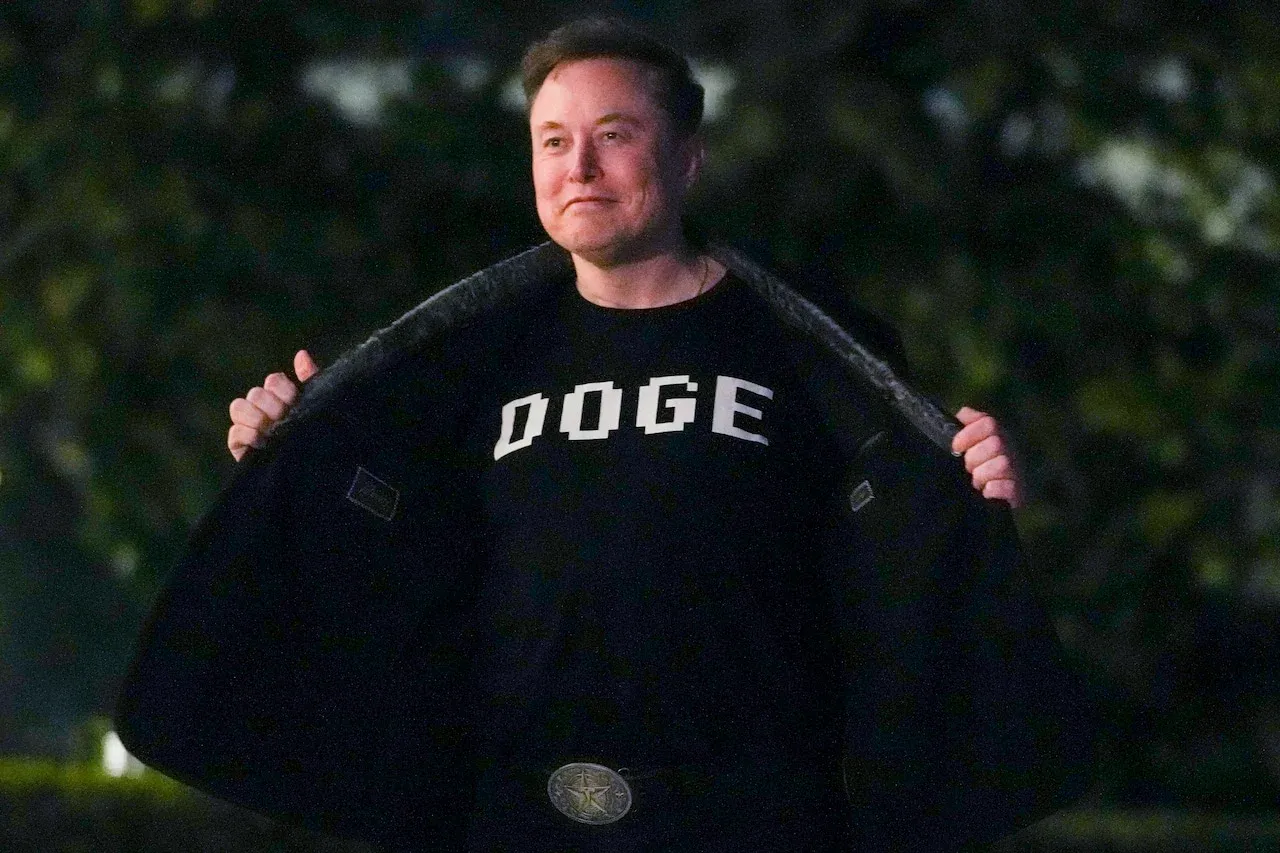
Since its creation on January 20, 2025, the Department of Government Efficiency (DOGE), led by Elon Musk under the Trump administration, has made sweeping claims about discovering “billions and billions of dollars in waste, fraud and abuse” across the federal government. This in-depth analysis examines every major fraud claim DOGE has publicly acknowledged, cross-referenced against independent fact-checks, court rulings, and government data.
Key Finding: Despite claims of discovering “the biggest fraud in history,” independent analyses have found that DOGE’s verified savings amount to approximately $2-5 billion—a fraction of the $2 trillion initially promised. Multiple high-profile fraud claims have been debunked or significantly walked back, and federal judges have rebuked the administration for “alleging fraud without evidence.”
Part 1: The Social Security Administration — “150-Year-Old Beneficiaries”
The Claim
DOGE’s most prominent fraud allegation centered on the Social Security Administration (SSA). Elon Musk claimed to have discovered what he called “the biggest fraud in history”—that 20 million people over the age of 100, including individuals supposedly 150 years old, were receiving Social Security benefits. President Trump repeated this claim during his Joint Congressional Address on March 4, 2025.
On the Joe Rogan Experience podcast, Musk reiterated that “the Social Security numbers of 20 million dead people are being used to steal $100 billion in benefits each year.”
The Reality
This claim was definitively debunked.
The Social Security Administration’s own data and multiple independent analyses revealed that DOGE staffers fundamentally misunderstood the agency’s database:
- Database Codes vs. Actual Payments: The SSA database includes records for everyone who ever paid into the system or received benefits—not just current beneficiaries. When death dates are missing from historical records (a known data quality issue dating back decades), placeholder codes appear that can be misinterpreted as impossibly old ages.2. Inspector General Findings: A 2015 SSA Inspector General audit had already identified this data issue, finding that while 18.9 million individuals over age 100 lacked death information in the system, “almost none currently receive benefit payments or have reported earnings.”3. Actual Numbers: According to SSA data, approximately 53,000 Americans over age 100 receive Social Security benefits—consistent with U.S. Census estimates of roughly 80,000 centenarians living in the country.4. The 13 Checks Finding: The Inspector General’s report noted they identified only 13 checks going to beneficiaries who were “likely 112+“—and some people do legitimately live to that age.5. Acting Commissioner Contradiction: Lee Dudek, the acting SSA commissioner placed by President Trump, clarified that deceased centenarians are “not necessarily receiving benefits,” directly contradicting claims made by Trump and Musk.
The Aftermath
DOGE installed anti-fraud phone verification checks at SSA in response to claims that “40% of phone calls were fraudulent.” After examining over 110,000 benefit claims:
- Only two cases had a “high probability” of being fraudulent- Less than 1% were flagged as even potentially fraudulent- The anti-fraud measures slowed retirement claim processing by 25%- An internal memo described a “degradation of public service”
SSA’s actual improper payment rate is 0.3%—one of the lowest in the federal government—and includes administrative errors, not just fraud.
Part 2: The $2.7 Trillion Medicare/Medicaid Claim
The Claim
Following a February 12, 2025 hearing of the House Subcommittee on Delivering on Government Efficiency (chaired by Rep. Marjorie Taylor Greene), social media posts claimed “DOGE subcommittee discovered $2.7 trillion in improper payments in Medicare and Medicaid overseas, to people who should not have gotten it.”
White House Press Secretary Karoline Leavitt called it “another example of the fraud, waste and abuse that DOGE is identifying on a daily basis.” Musk amplified the claim, calling it “the biggest fraud operation in human history.”
The Reality
This claim was rated FALSE by multiple fact-checkers.
- Not a DOGE Discovery: The $2.7 trillion figure came from a Government Accountability Office (GAO) report published in March 2024—months before DOGE existed. The subcommittee merely cited existing GAO data.2. Not Just Medicare/Medicaid: The $2.7 trillion represents cumulative improper payments across ALL federal agencies since fiscal year 2003—a 22-year period. Medicare and Medicaid accounted for approximately 43% of the most recent annual estimate.3. Not Fraud: The GAO explicitly stated improper payments occur for many reasons, ranging from “unintentional administrative errors to fraud.” An improper payment can include:
- Payments to the right person in the wrong amount- Missing documentation- Timing errors- Processing mistakes4. Not Overseas: The GAO reports made no claim that payments went to people overseas.5. Context: The $236 billion in estimated annual improper payments (FY2023) represents about 3.5% of total federal spending—a longstanding issue that predates and was already being tracked by existing oversight mechanisms.
Part 3: The “Wall of Receipts” — Inflated Savings Claims
The Claims
DOGE launched a website featuring a “Wall of Receipts” claiming to document billions in savings from terminated contracts. Initial claims included:
- $55 billion in total savings (later increased to $65 billion, then $115 billion, then $150 billion)- Specific contract terminations with dollar amounts- “Fraud detection” as a category of savings
The Reality
Independent analyses found massive errors, duplications, and misrepresentations:
Documented Errors on the Wall of Receipts:
Claim Reality Error Magnitude
ICE contract: $8 billion savings Actual contract: $8 million (a credit line) 1,000x overstatement
USAID contract: $650 million Listed three times (triple-counted) 3x duplication
Social Security contract: $232 million Actual savings: $560,000 414x overstatement
Multiple DOE grants Listed twice ($500 million duplication) 2x duplication
Independent Verification:
- NPR Analysis (February 2025): Matched DOGE claims to federal contract data and found verified savings of approximately $2 billion—a fraction of claimed amounts.- Washington Post Analysis: Corroborated the ~$2 billion figure.- New York Times Analysis (December 2025): Examined DOGE’s 40 largest claims and found only 12 appeared accurate. Among the largest claims, “bogus savings were both larger and much more common than the real ones.”- Manhattan Institute Assessment: Jessica Riedl, a conservative budget expert, described DOGE’s work as “government spending-cut theater” and noted they “really only verified about $5 billion in savings or less than one-tenth of 1% of federal spending.”- Politico Analysis (August 2025): Found DOGE saved “less than 5 percent of its claimed savings” from nearly 10,100 contract terminations.
Types of Errors Identified:
- Typos: The $8 billion vs. $8 million ICE contract error2. Triple-counting: Same contracts listed multiple times3. Misrepresenting credit lines: Counting maximum possible contract values rather than actual spending4. Including expired contracts: Counting contracts that had already ended naturally5. Counting reinstated items: Library and museum grants ordered reinstated by courts still appear as “savings”6. Timeline errors: Claiming savings from contracts not yet awarded
Part 4: Department-by-Department Fraud Claims
Treasury Department
Claim: Musk stated that “career Treasury officials are breaking the law every hour of every day by approving payments that are fraudulent or do not match the funding laws passed by Congress” and that payment approval officers “were instructed always to approve payments, even to known fraudulent or terrorist groups.”
Reality:
- No evidence was provided for these claims- A federal judge issued a temporary restraining order blocking DOGE access to Treasury systems, finding “a real possibility exists that sensitive information has already been shared outside of the Treasury Department, in potential violation of federal law”- Multiple lawsuits challenged DOGE’s access as potentially illegal
Department of Housing and Urban Development (HUD)
Claim: DOGE announced it “recovered $1.9 billion in misplaced taxpayer funds” that were “unaccounted for and improperly allocated” under the Biden administration.
Reality:
- HUD Secretary Scott Turner announced the “de-obligation” of funds- These were not “misplaced” in the sense of fraud—they were previously allocated funds that were returned to Treasury- The characterization as “fraud” or “missing money” was disputed by housing policy experts- No criminal referrals or fraud prosecutions resulted
U.S. Agency for International Development (USAID)
Claim: Trump and Musk suggested USAID officials “may have siphoned off taxpayer money for themselves,” with Musk sharing claims that former Administrator Samantha Power’s net worth increased from $7 million to $30 million during her tenure.
Reality:
- Rated FALSE by FactCheck.org- The wealth claims were based on comparing the low end of one financial disclosure range to the high end of another—a methodologically invalid comparison- Financial disclosure forms show ranges, not precise figures- Power’s disclosures showed between $8.8-29 million in 2021 and $12-30.5 million in 2024 (shared with her husband, historian Cass Sunstein)- No evidence of enrichment through the USAID position was provided
Internal Revenue Service (IRS)
Claim: DOGE sought access to IRS systems containing tax returns to identify “waste, fraud, and abuse” including “foreign fraud rings” and parents who “fraudulently claim the Child Tax Credit.”
Reality:
- Multiple lawsuits were filed to block access- Former National Taxpayer Advocate Nina Olson noted that identifying fraud requires audits—not just database access—and asked: “Do these folks have background in tax law? You have to have training on that.”- The Trump administration simultaneously fired many IRS auditors who actually investigate fraud- The IRS predicted more than $500 billion in revenue loss due to “DOGE-driven” cuts to enforcement
Department of Education
Claim: DOGE claimed savings from terminating contracts related to “digital modernization” and DEI programs.
Reality:
- Many terminated contracts were for routine educational services- Court orders blocked some terminations- No fraud was alleged or demonstrated—contracts were terminated based on policy preferences
Part 5: What Independent Experts Found
Government Accountability Office (GAO)
Rebecca Shea of the GAO confirmed the government “loses between $233 billion to $521 billion annually in direct financial fraud loss.” However, she noted this estimate existed before DOGE and that addressing fraud “takes technical experts and it costs money.”
Partnership for Public Service
This nonprofit estimated that DOGE’s actions—firing, rehiring, and placing employees on administrative leave—actually cost as much as $135 billion, far exceeding any documented savings.
Senate Permanent Subcommittee on Investigations (Minority Report)
Senator Richard Blumenthal’s July 2025 report found DOGE “generated at least $21.7 billion in waste” through:
- $14.8 billion paying ~200,000 employees not to work for up to 8 months (Deferred Resignation Program)- $6.1 billion for employees involuntarily separated or on administrative leave- $263 million in lost interest/fee income at Department of Energy from frozen loans
Certified Fraud Examiner Analysis
A Certified Fraud Examiner reviewing DOGE’s work noted:
“Based on what’s been presented so far, has DOGE found actual fraud? As a Certified Fraud Examiner, it would be hard to come to that conclusion.”
The examiner noted that fraud requires proving “deceit, trickery, sharp practice, or breach of confidence, perpetrated for profit”—none of which DOGE demonstrated in its public claims.
Part 6: Legal Rulings and Judicial Rebukes
Multiple federal judges issued rulings critical of DOGE’s claims and methods:
- Two judges rebuked the Trump administration “for alleging fraud without evidence” just days after the Social Security claims were made.2. Federal Judge Jeannette Vargas warned that “a real possibility exists that sensitive information has already been shared outside of the Treasury Department, in potential violation of federal law.”3. Federal courts blocked DOGE access to systems at:
- Treasury Department- Social Security Administration- Office of Personnel Management- Department of Education4. January 2026 court filings revealed that DOGE employees “secretly and improperly shared sensitive personal data” and “circumvented IT rules to improperly share data on outside servers.”5. Supreme Court (June 2025): While allowing DOGE access to SSA systems to proceed during litigation, Justice Jackson warned in dissent that “the ‘urgency’ underlying the Government’s stay application is the mere fact that it cannot be bothered to wait for the litigation process to play out.”
Part 7: The Pattern of Claims vs. Evidence
Claims That Were Walked Back or Debunked:
Original Claim What Actually Happened
20 million dead people receiving Social Security Database coding issue; ~13 questionable payments found by IG
$2.7 trillion Medicare/Medicaid fraud discovered Pre-existing GAO data from 2024; includes all agencies, all errors since 2003
$8 billion ICE contract savings Typo; actual contract was $8 million
USAID administrator enriched herself Financial disclosure misrepresentation; no evidence
40% of SSA phone calls are fraudulent Anti-fraud checks found 2 suspicious cases out of 110,000+
$55-150 billion in verified savings Independent analyses found $2-5 billion verifiable
Pattern Observed:
- Dramatic initial claim made via social media or press conference2. Claim amplified by Musk, Trump, and conservative media3. Fact-checks reveal errors, misunderstandings, or misrepresentations4. Claim quietly walked back or simply not mentioned again5. No corrections issued to original claims
Part 8: What Fraud Actually Exists (Pre-DOGE)
Independent auditors have long documented genuine fraud vulnerabilities in federal programs:
Existing Fraud Estimates (GAO):
- $233-521 billion annually in potential fraud losses- Primary drivers: Healthcare programs, unemployment insurance, pandemic relief programs
Existing Oversight Mechanisms:
- Inspectors General: In 2023, IG work led to 4,000+ prosecutions and identified $93.1 billion in potential savings- Government Accountability Office: Conducts ongoing audits and investigations- Department of Justice: Prosecutes federal fraud cases
Irony Noted by Critics:
- Trump fired 17 Inspectors General in January 2025—the officials specifically tasked with finding fraud- IRS enforcement staff were cut, reducing the government’s ability to pursue tax fraud- USAID Inspector General was fired after issuing a warning about fraud risks from the foreign aid pause
Part 9: The Cost-Benefit Analysis
Promised Savings:
- Musk initially promised: $2 trillion- Later revised to: $1 trillion- Then revised to: $150 billion
Verified Savings (per independent analyses):
- NPR/Washington Post: ~$2 billion- Manhattan Institute: ~$5 billion- POLITICO (August 2025): Less than 5% of claimed amounts
Documented Costs:
- Partnership for Public Service estimate: $135 billion (from workforce disruption)- Senate minority report: $21.7 billion in waste generated by DOGE- IRS revenue loss projection: $500+ billion
Net Assessment:
By most independent analyses, DOGE’s actions may have cost taxpayers more than they saved, while generating headlines about “fraud” that largely did not materialize.
Part 10: Conclusion
After a year of operation, DOGE’s fraud-finding mission can be assessed against its claims:
What DOGE Actually Found:
- Policy disagreements (DEI contracts, foreign aid programs, research grants)- Accounting issues and data quality problems predating the current administration- Routine contract terminations that any administration could make
What DOGE Did Not Find:
- Evidence of the “biggest fraud in history”- Widespread payments to dead beneficiaries- $2.7 trillion in Medicare/Medicaid fraud- Criminal schemes within federal agencies
What Critics Argue DOGE Actually Did:
- Generated misleading headlines about fraud- Disrupted federal services- Potentially violated privacy laws- Cost taxpayers billions through workforce chaos- Weakened legitimate fraud-fighting infrastructure by firing Inspectors General and IRS enforcement staff
The Broader Context:
Budget experts note that DOGE targeted programs representing a small fraction of federal spending while avoiding the largest budget items (Social Security benefits, Medicare, defense) where meaningful deficit reduction would require difficult political choices.
As Manhattan Institute’s Jessica Riedl summarized: “The targets they’re going after are not where the money is… [They] hit a lot of cultural touchstones for a lot of conservatives, but they’re nowhere close to the drivers of our fiscal challenges.”
Sources and Methodology
This analysis draws from:
- Government Accountability Office reports- Social Security Administration data and Inspector General audits- Federal court filings and rulings- Independent analyses by NPR, Washington Post, New York Times, and POLITICO- Fact-checks by PolitiFact, Snopes, and FactCheck.org- Senate investigative reports- Statements from budget experts at the Manhattan Institute, Brookings Institution, and Center for Budget and Policy Priorities- DOGE’s own “Wall of Receipts” website- White House press briefings and official statements
This document represents a comprehensive compilation of publicly available information about DOGE’s fraud claims and findings as of January 2026. Readers are encouraged to consult primary sources for additional context.