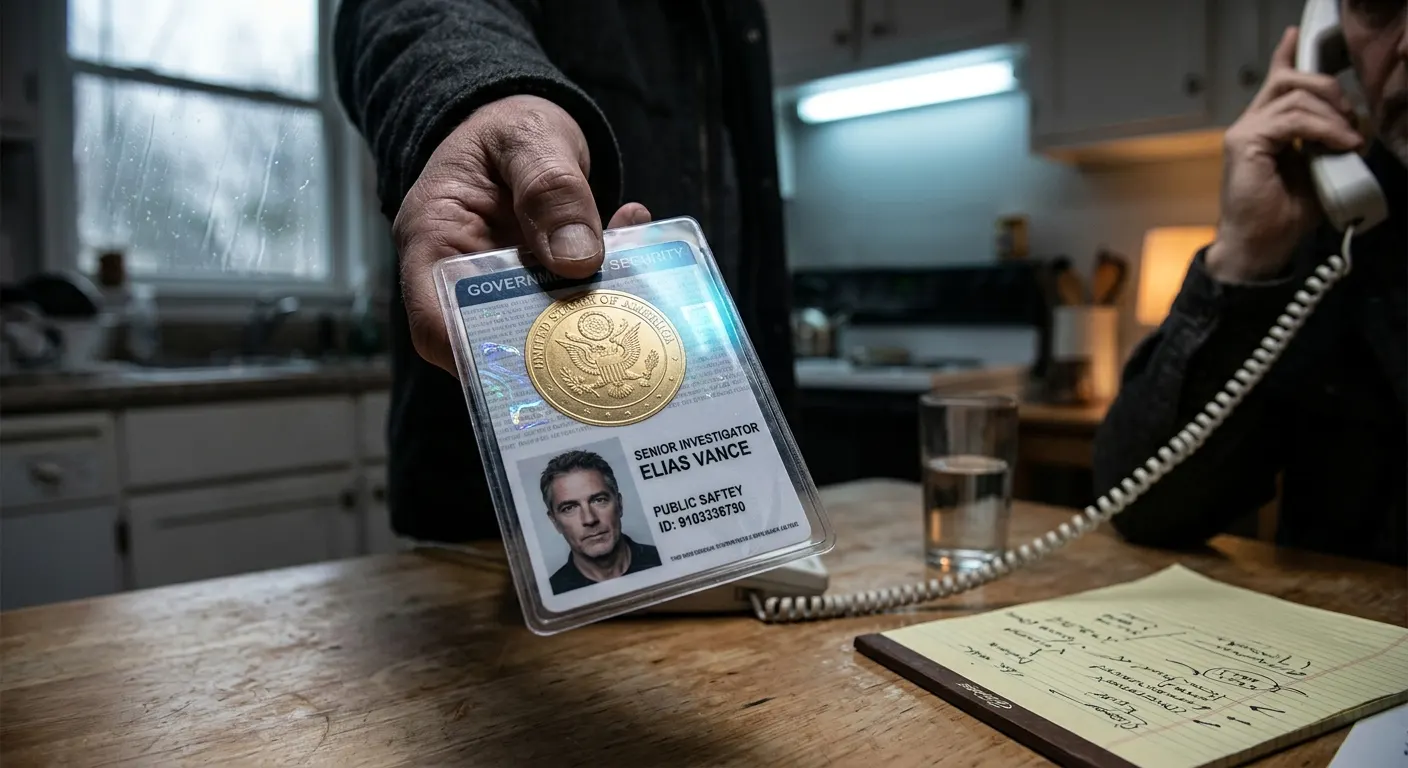
If you have ever been scammed, you are now a target for a second scam — and the people running it know it.
On June 3, 2026, the Federal Trade Commission issued a consumer alert about a fast-spreading version of the recovery scam, in which fraudsters pose as FTC employees and offer to help victims get back money they already lost. The new wrinkle: to seem legitimate, the impersonators are now texting photos of fake FTC employee IDs and badges to “verify” their identity.
The FTC’s message was blunt: a real FTC employee won’t text you their photo ID to prove who they are — and won’t offer to recover your money for a fee.
Why Recovery Scams Are So Cruel
Recovery scams — sometimes called “reloading” scams — specifically target people who have already been defrauded. That is not a coincidence. Scammers trade and sell “sucker lists” of prior victims, because someone who has lost money is often desperate to get it back and more willing to believe a stranger who promises to help.
The emotional setup is devastating. The victim is anxious, embarrassed, and motivated. Then someone calls or messages claiming to be from a government agency — the very kind of authority that should be able to help — and says the good news the victim has been hoping for: your money can be recovered. All you have to do is cooperate.
How the Fake “FTC Agent” Scam Works
The con follows a recognizable arc:
The unexpected contact. You get a message — call, text, email, or social media — from someone claiming to be an FTC employee or “agent” who can help you recover losses from a previous scam.
The fake proof. Because people are increasingly wary of impersonators, the scammer pre-empts your doubt by sending a photo of an official-looking FTC ID and badge. It looks real. It is not. An image of a badge proves nothing — anyone can fabricate or steal one.
The ask. This is where the trap closes. To “process” your recovery, the fake agent asks you to pay a fee, move your money into a new account they specify, or hand over financial information. Every one of those requests is the scam.
The FTC was explicit about the bright line: a real FTC employee will not claim to help you recover money you lost in a scam and then ask you to pay them, move your money into an account they specify, or give them your financial details.
The Tells That Cut Through Everything
The danger of the fake-badge tactic is that it attacks the one defense people have started using — “ask them to prove who they are.” So the rule has to shift from checking credentials to checking the request itself. No badge, ID, or title changes these facts:
- No legitimate government agency charges you a fee to recover money. The FTC does not, and never will, ask for payment to return funds.
- No real agency asks you to move your money to “protect” or “recover” it. Telling you to wire funds, buy gift cards, send cryptocurrency, or transfer money into a “safe” account is always fraud.
- No real official needs your account numbers, passwords, or one-time codes to help you. Those requests exist to drain your accounts, not refill them.
- A photo of an ID or badge is not verification. Images are trivial to fake or steal. Treat them as a red flag, not reassurance — the very fact that someone volunteered one unprompted is suspicious.
What to Do
Stop engaging and verify independently. If you think you are dealing with an FTC impersonator, do not use any phone number, link, or contact the person gave you. The FTC does not initiate these recovery offers.
Never pay to get money back. If recovering your loss requires you to first send money or share financial information, it is a scam — full stop.
Report it. Report FTC impersonation and any fraud to the Federal Trade Commission at reportfraud.ftc.gov. Your report helps the agency track and act against these schemes — and warns the next person in line.
Warn anyone you know who has been scammed before. Prior victims are exactly who these criminals are hunting. A quick heads-up that “the FTC will never call to help you recover money for a fee” can stop the second loss before it starts.
Being scammed once is not a character flaw — it is what happens when criminals are good at their jobs. But the people who target victims a second time are counting on hope overriding caution. The simplest protection is also the most reliable: no real agency, and no real agent, ever asks you to pay or move money to get your money back.