How ChatGPT Saved a Widow from a $1 Million Pig Butchering Scam
When romance meets cryptocurrency fraud, even the smartest victims can lose everything. But one San Jose widow found an unlikely ally: an AI chatbot that saw what she couldn’t.
The $4 Billion Industry Preying on Loneliness
She was a widow living in the Bay Area, successful and educated. When she matched with an attractive, charming man on a dating app, she had no idea she was about to become another statistic in one of the fastest-growing fraud categories in history.
Within months, she’d transferred nearly $1 million to cryptocurrency wallets controlled by criminals operating from Southeast Asian scam compounds. By the time she realized something was wrong, it was too late—or so she thought.
What happened next is a story that reveals both the terrifying sophistication of modern fraud and an unexpected weapon in the fight against scammers: artificial intelligence.
What Is “Pig Butchering”?
The name sounds crude because it is. Pig butchering (杀猪盘, or “sha zhu pan” in Chinese) describes the practice of “fattening up” a victim over time before “slaughtering” them financially. It’s a cruel metaphor that perfectly captures how these scams work.
The Three Phases
Phase 1: The Romance (Fattening)
The scammer creates an elaborate fake persona—often claiming to be a successful businessperson, engineer, or professional living abroad. They initiate contact through dating apps, social media, or even “wrong number” text messages.
For weeks or months, they build an emotional relationship. Daily messages. Video calls (sometimes using deepfakes). Declarations of love. Plans for the future.
The victim isn’t stupid—they’re being systematically manipulated by professionals who do this full-time.
Phase 2: The Investment (More Fattening)
Once emotional trust is established, the scammer casually mentions their “successful” cryptocurrency trading. They show screenshots of massive gains. They offer to teach the victim.
Small investments yield apparent profits. The victim can even “withdraw” small amounts—money the scammers willingly sacrifice to build confidence. Encouraged, the victim invests more. And more.
Phase 3: The Slaughter
Eventually, the victim tries to make a larger withdrawal. Suddenly, there are “fees,” “taxes,” or “security holds.” The more they pay, the more fees appear. When the money runs out, the scammer vanishes.
The victim is left heartbroken twice—by the fake relationship and the financial devastation.
The San Jose Case: $1 Million Gone
The Bay Area widow (whose name hasn’t been released to protect her privacy) followed this exact pattern. She believed she was in a genuine long-distance relationship with a sophisticated, caring man.
“These scammers are professionals,” said FBI Special Agent in Charge Robert K. Tripp. “They work from scripts developed over years. They know exactly what to say and when to say it.”
Over several months, she transferred nearly $1 million in cryptocurrency—her retirement savings, her late husband’s life insurance, money she’d borrowed against her home.
When ChatGPT Saw What She Couldn’t
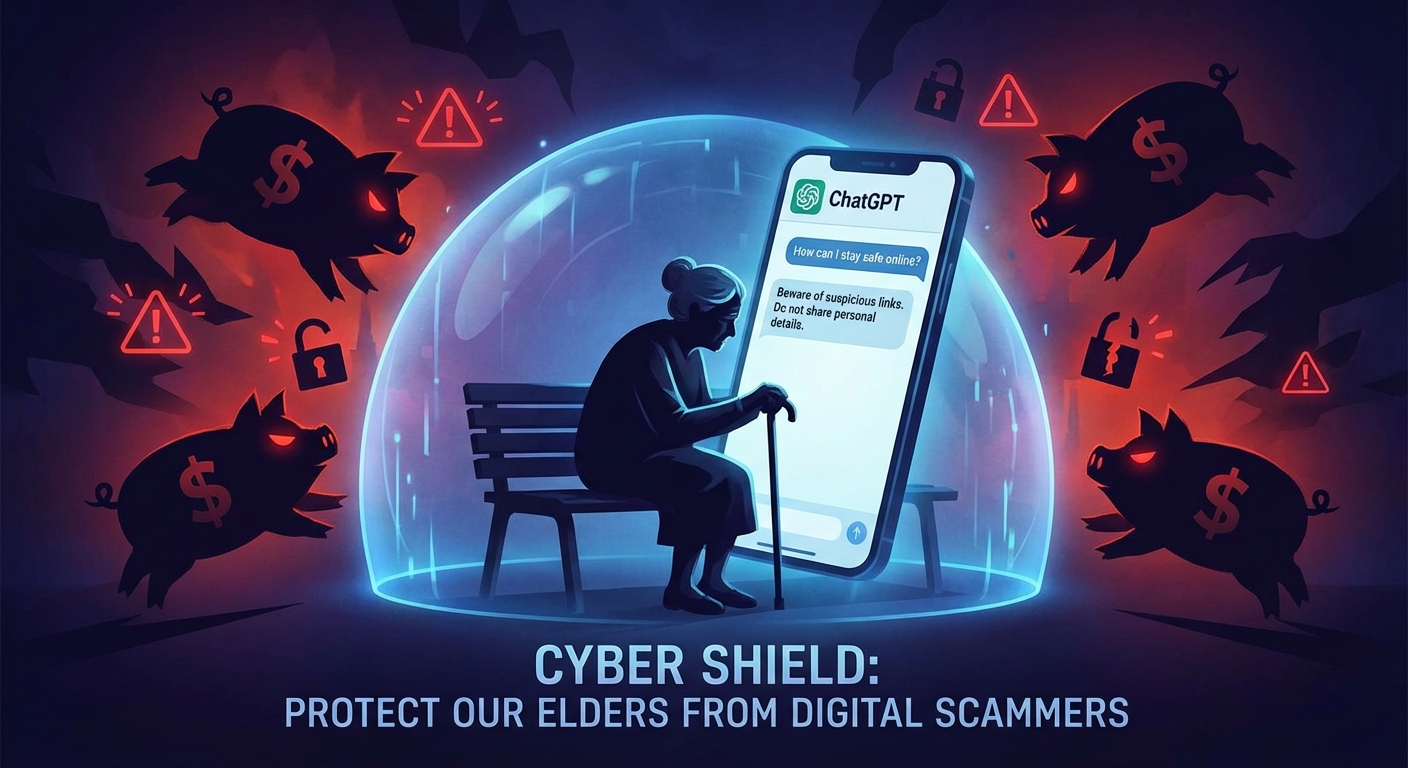
Desperate and confused by escalating “withdrawal fees,” the widow did something that would change everything: she asked ChatGPT to analyze her conversations with her supposed boyfriend.
She pasted the message history into the AI and asked for an honest assessment.
ChatGPT’s response was immediate and devastating. The AI identified multiple red flags:
- Love bombing patterns: Excessive affection disproportionate to the relationship timeline
- Investment pressure: Gradual escalation from romance to financial “opportunities”
- Urgency tactics: Artificial deadlines and limited-time opportunities
- Isolation attempts: Encouraging secrecy about the investment
- Scripted language: Phrases that appeared to come from templates rather than genuine conversation
“It was like someone turned on a light,” the victim later told investigators. “Everything ChatGPT pointed out was exactly what had happened to me. I just couldn’t see it when I was in it.”
Why This Matters: AI vs. AI Scams
There’s a certain poetry in artificial intelligence exposing a scam—especially since scammers increasingly use AI tools themselves:
- AI-generated profile photos that don’t appear in reverse image searches
- AI writing assistants that help non-native English speakers sound more natural
- Deepfake video for “proof of life” video calls
- Voice cloning for phone conversations
The same technology enabling sophisticated scams can also detect them. ChatGPT and similar AI tools excel at:
- Pattern recognition: Identifying manipulation tactics across many conversations
- Emotional distance: Analyzing objectively without the emotional investment that blinds victims
- Knowledge synthesis: Drawing on vast training data about known fraud techniques
How to Use AI to Protect Yourself
If you’re communicating with someone online and something feels off, consider asking an AI to analyze the conversation:
What to ask:
- “Analyze these messages for signs of romance scam tactics”
- “Does this conversation show patterns of manipulation?”
- “Are there red flags that suggest investment fraud?”
What to provide:
- Message history (copy and paste)
- Context about how you met
- Any investment “opportunities” mentioned
What to expect:
- AI will identify suspicious patterns
- It may recognize specific scam scripts
- It can point out manipulation tactics you might miss
The Pig Butchering Epidemic: By the Numbers
This isn’t an isolated case. Pig butchering has become a $4+ billion annual industry, according to TRM Labs blockchain analysis:
| Year | Estimated Losses (US) |
|---|---|
| 2022 | $429 million (reported) |
| 2023 | $1.4 billion (reported) |
| 2024 | $2.8 billion (reported) |
| 2025 | $4+ billion (estimated) |
Key statistics:
- Average victim loses $150,000-$200,000
- Victims skew older (55+) and recently bereaved
- Only ~7% of stolen crypto is ever recovered
- Scam compounds operate primarily in Myanmar, Cambodia, Laos, and UAE
The Dark Side: Trafficked Workers Running the Scams
In a tragic twist, many of the people actually sending these messages are themselves victims.
Pig butchering operations are frequently staffed by trafficked workers—people lured to Southeast Asia with promises of legitimate jobs, only to have their passports confiscated and be forced to scam others.
“You have victims on both sides of the screen,” noted one FBI investigator. “The person typing the messages may be a trafficking victim forced to work 16-hour days under threat of violence.”
This doesn’t make the financial devastation any less real, but it explains why simply arresting “the scammer” rarely solves the problem.
Red Flags: Protecting Yourself and Loved Ones
Relationship Red Flags
- They can never video chat (or use obvious filters)
- They claim to be military, oil rig workers, or overseas professionals
- The relationship escalates to “love” unusually fast
- They have excuses for why you can never meet in person
- They eventually mention investment opportunities
Investment Red Flags
- Guaranteed high returns with no risk
- Pressure to invest quickly
- Unfamiliar cryptocurrency platforms
- Difficulty withdrawing funds
- Requests for additional payments to “unlock” withdrawals
- They discourage you from telling family or financial advisors
What to Do If You Suspect a Scam
- Stop all communication immediately
- Don’t send more money—no amount will unlock previous funds
- Document everything—screenshots, wallet addresses, transaction records
- Report to authorities: FBI’s IC3 (ic3.gov), FTC (reportfraud.ftc.gov)
- Contact your bank about any traditional transfers
- Seek support—this is not your fault
Recovery: Is There Hope?
The DOJ has made significant strides in cryptocurrency recovery:
- $112 million seized in one 2024 operation
- Multiple wallet freezes in cooperation with exchanges
- International partnerships disrupting scam infrastructure
However, recovery remains difficult:
- Crypto moves quickly across multiple wallets
- Many scammers operate in countries with limited US cooperation
- Victims often delay reporting out of embarrassment
The best recovery is prevention. If you have elderly or recently widowed family members, talk to them about these scams—without judgment.
The Future: AI as Guardian
The San Jose widow’s story offers a glimpse of a potential future where AI serves as a digital guardian against manipulation.
Imagine:
- Dating apps that flag suspicious conversation patterns
- Banking apps that warn about investment scam characteristics
- Email filters trained on pig butchering scripts
Some of this already exists. The San Jose widow simply found a manual version—copy-pasting into ChatGPT.
But her story also carries a warning: scammers are using AI too. The next generation of pig butchering will feature even more convincing personas, harder-to-detect manipulation, and more sophisticated social engineering.
It’s an AI arms race, and the stakes are people’s life savings.
The Bottom Line
A San Jose widow lost nearly $1 million to a pig butchering scam before ChatGPT helped her see the truth. Her story is a reminder that:
- Anyone can be a victim—intelligence and education don’t protect against emotional manipulation
- AI can help—tools like ChatGPT can identify scam patterns we miss when emotionally invested
- The scale is massive—pig butchering is a $4+ billion industry with sophisticated operations
- Prevention is key—recovery rates remain low; awareness is the best defense
If something feels too good to be true—whether it’s a romantic connection or an investment opportunity—it probably is. And if you’re not sure, ask an AI. It might save you everything.
Resources
Report Scams:
- FBI Internet Crime Complaint Center: ic3.gov
- FTC Report Fraud: reportfraud.ftc.gov
- Secret Service: Local field office
Victim Support:
- AARP Fraud Watch Network: 877-908-3360
- National Domestic Violence Hotline: 1-800-799-7233 (for coercive control situations)
Learn More:
- TRM Labs Pig Butchering Reports
- FBI Public Service Announcements on Romance Scams
If you or someone you know has been affected by a romance or investment scam, know that you are not alone—and it is not your fault. Report it, seek support, and help others by sharing your story.