Executive Summary: The Heir to 419
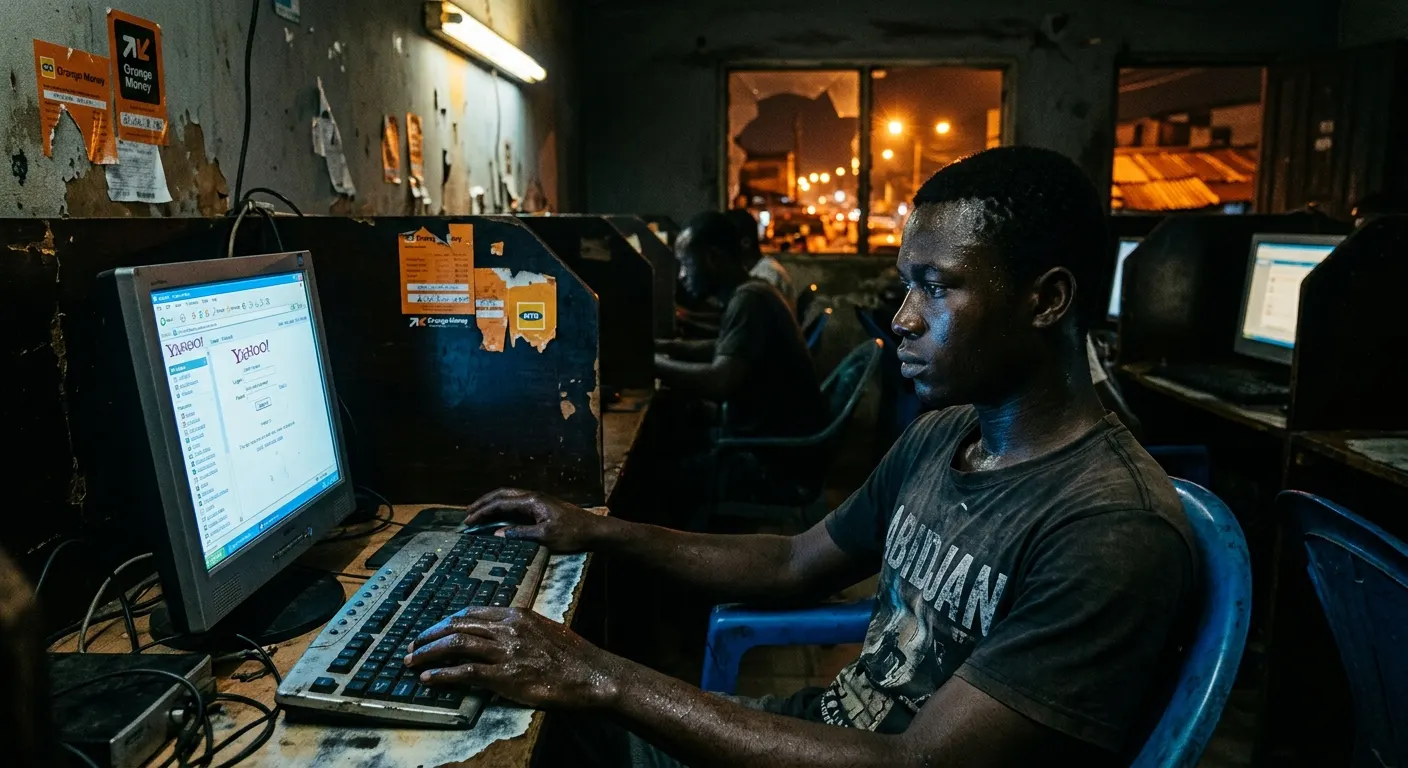
When people talk about West African internet fraud, they usually mean Nigeria. But for two decades, Côte d’Ivoire has quietly run a parallel operation — and in some respects a more modern one. Ivorian fraudsters have a name of their own: brouteurs, from the French for grazing animals, a slang term for young men who feed off foreigners online without ever leaving the cybercafé.
The brouteur economy began where the Nigerian 419 letter left off — advance-fee promises, fake inheritances, romance scams aimed at lonely Europeans. Academic research on Ivorian cyberfraud published in the Journal of Economic Criminology found these operations sit in an unusual middle ground: more structured than lone opportunists, less hierarchical than classic organised crime. They are networks of specialists — one man builds the fake profile, another launders through mobile money, a third supplies stolen photos — assembling and dissolving around individual jobs.
In 2026, that flexible structure has found its most profitable and most destructive product: sextortion.
The Case That Forced Abidjan’s Hand
In February 2022, Ryan Last, a 17-year-old high school senior in San Jose, California, took his own life hours after being sextorted online. The person he believed was a 20-year-old woman was, according to the US Justice Department, an Ivorian man named Alfred Kassi. Ryan had paid $150 to stop his intimate images from being sent to his contacts. It didn’t stop.
It took three years and an unusual piece of international police work to reach him. In late April 2025, Ivorian law enforcement arrested Kassi — and when they seized his phone, prosecutors say the messages he had sent Ryan in 2022 were still on it. Three more men were arrested in the same sweep: Oumarou Ouedraogo, accused of moving the money, and Moussa Diaby and Oumar Cisse, both alleged members of Kassi’s network who admitted to sextortion offences of their own.
The network is accused of targeting thousands of victims — including minors — across the United States, Canada, the United Kingdom, France, Spain and Italy. Because Côte d’Ivoire does not extradite its own citizens, all four will be prosecuted at home under Ivorian cybercrime law. That fact is the single most important thing to understand about Ivorian fraud enforcement: the country can and does arrest, but the trial happens in Abidjan or it doesn’t happen at all.
Why Sextortion Beat Romance Fraud
Sextortion is the brouteur trade optimised for speed. A traditional romance scam takes months of grooming for an uncertain payoff. Financially motivated sextortion takes an evening. The scripts are traded openly, the fake profiles are recycled, and the payment demands are deliberately small — $100, $150, $300 — priced at exactly what a teenager can move from a gift card or a payment app before a parent notices.
FinCEN’s advisory on financially motivated sextortion describes the pattern US banks are told to watch for: rapid small-dollar transfers from young account holders to prepaid cards, gift card codes, and peer-to-peer wallets, often at night, often followed by further transfers within hours. That last detail is the laundering layer — the Ouedraogo role — pushing money through mobile money accounts and remittance corridors until it lands in Abidjan.
The cruelty is the product. The scam doesn’t sell an investment or a relationship. It sells the promise that the shame will stop.
Operation Red Card 2.0: 58 Arrests Over Loan Apps
Sextortion is the export. Domestically, the fastest-growing Ivorian fraud is predatory mobile lending.
Between 8 December 2025 and 30 January 2026, INTERPOL ran Operation Red Card 2.0 across 16 African countries, producing 651 arrests and more than $4.3 million recovered. Côte d’Ivoire’s share was pointed: 58 suspects arrested in a crackdown on mobile loan fraud — deceptive lending apps that harvest a borrower’s contacts and photo gallery during installation, disburse a small loan, then extort repayment by threatening to message the victim’s entire address book.
It is sextortion’s logic applied to consumer credit: the leverage isn’t the debt, it’s the exposure. The operation as a whole targeted the infrastructure behind high-yield investment schemes, mobile money fraud, and fraudulent loan applications — the three pillars of the modern West African fraud stack.
The Mobile Money Problem
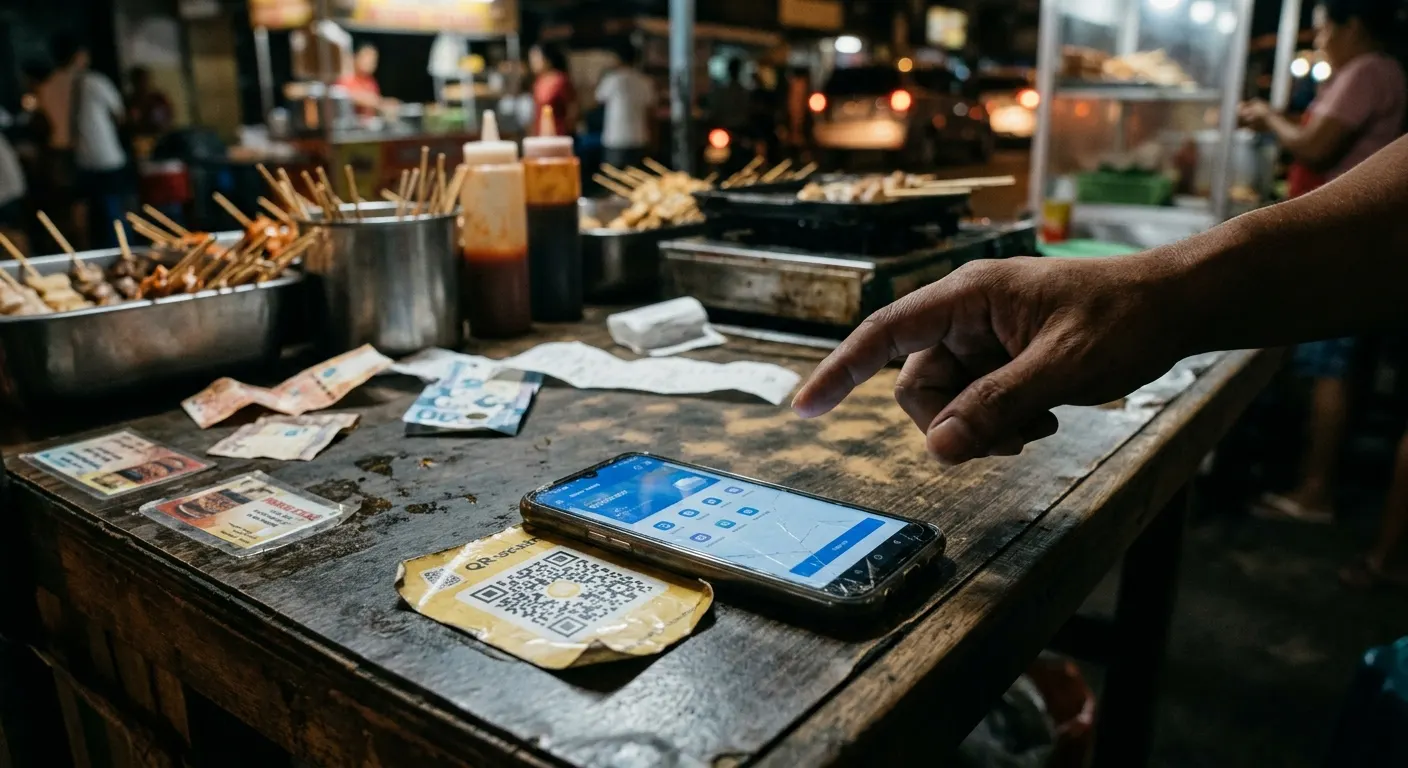
Côte d’Ivoire is one of West Africa’s most mobile-money-saturated economies, and that has been genuinely good for financial inclusion — and genuinely good for fraudsters. Mobile wallets give brouteur networks something the 419 era never had: instant, low-friction, semi-anonymous domestic settlement. Proceeds from a European romance victim or an American teenager can be converted, split across agent accounts, and cashed out through a chain of intermediaries faster than any bank wire could be recalled.
Common domestic variants include agent impersonation (“we detected a problem with your wallet, confirm your PIN”), fake winnings from telecom promotions, and reversal scams where a fraudster sends money “by mistake” and pressures the recipient into refunding it to a different number before the original transaction is cancelled.
Enforcement: Real, But Outmatched
Côte d’Ivoire has invested more in cybercrime policing than most of its neighbours — the country runs a dedicated cybercrime unit that takes complaints, has cooperated repeatedly with the FBI and French authorities, and has demonstrated in the Kassi case that it will move on foreign referrals. The 2026 Red Card results show the same willingness.
The constraint is arithmetic. A handful of investigators face a diffuse population of young men in cybercafés with no fixed hierarchy to decapitate, in a country where youth unemployment makes the trade an aspirational career rather than a shameful one. Arrest one node and the network reassembles around it.
Protecting Yourself
If you’re a parent, have the sextortion conversation before it happens. Tell your child explicitly: if someone threatens to share intimate images, you will not be in trouble, and paying makes it worse. Every documented case escalates after the first payment. Report to the NCMEC CyberTipline and the FBI at ic3.gov, and preserve the messages.
Never pay a sextortion demand. There is no version of this where paying ends it. Block, screenshot, report to the platform, and report to police.
Treat any romance contact who resists live video as fraudulent. Brouteur profiles run on stolen photos. Reverse-image search them. AI video is closing this gap, so also treat any request for money, crypto, or gift cards as disqualifying regardless of what you’ve seen on camera.
In Côte d’Ivoire — never install a loan app that demands contacts or gallery access. That permission request is the business model. Borrow only from licensed institutions, and report harassment to the cybercrime unit.
Verify mobile money the slow way. No legitimate agent or operator will ever ask for your PIN. If someone sends money “by mistake,” refund it through the operator’s formal reversal process, never to a phone number they give you.
Côte d’Ivoire didn’t invent West African internet fraud, and it won’t be the last country to host it. But the Kassi case established something that matters: a brouteur in Abidjan can now be arrested for what he did to a child eight time zones away. Slowly, and far too late — but it happened.