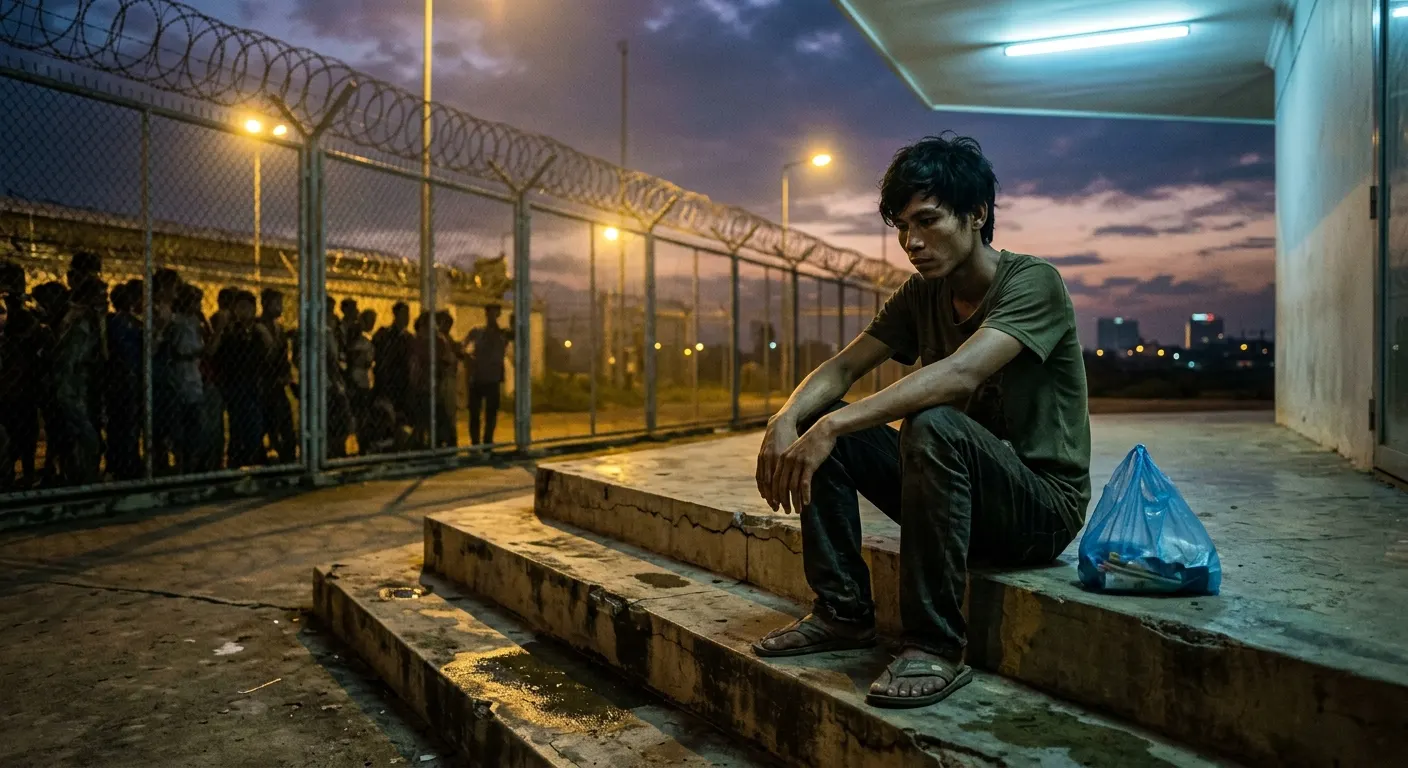
Inside fortified compounds along the Thai and Vietnamese borders, tens of thousands of workers — many of them enslaved — sit at computer banks running the world’s most lucrative fraud operation. The country is Cambodia. The industry is scamming. And the scale has become so enormous that the rest of the world has a new name for it: Scambodia.
A major investigative report published by the Wall Street Journal on April 20, 2026 lays bare the true scale of Cambodia’s cybercrime economy — a system so vast, so organized, and so deeply embedded in the country’s economic fabric that some foreign politicians and investigators now openly refer to the country as “Scambodia.”
This is not a story about a few criminals with laptops. This is industrial-scale fraud infrastructure, backed by Chinese organized crime, protected by local corruption, and generating billions of dollars a year from victims in the United States, Europe, Australia, and Asia.
The Geography of Deception
Cambodia’s scam geography is not random. The operations cluster in specific economic zones — officially designated areas with reduced regulatory oversight, often located near international borders where cross-jurisdiction enforcement is complicated.
The most significant zones are in Sihanoukville on the Gulf of Thailand — a city that has transformed from a sleepy beach town into a Chinese crime enclave — and in border regions like O’Smach and Bavet, where Cambodia’s porous frontiers with Thailand and Vietnam provide escape routes and jurisdictional complexity that protects operators.
These aren’t basements or warehouses. They are fortified campuses — multi-building complexes enclosed by high walls topped with razor wire, staffed by armed security, and equipped with industrial-grade internet infrastructure capable of running thousands of simultaneous fraud operations.
Investigators who have accessed or surveilled these compounds describe them as small cities. They have dormitories, canteens, medical facilities, and entertainment areas — all designed to keep workers inside. Because “inside” is where they are most valuable to the operators, and because many of them cannot leave.
Enslavement at Industrial Scale
The labor model driving Cambodia’s scam industry is human trafficking.
Recruiters — typically operating through social media and encrypted messaging apps — post fake job advertisements targeting young people across Southeast Asia, South Asia, Africa, and even Eastern Europe. The jobs are real-sounding: customer service representative, IT support specialist, digital marketing associate, data entry clerk. Salaries are attractive. Relocation assistance is offered.
Recruits travel to Cambodia, often legally. They are met at the airport and transported to a compound. Their passports are confiscated. And they are told they will work as scammers — targeting victims in their native language, in their home countries, running romance fraud, investment scams, or cryptocurrency theft operations.
Recruits who refuse are beaten, sold to other compounds, or ransomed back to their families — who must pay thousands of dollars for their release. Those who comply receive commissions that are partly paid in real money and partly used to reduce a fabricated “debt” — the cost of their transport, housing, and recruitment, which was never disclosed upfront.
The UN Office on Drugs and Crime estimates that over 100,000 people are currently trapped in scam operations across Cambodia and neighboring Myanmar — with hundreds of thousands more across the wider region including Laos and the Philippines.
The Chinese Syndicate Connection
The operations are predominantly run by Chinese criminal organizations. These syndicates — some with roots in traditional organized crime, others formed specifically around the cybercrime opportunity — operate what the WSJ describes as “franchised” fraud infrastructure.
The model is sophisticated. Syndicate leaders provide the compound, the internet infrastructure, the scripting and methodology, and the money-movement networks. Workers — either enslaved or semi-voluntary — are the labor force. Proceeds are laundered through a combination of cryptocurrency, shell companies in Southeast Asian financial hubs, and underground banking networks.
Local protection is an explicit line item in the business model. Cambodian officials at various levels of government have been documented receiving payments from compound operators. Police raids on facilities are often tipped off in advance. Workers who escape and report to authorities are sometimes returned to the compounds.
The scale of Chinese involvement is visible in Sihanoukville, where Chinese-language signage dominates entire neighborhoods, Chinese-owned casinos (many now closed, having been replaced by fraud operations) once drew millions of visitors, and local infrastructure has been rebuilt specifically to serve the Chinese criminal economy.
What Scammers Are Running From These Compounds
The fraud operations running out of Cambodian compounds are not primitive. They represent the cutting edge of organized cybercrime.
Pig butchering (sha zhu pan in Chinese — literally “slaughtering the pig”) is the signature product. Scammers build trust with targets over weeks or months through fake romantic or friendship relationships, then introduce them to fraudulent cryptocurrency investment platforms. The victim is shown fabricated profits, encouraged to invest more, and ultimately loses everything when the platform vanishes. Average losses per victim exceed $120,000.
Tech support and government impersonation scams run from dedicated desks staffed by workers with relevant language skills. Teams targeting Americans impersonate the IRS, Social Security Administration, or FBI. Teams targeting Australians impersonate the ATO or AFP. Scripts are professionally written and updated regularly to reflect current events.
Romance fraud without the investment angle — a simpler but still devastating operation running continuously via dating apps and social media platforms.
Cryptocurrency draining through approval phishing — convincing victims to authorize malicious blockchain transactions that hand scammers complete control of their wallets.
Each compound typically runs multiple operation types simultaneously, with workers rotated between desks based on language skill and performance.
Cambodia’s Legislative Response — and Its Limits
Cambodia’s National Assembly passed the country’s first comprehensive anti-scam law on April 3, 2026 — a significant legislative step that includes potential life sentences for compound operators.
Within days of passage, Cambodian authorities raided a luxury hotel in Phnom Penh, detaining 311 foreign nationals including 254 Chinese citizens in what investigators described as an urban cybercrime hub.
The law is real. The raids are real. But Cambodia’s track record of sustained enforcement against Chinese-operated compounds is weak. Previous crackdowns have resulted in temporary relocations — operations move across a border into Myanmar or Laos for months, then return. Prosecution rates for compound operators are vanishingly low. Workers who are “rescued” in raids often find themselves re-trafficked within weeks.
The fundamental problem is structural: the scam economy is genuinely large relative to Cambodia’s GDP. The UNODC estimates that fraud operations generate revenues equivalent to a meaningful percentage of the country’s entire formal economic output. Eliminating it is not just a law enforcement challenge — it is an economic disruption of a magnitude that Cambodia’s government has shown limited appetite to absorb.
What This Means for Victims in Your Country
If you are in the United States, UK, Australia, Canada, or any other English-speaking country — and you have ever received a contact from someone you didn’t know who built a relationship with you and eventually steered the conversation toward investment or cryptocurrency — there is a reasonable chance the person on the other end was sitting in a compound in Southeast Asia.
The “girlfriend” or “friend” you met on Instagram or WhatsApp may have been a script running on the phone of an enslaved worker in Sihanoukville. The investment platform that showed you consistent profits was almost certainly a fake website designed specifically to convince you to wire more money.
This is not a reason to stop using the internet or stop trusting people. It is a reason to understand the industrial infrastructure behind online fraud — because understanding it is the first line of defense.
Red Flags That You’re Talking to a Compound Scammer
- Contact initiated by a stranger on a platform where you don’t typically get cold contacts (Instagram, WhatsApp, LinkedIn)
- Unusually attractive profile photos (reverse image search these — many are stolen from real people)
- Rapid intimacy-building over messaging, resisting voice or video calls until a relationship is established
- Any conversation that eventually turns to investment, cryptocurrency, or a “once in a lifetime opportunity”
- A trading or investment platform you cannot independently verify with a Google search and real-world reviews
- Urgency to invest before a “window closes” or “special conditions expire”
What Governments Are Actually Doing
The United States, United Kingdom, and Australia have all issued formal travel advisories and warnings about scam compounds in Cambodia and the wider region. The US State Department has designated specific compound operations under sanctions authorities.
Interpol’s Operation Storm Makers series has resulted in hundreds of arrests and the identification of thousands of trafficking victims across Southeast Asia — but has not fundamentally disrupted the business model.
The WSJ investigation, and the growing use of the “Scambodia” label by international politicians and officials, reflects a hardening international consensus that Cambodia’s government needs to do more than pass laws and stage one-off raids. Whether that pressure translates into sustained enforcement — rather than temporary optics — remains the open question.
Report and Recover
If you or someone you know has been targeted by scammers you believe may be operating from compound facilities:
- US: FBI at ic3.gov or 1-800-CALL-FBI. For trafficking concerns: National Human Trafficking Hotline at 1-888-373-7888
- UK: Action Fraud at actionfraud.police.uk or 0300 123 2040
- Australia: ScamWatch at scamwatch.gov.au; Australian Federal Police at afp.gov.au
- Canada: Canadian Anti-Fraud Centre at antifraudcentre-centreantifraude.ca
If you’ve lost money to a pig butchering scam, cryptocurrency recovery services are almost universally additional scams. Legitimate recovery paths involve law enforcement and, in some jurisdictions, civil litigation — not private “fund recovery” companies that ask for upfront fees.