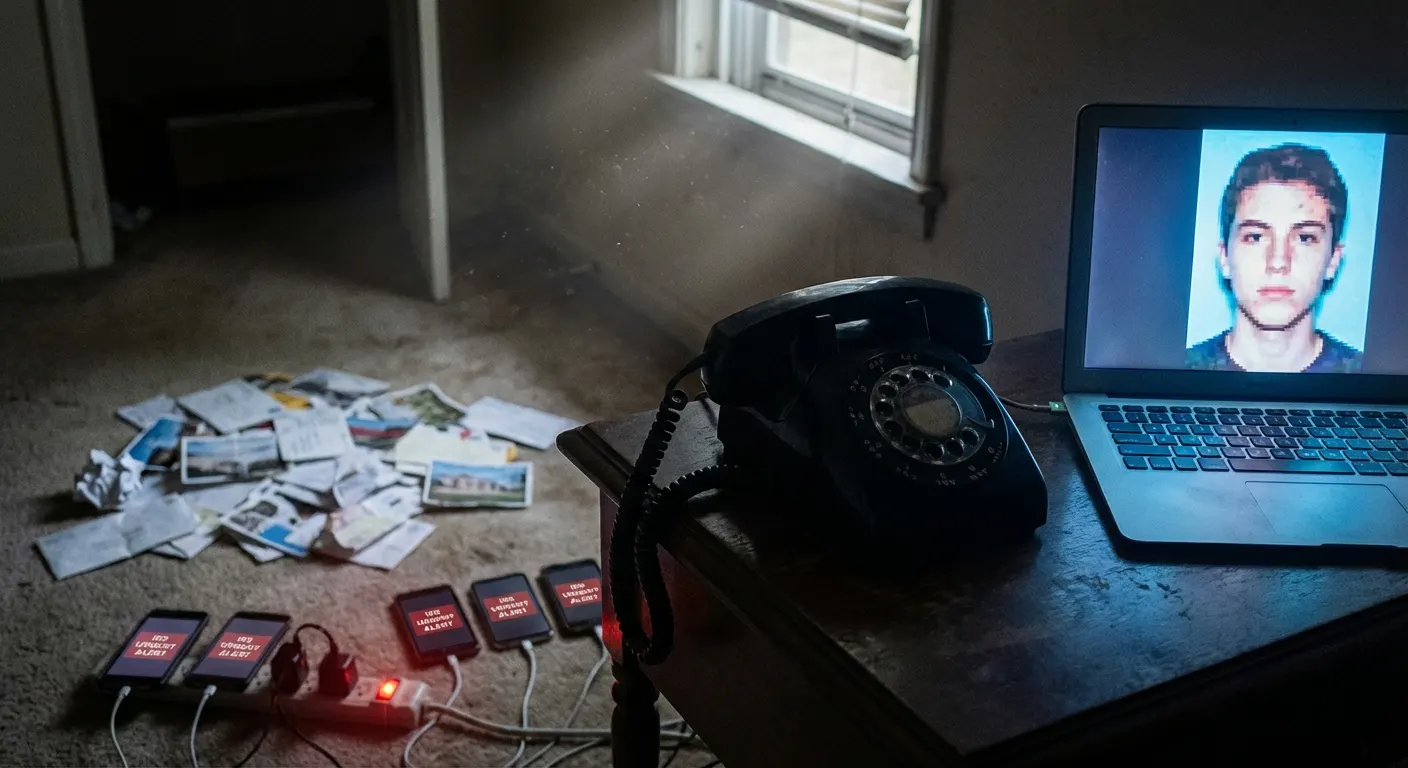
The St. Clair County Sheriff’s Office is alerting Michigan residents to three separate scams that have surfaced in recent weeks — each targeting a different type of victim.
What’s notable about this warning isn’t that any single scheme is unprecedented. Each of these scams has national precedent. What’s notable is that all three are running simultaneously in the same community — targeting seniors and retirees with mail and phone schemes, teenagers with AI-generated imagery, and taxpayers with fake IRS demands in the weeks before April 15.
Scam 1: “Unclaimed Rewards” Postcard Scheme
Some residents are receiving physical postcards in the mail claiming they have unclaimed rewards of over $100. The cards direct recipients to a website — membersagain.com — along with a phone number and a claim number to make it look legitimate.
When victims call or visit the site, they’re asked for banking or credit card information to cover a supposed “service fee” before their reward can be released. The reward never arrives. Instead, people are reporting unauthorized charges to their accounts.
Why the Physical Mail Approach Still Works
Mail-based scams survive because people assign more credibility to something that arrived in their physical mailbox. An email claiming you have unclaimed rewards is easy to dismiss — most people have been trained to be skeptical of those. But a printed postcard, with a specific claim number and a website? It feels real in a way a digital message doesn’t.
The technical sophistication required is minimal. Mass postcard printing and mailing services are cheap and widely available. The return on investment for scammers is high if even a small percentage of recipients call the number or visit the site.
The “service fee” is the core mechanism. Once you’ve provided banking information to pay a small fee, the scammers either make unauthorized withdrawals or sell your financial data. The supposed reward is never the point — it’s the pretense.
What to do: Throw away any postcard claiming you have unclaimed rewards that asks for financial information. No legitimate rewards program requires a fee to collect winnings. If you’re genuinely uncertain, search the program name independently — don’t use the website or phone number on the card.
Scam 2: AI-Generated Images Targeting Teenagers
Scammers are using artificial intelligence to generate realistic imagery involving minors — a predatory tactic used to initiate sextortion attempts. In these schemes, a scammer creates or obtains an explicit image (real or AI-generated) and contacts the teen threatening to share it unless they pay money or provide more images.
The Scope of This Threat
This is not a fringe phenomenon. The FBI has documented a dramatic increase in sextortion reports involving minors, and AI has significantly lowered the barrier to generating convincing imagery. A scammer no longer needs to obtain genuine images — they can generate realistic synthetic ones and use those as leverage.
The psychological impact on teenagers targeted by these schemes is severe. The threat of humiliating content being shared with peers, family members, or teachers creates a level of distress that makes victims feel they have no choice but to comply. This is the intended effect.
The AI-generated imagery component changes the legal and practical landscape in ways that are still evolving. Regardless of whether the image is real or synthetic, the extortion threat is real — and it should be treated as a serious crime.
The sheriff’s office is urging parents to talk to their teenagers about these threats and to monitor for unusual online contact from strangers.
Warning Signs for Parents
- Your teen receives unexpected messages from unknown contacts, particularly on gaming platforms, social media, or messaging apps
- Your teen seems distressed or withdrawn after online activity
- Requests for money, gift cards, or more images from someone online
- A teenager is being asked to keep a conversation secret from parents
- Unrecognized contact requests that your teen seems hesitant to discuss
The Escalation Pattern
These scams typically follow a pattern: initial contact → gradual introduction of explicit conversation or image exchange → acquisition of an image → escalating threats unless payment is made. Once a payment is made, demands typically increase rather than stop.
The single most effective response is to report immediately and not pay. Paying a sextortionist does not end the extortion — it confirms that the threat works and invites escalation.
What to do: If your child is targeted, do not pay. Contact local law enforcement and the National Center for Missing & Exploited Children at 1-800-THE-LOST (1-800-843-5678) or cybertipline.org. Also report to the FBI at ic3.gov.
For more on how AI is being weaponized in fraud: AI and Deepfake Scams: The Future of Fraud and How to Stay Safe
Scam 3: Fraudulent IRS Payment Demands
With tax season in full swing, residents are receiving calls demanding immediate IRS payments — often with threats of arrest, lawsuits, or license suspension if they don’t pay on the spot.
Why April Is Prime Season for IRS Scams
The proximity to the April 15 filing deadline creates conditions that scammers exploit deliberately. Taxpayers are already thinking about their taxes, may have pending questions about their returns, and are more susceptible to urgency-based messaging about tax obligations.
The IRS does not make threatening calls demanding immediate payment. The IRS initiates contact by mail, not phone — and it never demands gift cards, wire transfers, or cryptocurrency. But awareness of this fact is still not universal, and scammers count on reaching victims who don’t know these rules.
The 2026 tax scam environment is more sophisticated than prior years. According to a FTC warning issued on January 30, 2026, scammers are now offering to connect victims with “tax resolution officers” who can perform fake “red flag checks” and enroll them in fictional “IRS liability reduction programs.” These don’t exist — they’re designed to extract personal information or upfront fees.
AI has added a new dimension. Voice cloning technology now allows scammers to generate calls that sound like professional, authoritative IRS agents — with no foreign accent, no robotic cadence, and no obvious tells. The naturalness of the voice is itself a manipulation tool.
What the Numbers Show
Americans lost over $1.3 billion to imposter scams in the most recently reported full year. IRS and government impersonation schemes drove a significant portion of that total. The FTC has ranked phishing and IRS impersonation as the #1 threat on their annual “Dirty Dozen” scams list every year, including 2026.
Michigan residents are not anomalous here — these calls are running simultaneously in communities across the country. St. Clair County is simply one of the places where a local law enforcement agency is taking the step of issuing a public warning.
For a comprehensive overview of the current tax scam landscape: Tax Season 2026 Scam Alert: The Complete Guide to Protecting Yourself
The IRS: What It Actually Does
- Initiates nearly all contact via U.S. mail — not phone, text, or email
- Never demands immediate payment in a single phone call
- Never requires gift cards, wire transfers, or cryptocurrency as payment
- Provides written notices with specific amounts, tax years, and appeal rights
- Never threatens arrest in a phone call without prior written correspondence
If you receive a call demanding immediate IRS payment, hang up. If you think you might genuinely owe taxes, call the IRS directly at 1-800-829-1040 or visit irs.gov to check your account status. The IRS has an online account portal where you can see exactly what you owe, if anything.
What to do: Hang up. Report IRS impersonation calls at tigta.treasury.gov (the Treasury Inspector General for Tax Administration).
Also see: IRS Scams Are Evolving: The 5 Tax Season Tricks That Will Fool Even Smart People in 2026
Why Three Scams at Once?
The fact that St. Clair County is warning about three different schemes simultaneously isn’t coincidence. Scam operations are not monolithic — they run in parallel, each targeting different demographics with different methods.
Mail-based reward scams often target older adults and retirees, who are more accustomed to acting on physical mail. AI sextortion schemes target teenagers, who are active on social media and messaging platforms and vulnerable to social pressure. IRS demands target working-age adults and seniors during the window of maximum tax anxiety.
What scammers share across all three: they identify a specific emotional trigger for a specific population and construct a scheme designed to extract money before the victim can verify or reconsider.
Stay Vigilant
Three different scams. Three different victim profiles. The St. Clair County Sheriff’s Office is urging residents to stay alert and share these warnings with neighbors, friends, and family — especially elderly relatives and teenagers who may be most at risk.
A particularly important step: talk to your family. Seniors should know that rewards requiring fees are always fake. Teenagers should know that sextortion threats should be reported, not paid. Adults should know that the IRS never demands immediate payment by phone.
These conversations, happening now, can prevent real losses.
Track active scam alerts at ScamWatch HQ. Report fraud to the FTC at ReportFraud.ftc.gov.