If you’ve spent any time on Facebook, Instagram, or TikTok lately, you’ve probably seen them: ads promising incredible investment returns, “limited time” offers from what looks like your bank, or celebrity endorsements for products that seem too good to be true. That’s because they are. And according to leaked internal documents, social media companies know it—and have been profiting from it anyway.
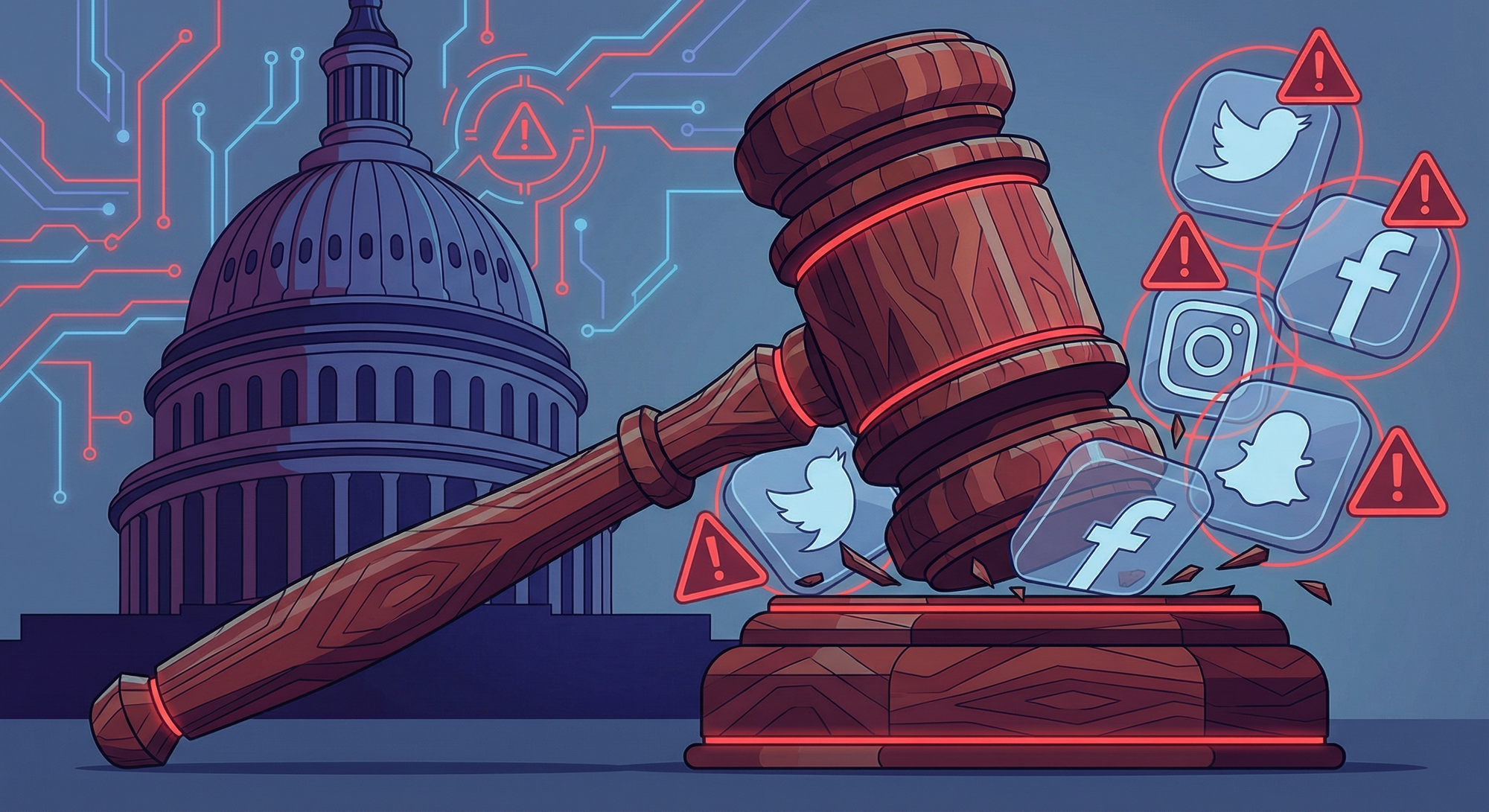
On February 4, 2026, something surprising happened in Congress: a Republican and a Democrat agreed on something. Senators Bernie Moreno (R-OH) and Ruben Gallego (D-AZ) introduced the Safeguarding Consumers from Advertising Misconduct Act—the SCAM Act—a bill designed to force social media platforms to actually do something about the fraudulent ads flooding their platforms.
But will this bill actually become law? And more importantly, what would it mean for regular people trying to navigate an increasingly dangerous online advertising landscape? Let’s break it down.
The Problem: Billions Lost to Social Media Scams
The numbers are staggering. According to the FTC data cited in the bill itself, Americans lost an estimated $196 billion to fraud in 2024 (adjusted for underreporting). That’s not a typo—that’s nearly $200 billion. Of that amount, an estimated $81.5 billion was stolen from seniors.
A significant portion of these scams originate from or are promoted through social media advertising. Bank impersonation scams have become particularly sophisticated. In June 2025, security researchers documented Instagram ads impersonating major Canadian banks like Bank of Montreal (BMO) and EQ Bank. These weren’t crude operations—they featured deepfake videos of real bank executives and directed victims to typosquatted domains that looked nearly identical to legitimate banking websites.
The scammers’ playbook is disturbingly effective:
- Create a professional-looking ad impersonating a trusted brand2. Target vulnerable demographics using the platform’s own advertising tools3. Collect banking credentials through convincing fake login pages4. Empty accounts before victims realize what happened
And here’s the uncomfortable truth: the platforms make money every step of the way.
The Bombshell: Meta’s $16 Billion Problem
The SCAM Act didn’t emerge from nowhere. Its introduction directly followed a Reuters investigation in November 2025 that revealed internal Meta documents showing the company expected to earn 10% of its 2024 revenue—approximately $16 billion—from ads for scams and other illicit products.
According to the reporting, Meta’s internal systems tracked fraudulent advertising but the company was reluctant to crack down too aggressively because of the revenue impact. Managers were allegedly told not to take any action that could cost Meta more than 0.15% of its total revenue. Small fraudsters reportedly weren’t blocked until their ads were flagged at least eight times. Bigger spenders allegedly racked up 500 or more strikes without being removed.
Meta has disputed these characterizations, claiming its internal statistics “overestimated” the proportion of revenue from problematic ads. A company spokesperson told reporters, “We aggressively fight fraud and scams because people on our platforms don’t want this content, legitimate advertisers don’t want it and we don’t want it either.”
But the damage was done. Senators Hawley and Blumenthal called for FTC and SEC investigations. And now, Senators Moreno and Gallego have proposed legislation to address the problem directly.
What the SCAM Act Actually Does
So what would the bill require? Here are the key provisions:
1. Advertiser Verification Requirements
Platforms would be required to verify the government-issued identification of advertisers or confirm the “legal existence” of businesses before allowing them to run ads. This is a significant change from the current system, where setting up an ad account often requires little more than a credit card.
2. “Reasonable Steps” to Prevent Fraud
The bill requires platforms to take “reasonable steps” to combat fraudulent advertising. While this language is deliberately somewhat vague (to account for evolving scam tactics), it establishes a baseline expectation that platforms must actively work to prevent fraud—not just respond after the damage is done.
3. Prompt Response to Reports
When users or government entities report scam ads, platforms would be required to promptly review and act on those reports. No more letting flagged content linger while it continues to victimize people.
4. FTC and State Attorney General Enforcement
Here’s where the bill gets teeth. Non-compliance would be treated as a violation of the FTC’s prohibition on unfair or deceptive business practices. Both the FTC and state attorneys general would have authority to bring civil actions against platforms that fail to meet their obligations.
5. Section 230 Limitations
Perhaps most significantly, the bill explicitly limits Section 230 immunity in this context. Section 230 of the Communications Decency Act has long shielded online platforms from liability for content posted by users. The SCAM Act carves out an exception for paid advertising, essentially saying: if you’re making money from running an ad, you can’t hide behind Section 230 when that ad turns out to be fraudulent.
What the SCAM Act Doesn’t Do
It’s important to be clear about the bill’s limitations:
It Won’t Stop All Scams
No legislation can eliminate fraud entirely. Scammers are creative and adaptive. The SCAM Act creates incentives for platforms to do better, but determined fraudsters will continue to find ways around verification systems.
It Doesn’t Create a Private Right of Action
Individual consumers can’t sue platforms directly under this bill. Enforcement is limited to the FTC and state attorneys general. If you lose money to a scam ad, you still won’t be able to take Facebook to court yourself.
It Focuses on Advertising, Not All Content
The bill specifically targets paid advertising. Scams that spread through organic posts, private messages, or other non-advertising channels wouldn’t be covered.
”Reasonable Steps” is Deliberately Vague
The bill doesn’t mandate specific technologies or verification methods. While this flexibility might help the law adapt to new scam techniques, it also gives platforms significant latitude in how they comply—and creative lawyers significant latitude to argue their clients are already doing enough.
Who Supports the Bill?
The SCAM Act has attracted unusual support from organizations that don’t always agree:
Banking Industry: The American Bankers Association (ABA) quickly endorsed the bill, calling it “a critical new weapon in the fight against fraud and scams.” The ABA letter specifically highlighted how bank impersonation scams exploit the trust consumers place in financial institutions.
Consumer Advocacy Groups: AARP endorsed the bill, noting that “online scam ads have become increasingly sophisticated and pervasive, with criminals exploiting advertising on major social media platforms to target older adults.” The National Consumers League and Consumer Federation of America also expressed support.
State Banking Associations: Both the Arizona Bankers Association and Ohio Bankers League (representing the home states of the bill’s sponsors) issued statements of support.
The backing from both the banking industry and consumer advocates is significant. These groups often find themselves on opposite sides of financial regulation debates. Their alignment here reflects genuine concern about the scope of the fraud problem.
Who’s Likely to Oppose It?
While no major tech companies have issued formal opposition statements yet, the bill’s prospects will likely depend on industry response:
Social Media Platforms: Meta, Google (which owns YouTube), TikTok, and other platforms have historically resisted mandatory advertiser verification requirements. A Reuters report in December 2025 revealed that Meta had developed a global “regulatory playbook” seeking to halt or delay such regulations.
Advertising Industry: Requirements that slow down the process of placing ads or increase verification costs may face resistance from the broader advertising ecosystem.
Free Speech Advocates: Some groups may argue that verification requirements could chill legitimate speech or create barriers for small businesses trying to advertise online.
Will It Actually Pass?
Here’s where we need to get realistic. The SCAM Act has several factors working in its favor:
Bipartisan Sponsorship: In today’s polarized Congress, getting a Republican and Democrat to agree on anything is an achievement. Senator Moreno is a first-term Republican; Senator Gallego is a newly-elected Democrat. Their collaboration suggests the issue could transcend partisan divides.
Broad Coalition Support: Having both the banking industry and consumer advocates on the same side gives the bill credibility with both parties.
Post-Investigation Momentum: The Reuters exposé provided concrete evidence of the problem—and specific numbers ($16 billion) that make for effective talking points.
Protecting Seniors Narrative: With $81.5 billion in estimated fraud losses among seniors, supporters can frame this as protecting vulnerable populations—a message that resonates across the political spectrum.
However, significant obstacles remain:
Tech Industry Lobbying Power: Social media companies spend heavily on lobbying and have successfully blocked or weakened similar efforts in the past.
Section 230 Complexity: Any bill that touches Section 230 immediately becomes more complicated. The law has passionate defenders and critics on both sides of the aisle, and modifications tend to get tangled in broader debates about online speech and platform responsibility.
Congressional Priorities: Even popular bills can languish if they’re not leadership priorities. The 119th Congress has a full agenda, and it’s unclear whether this bill will get the floor time it needs.
Industry-Friendly Alternatives: Watch for industry groups to propose “voluntary” measures or alternative legislation that appears to address the problem while preserving more of the status quo.
Our assessment: The SCAM Act has better odds than most tech regulation bills, but passage is far from certain. The bipartisan sponsorship and coalition support give it a fighting chance. If it advances through committee and gets a floor vote, it could pass. But many bills with similar promise have died in the legislative process.
What You Can Do Right Now
Whether or not the SCAM Act becomes law, you need to protect yourself:
1. Verify Independently Never click links in social media ads to access your bank or financial services. Instead, navigate directly to your bank’s website by typing the address yourself, or use your bank’s official app.
2. Be Skeptical of “Too Good to Be True” Offers If an ad promises unusually high returns, exclusive access, or urgent limited-time deals, treat it with extreme suspicion.
3. Check Advertiser Accounts Before engaging with any ad, click through to the advertiser’s profile. Legitimate businesses typically have established pages with history. Scam accounts often have minimal followers, no posts, or were created recently.
4. Report Scam Ads Every report helps. Even if platforms don’t always act quickly, documented reports create paper trails that regulators can use.
5. Enable Multi-Factor Authentication Protect your accounts so that even if you accidentally enter credentials on a fake site, attackers still can’t access your accounts.
6. Talk to Vulnerable Family Members Seniors are disproportionately targeted. Have conversations with elderly relatives about social media scams and establish verification protocols for financial requests.
The Bottom Line
The SCAM Act represents Congress’s most serious attempt yet to address the flood of fraudulent advertising on social media platforms. Its bipartisan sponsorship and diverse coalition of supporters suggest genuine momentum behind holding platforms accountable for the ads they profit from.
Will it become law? Maybe. The obstacles are real, and the tech industry’s lobbying operation is formidable. But the sheer scale of the problem—$196 billion in annual fraud losses—creates pressure for action.
In the meantime, scammers aren’t waiting for Congress. They’re refining their techniques, creating more convincing deepfakes, and targeting new victims every day. Legislative solutions matter, but your best defense remains vigilance, skepticism, and good security hygiene.
We’ll be tracking the SCAM Act’s progress through Congress. Subscribe to Scam Watch HQ for updates as this legislation moves forward—or fails to.
Have you encountered bank impersonation scams or fraudulent ads on social media? Share your experience in the comments. Your stories help others recognize these scams before they become victims.