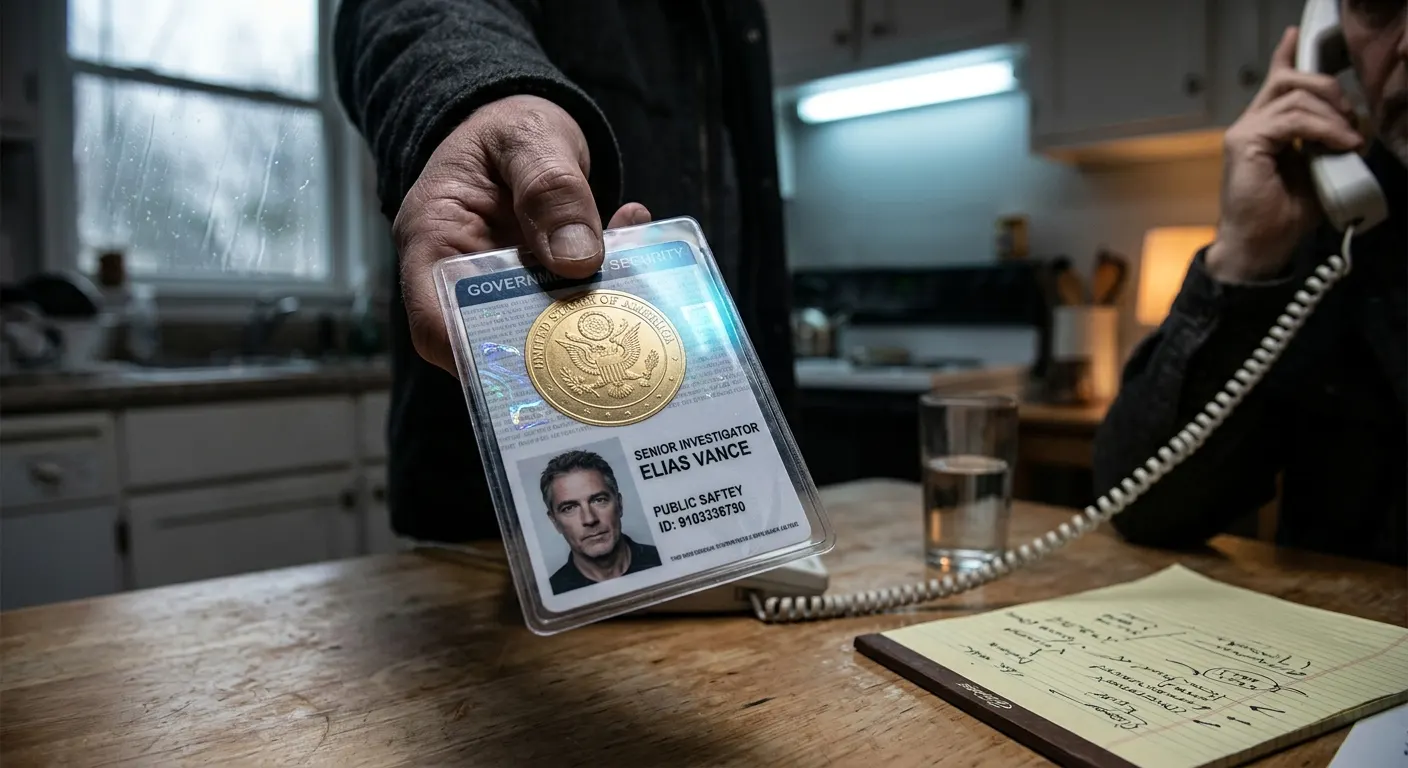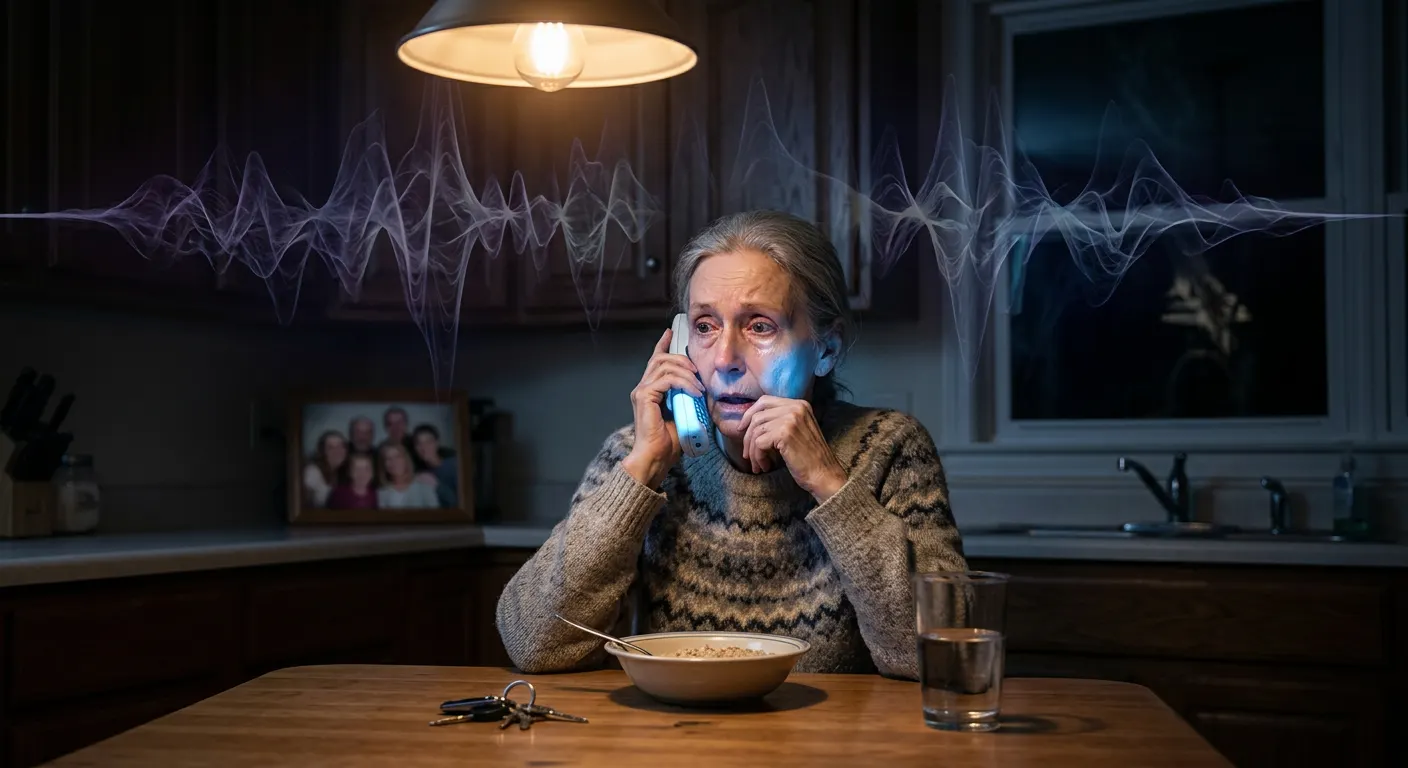
The phone call sounds exactly like your son. He’s panicked, his voice cracking. He’s been in a car accident. He needs money wired immediately. He doesn’t have time to explain — just please send the money.
It is not your son. It is an AI.
Voice phishing — known as vishing — has become one of the fastest-growing and most financially destructive forms of fraud in America, and the numbers from 2024 through 2026 mark a genuine escalation. The attacks are more frequent, more convincing, and more expensive than they have ever been. The primary driver is a technology that most people have heard of but don’t fully understand as a threat: AI voice cloning.
The Numbers Behind the Surge
The growth in vishing attacks is not gradual. It is explosive.
According to data compiled from cybersecurity threat intelligence sources, voice phishing attacks surged 442% comparing the second half of 2024 to the first half of the same year. At the start of 2024, researchers were logging roughly two vishing incidents per month at the enterprise level. By December 2024, that number had reached 93 per month — a near-fifty-fold increase within a single calendar year.
Scale that to the national consumer level, and the volume becomes almost incomprehensible: Americans receive approximately 2.56 billion scam calls every month in 2025. Of all adults in the United States, 68% receive at least one scam call every week. 31% receive them daily.
The financial trajectory is equally stark. Generative AI-enabled fraud losses — driven heavily by voice cloning — are projected to reach $40 billion by 2027. Organizations that suffer a major vishing attack face an average recovery cost of $1.5 million. Financial institutions specifically report losing an average of $600,000 per vishing attack. Across all sectors, organizations lose an estimated $14 million annually to vishing.
Of individuals targeted with AI-powered voice phishing, 77% lost money. The median loss per victim is $1,400. Less than 5% of stolen funds are ever recovered.
How AI Voice Cloning Works
The technology that makes modern vishing so effective is not theoretical or expensive. It is cheap, accessible, and frighteningly capable.
AI voice cloning works by training a machine learning model on audio samples of a target’s voice — and the required sample is now vanishingly small. Modern AI can clone a voice convincingly from just three seconds of audio. That three seconds might come from a voicemail, a YouTube video, a social media post, a podcast appearance, or any other publicly available recording.
Once cloned, the AI voice can be made to say anything. It can be scripted to respond to a conversation in real time. It can express emotion — panic, urgency, relief, warmth. It can do this at 3 a.m. when your guard is down, at 2 p.m. when you’re in the middle of a workday, at any moment chosen by the operator running the attack.
The realism is documented in the data. In studies examining AI-generated voice interactions, 68.33% of victims found bot voice interactions to be realistic. 46.25% perceived the attackers as credible and trustworthy. Even trained human listeners miss the fact that audio is AI-generated 27% of the time.
This is not a technology that produces obvious fakes. It produces near-identical replicas. The “just listen carefully and you’ll notice” advice that circulated a few years ago no longer holds.
The Tactics That Make Vishing Work
The technology is only part of the story. What makes vishing attacks consistently effective is the combination of technical convincingness with sophisticated psychological manipulation.
Researchers analyzing vishing attack patterns found that:
- 95.3% of attacks exploit authority compliance — the caller claims to be from the IRS, Social Security Administration, Medicare, a bank, law enforcement, or another institution the target is conditioned to obey
- 90.7% use social proof — suggesting that the situation is standard, normal, or already understood by others
- 89.5% employ distraction tactics — creating urgency, time pressure, or emotional arousal that interferes with the target’s ability to think critically
The combination of an AI-generated voice that sounds like someone you trust and a psychological script designed to short-circuit rational evaluation is particularly effective. A call that sounds like your bank’s fraud prevention team, delivered in a voice that matches recordings you’ve interacted with, creating urgent time pressure around a plausible scenario — this is not easy to resist in real time.
Perhaps most disturbing: 39% of vishing victims report that the callers already knew their home address. This is not guesswork. Scam operators use data brokers, previous breach data, and scraped social media profiles to build target profiles before making contact. The call that includes your address, employer, or a reference to a recent purchase is not a lucky guess. It is researched.
Who Is Getting Hit
The demographic breakdown of vishing victims runs against some common assumptions.
Young adults (18–34) are three times more likely than older adults to lose money to voice scams. This mirrors findings from the F-Secure report on scam trends generally: digital fluency does not translate into scam resistance. Young adults are more frequently on the phone, more likely to engage with unfamiliar numbers, and more likely to assume that their own sophistication protects them.
By industry, the most targeted professionals are:
- Manufacturing and engineering — 19.2% of vishing attacks
- Customer support roles — 11.5% victimized rate
Customer support workers are particularly vulnerable because their job function literally requires them to engage with strangers over the phone and provide assistance — including account access, credential resets, and financial authorizations.
70% of organizations have been victims of a successful vishing attack. 6.5% of employees, when tested, will give sensitive information to a vishing caller. Despite advance warnings, 33% of employees still disclosed sensitive data — suggesting that awareness alone, without structural change, does not solve the problem.
The Infrastructure Enabling It
The vishing surge is not just about better technology. It is about a failure of the underlying communications infrastructure.
Despite federal requirements to install anti-robocall technology, only 44% of phone companies have fully deployed the required STIR/SHAKEN call authentication systems. These systems are designed to verify that calls are originating from the numbers they claim to come from — the technical foundation of caller ID fraud prevention. The fact that less than half of phone companies have implemented them means that spoofed caller IDs remain trivially easy to operate at scale.
Scam operators can place a call that appears to come from the IRS, your bank, or a local phone number with no technical barriers. The phone network was not designed to prevent this, and the voluntary compliance rate with solutions that address it is insufficient.
Deepfake Vishing: The Next Level
Beyond voice cloning, a subset of vishing attacks has escalated to full deepfake video calls — where the perpetrator appears on screen as a person the target knows and trusts.
Deepfake-enabled vishing attacks surged more than 1,600% in Q1 2025 compared to Q4 2024, according to cybersecurity researchers. These attacks require more resources to execute but yield significantly higher losses because the visual component dramatically increases the target’s confidence that the interaction is genuine.
The Arup case — in which a finance employee was deceived by a video call featuring what appeared to be the company’s CFO and other colleagues, resulting in $25 million in wire transfers — is the documented high-water mark. But the 1,600% growth rate suggests that what was a technically sophisticated attack in early 2025 is becoming a more accessible capability throughout 2026.
How to Protect Yourself
The combination of AI voice cloning, psychological manipulation, and spoofed caller IDs creates a threat that cannot be defeated by vigilance alone. But there are specific, structural responses that substantially reduce risk.
Establish a family safe word. Agree on a word or phrase with immediate family members that can be used to verify identity in an emergency call. A scammer controlling an AI voice does not know your family’s safe word. This is the single most effective countermeasure against grandparent scams and family emergency fraud.
Never act on urgency created by an inbound call. Legitimate institutions — banks, the IRS, Social Security, law enforcement — do not call you and demand immediate action. If a caller creates pressure to act immediately, that pressure is itself the manipulation. Hang up and call the institution back using a number from their official website.
Assume caller ID is unreliable. A call appearing to come from your bank, the IRS, or a local number may be completely spoofed. The displayed number is not evidence of the caller’s identity.
Use out-of-band verification for any financial request. If someone calls and asks you to approve, authorize, or initiate any financial transaction — regardless of who they claim to be — end the call and verify through a second, independent channel before doing anything.
Report scam calls. File reports at ftc.gov/complaint and forward suspicious texts to 7726 (SPAM). The 2.56 billion monthly scam calls Americans receive are possible in part because reporting rates remain extremely low, which limits enforcement action.
The 442% surge in vishing is not a temporary spike. It is the early curve of a sustained growth trajectory driven by technology that gets better and cheaper with each passing month. The response — from individuals, institutions, and the phone network itself — needs to scale accordingly.
If you received a suspicious call, report it to the FTC at ftc.gov/complaint or call 1-877-382-4357.