A 62% Jump, and We’re Only Half Way Through
The Better Business Bureau’s Scam Tracker has recorded more than 81,000 scam reports so far in 2026 — a 62% increase over the same point in 2025. That is not a gentle upward drift. It is the steepest year-over-year rise the tracker has seen, and it is happening in a year when consumer awareness of fraud is arguably higher than it has ever been.
The BBB’s own explanation is blunt: advances in artificial intelligence are making scams harder to detect, allowing fraudsters to rapidly produce convincing messages, websites, and documents. What used to be the tell — the broken English, the pixelated logo, the site that looked like it was built in 2009 — has been engineered out of the problem.
Scam Tracker is a self-reported database, so the raw number understates reality by an enormous margin; most people who lose money never file anywhere. But the trend line is meaningful precisely because reporting behaviour hasn’t changed much. More people are encountering more convincing scams.
Employment Fraud: The Category That Doubled
The clearest signal in the data is job scams. BBB Scam Tracker recorded 22,000 employment scam complaints in 2025, up from just 11,000 in 2024 — a doubling in a single year. Through 2026 the category has kept climbing, and the BBB has issued a specific warning about a surge in AI-driven job fraud.
The mechanics have changed in ways that matter. Where a fake job offer once arrived as a mass email, the 2026 version begins on a legitimate-looking listing on a real job board, moves to a scheduled “interview” conducted over a chat app or an AI-voiced video call, and ends with a formal-looking offer letter carrying a real company’s branding. The fraud lands at the onboarding step: a request for a Social Security number and bank details for “direct deposit setup,” a check to deposit and forward for “home office equipment,” or a fee for training or certification.
Generative AI has removed every friction point in that chain. Job descriptions, recruiter personas, interview scripts, offer letters, and company websites can all be produced in minutes, at scale, in fluent English, targeted at a specific industry.
Adjacent to this sits the task scam — the gamified “rate products, earn commissions” fraud that BBB has been tracking through 2026, where victims are paid small amounts early and then required to deposit their own money to “unlock” higher-tier tasks.
Weight-Loss Fraud Gets a Synthetic Makeover
The BBB has also flagged a sharp rise in weight-loss scams, and here AI is doing something more specific than writing better copy.
Fraudulent supplement sellers are generating synthetic before-and-after imagery — photorealistic transformations of people who don’t exist — alongside AI-voiced testimonial videos and fabricated clinical claims. Some campaigns go further and clone the likeness or voice of doctors and celebrities to front the endorsement. The product, when it arrives at all, is an unregulated capsule; the real business is often a subscription trap that keeps billing after the “one-time trial.”
Two things make this category unusually effective. Demand is high and emotionally loaded, and the surrounding legitimate market — genuine prescription weight-loss drugs — has created enormous consumer confusion about what is real, what is compounded, and what can lawfully be sold online.
Holiday Merchandise: The Fourth of July Spike
Scam Tracker complaints tied to the Fourth of July skyrocketed in the weeks before the holiday, the BBB reported. The bulk concerned merchandise advertised online and never delivered: American flags, 250th anniversary banners, and other patriotic goods promoted through social media ads at prices that undercut every legitimate retailer.
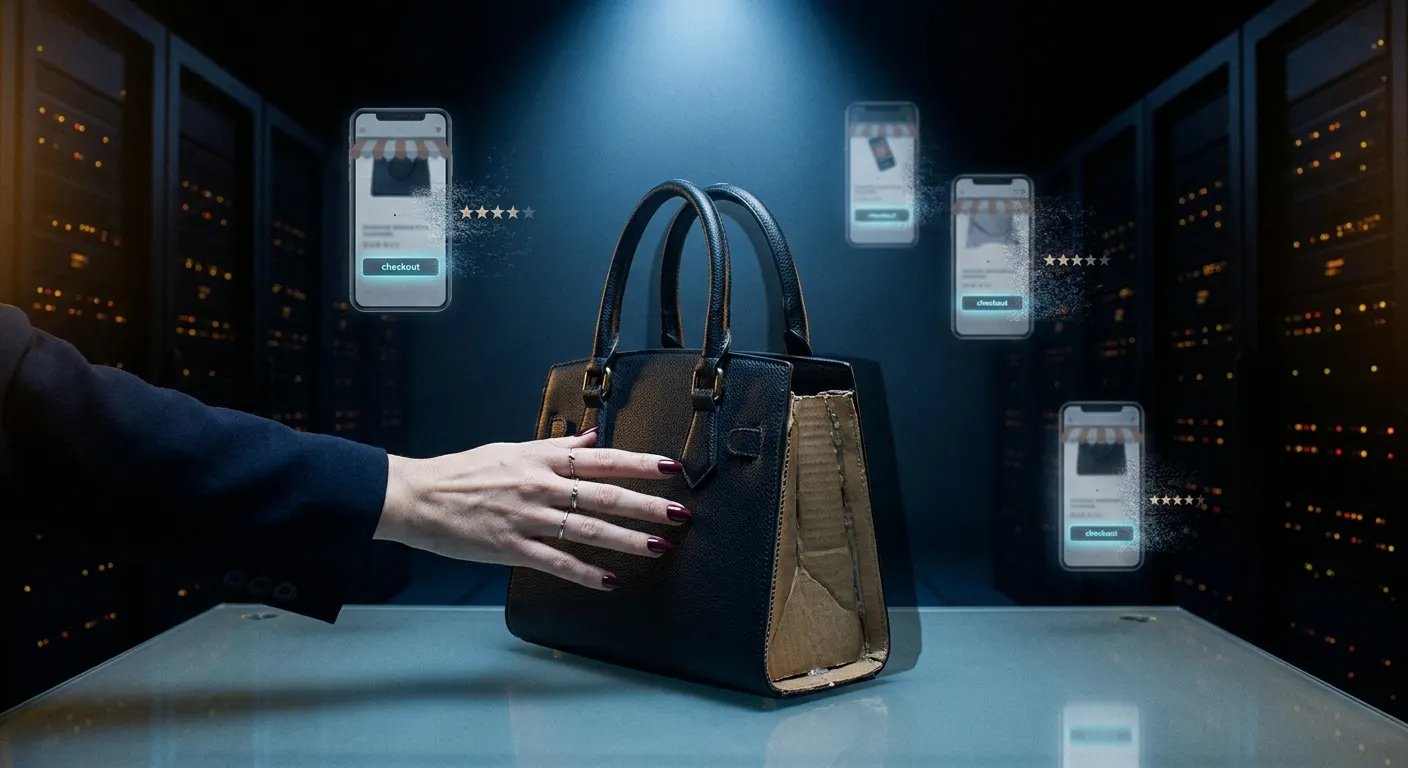
This is the seasonal pattern the BBB sees around every major holiday and event, and it is worth naming plainly because it is entirely predictable. A national moment creates a burst of specific demand; fraudulent storefronts spin up to meet it; the goods never ship; the storefront disappears before the chargebacks land. The 2026 twist is that the product photography, the store, and the ad copy are all AI-generated, so the operation costs almost nothing to stand up and can be replicated hundreds of times.
Why the Old Advice Is Failing
For twenty years, consumer fraud education has taught people to look for surface defects. Spelling errors. Odd grammar. Low-resolution logos. Generic greetings. Every one of those signals has now been automated away.
What has not changed is the underlying structure of a scam, and that is where attention has to move:
- Money flows in an unusual direction (you pay to get a job, you pay to get a refund, you deposit a check and forward part of it).
- The payment method is irreversible (gift cards, crypto, wire, peer-to-peer apps).
- There is manufactured urgency and a reason not to check with anyone else.
- The relationship started with an inbound contact you didn’t initiate.
Those four hold regardless of how polished the presentation is.
Protecting Yourself
Verify a job offer through the company, not through the recruiter. Look up the employer’s real careers page and phone number independently. A genuine employer will confirm that the role and the recruiter exist. No legitimate employer asks you to pay for equipment, training, or a background check, or sends you a check to deposit and forward.
Never give a Social Security number or bank details before you have verified the employer independently — and be sceptical of any hiring process that never involves a live, unscheduled human conversation.
Treat “before and after” images and testimonial videos as worthless evidence. They cost nothing to fabricate. For anything health-related, check whether the seller makes disease or guaranteed-outcome claims — that alone is a legal red flag — and talk to a pharmacist or clinician before buying.
Read the billing terms on any trial offer. Subscription traps are the most common weight-loss fraud outcome. If the cancellation terms aren’t clearly stated, assume they’re hostile.
Buy holiday and event merchandise from retailers you already know. If you find a seller through a social media ad, search the store name plus “scam” and check how long the domain has existed before entering a card number. Use a credit card — its chargeback rights are stronger than a debit card’s or a payment app’s.
Report it, even if you didn’t lose money. BBB Scam Tracker, the FTC at reportfraud.ftc.gov, and the FBI’s IC3 all build the pattern data that drives enforcement. That 62% figure exists because people filed.
The scams themselves aren’t new. What’s new is that producing a convincing one no longer requires skill, time, or money — and the reporting numbers are the first place that shows up.