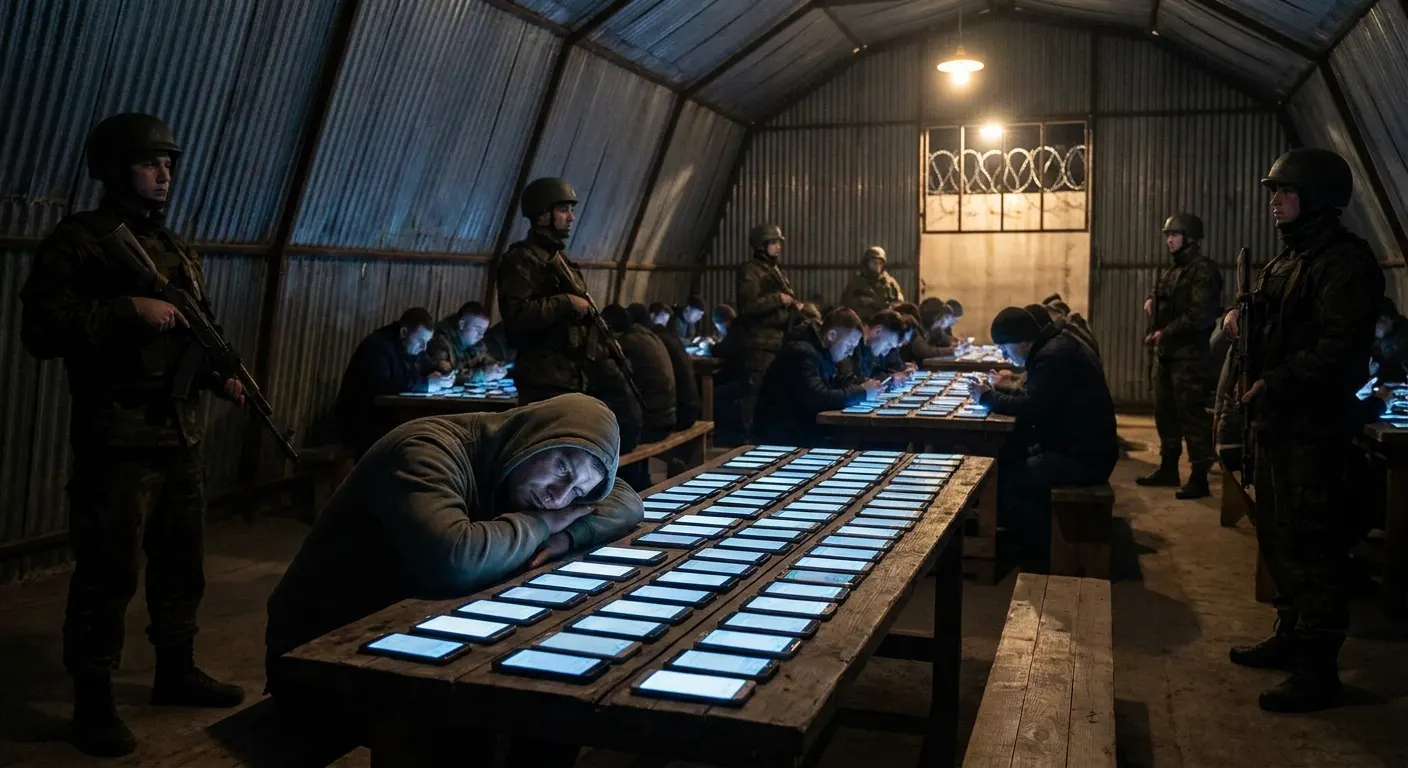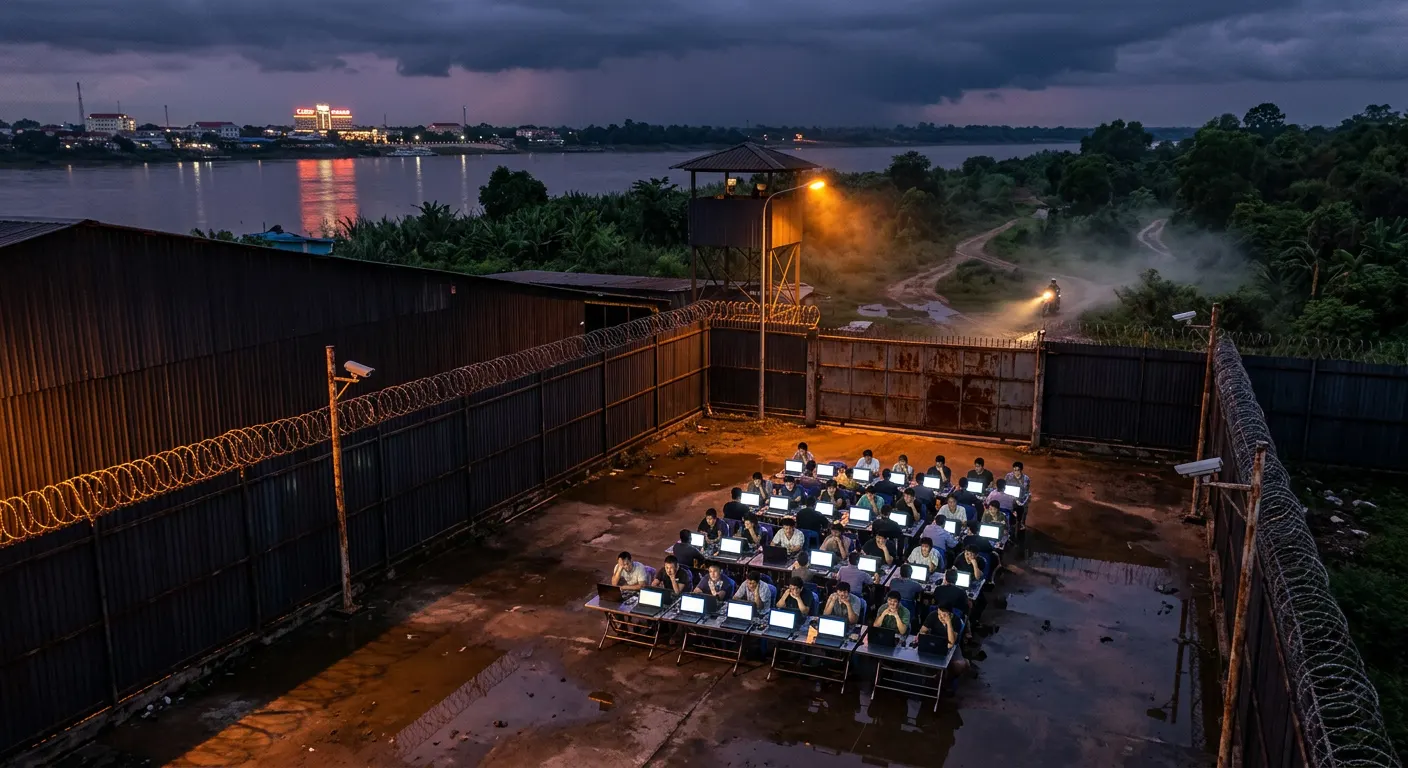
When we first reported on Cambodia’s transformation into “Scambodia” — a country where billion-dollar fraud infrastructure had become embedded in the national economy — the question was whether enforcement would ever match the scale of the problem. In April 2026, the answer is becoming clearer: under unprecedented pressure from China, Cambodia has shut 91 casinos, deported 13,000 people from 33 countries, watched nearly a quarter-million more voluntarily flee, and enacted a new criminal law with sentences extending to life imprisonment. This is not the Cambodia of two years ago.
The April 26 casino closures are the most visible single action, but they are one data point in a sustained enforcement surge that began accelerating in mid-2025. Understanding what has changed — and what hasn’t — requires looking at the full picture of Cambodia’s evolving relationship with its scam compound industry.
The Casino Shutdowns: 91 Fronts Exposed
Cambodia’s Gaming Control Committee ordered the closure of 91 casinos identified as either directly operating online fraud schemes or facilitating scam networks through money laundering, accommodation, or infrastructure services.
Casinos have been a preferred operational cover for scam compounds in Cambodia for years. The legitimate gambling industry provides a plausible explanation for cash flows, telecommunications infrastructure, and the presence of large numbers of foreign nationals — all of which are also central to running fraud operations. The overlap between casino licensing and scam compound operation has been documented by researchers, journalists, and law enforcement across multiple investigations.
The 91 closures represent a significant escalation from previous enforcement actions, which had largely targeted individual facilities or specific operators. A coordinated shutdown of this many licensed establishments signals that the Cambodian government is willing to accept economic disruption in the gambling sector to demonstrate enforcement credibility.
The Numbers Behind the Crackdown
The casino closures headline a nine-month enforcement campaign whose full scope is striking:
- 250+ scam centre raids conducted across Cambodia since mid-2025
- 13,039 foreign nationals deported from 33 nationalities with links to online scam operations
- 241,888 people voluntarily departed Cambodia between mid-January and April 19, 2026 as enforcement tightened — a staggering figure that suggests the broader network of scam compound workers, operators, and support personnel recognized that the operating environment had fundamentally changed
The voluntary departures are particularly significant. Scam compound operations require large numbers of workers — fraud operators, technology staff, recruiters, security personnel, money mule handlers. When nearly a quarter-million people connected to this ecosystem leave the country voluntarily within three months, it represents a collapse of operational capacity at scale that no number of individual arrests could achieve.
The New Law: Life Imprisonment for Fatal Operations
Cambodia’s new Law on Combating Online Scams came into force on April 6, 2026. Its penalty structure is among the most severe of any cybercrime legislation in Southeast Asia:
- Ringleaders: 5–10 years imprisonment, rising to 10–20 years in cases involving violence, human trafficking, illegal detention, or forced labor
- Lower-level participants: 2–5 years imprisonment
- Operators whose scams result in fatalities: 15–30 years or life imprisonment
The inclusion of a life imprisonment provision for fatal outcomes is significant. Deaths connected to scam compounds have been documented — primarily among trafficked workers subjected to physical violence — and the legal framework now treats the most extreme cases on par with violent crime rather than financial fraud.
The law also establishes new provisions for asset seizure, international cooperation, and the criminal liability of financial institutions that knowingly facilitate scam proceeds.
China’s Hand: The Wang Yi Factor
The timing of the enforcement escalation is not entirely attributable to Cambodian initiative. Chinese Foreign Minister Wang Yi visited Phnom Penh on April 22 — four days before the casino closures — and met with Prime Minister Hun Manet. During the meeting, Wang explicitly urged Cambodia to take stronger action against cross-border gambling and online fraud, stating that such networks posed “a serious threat to public safety.”
China’s pressure on Cambodia reflects a domestic political reality: a significant portion of the fraud victims targeted by Cambodian-based scam compounds are Chinese nationals, and Chinese citizens constitute a substantial share of the trafficked workers held in those compounds. The Chinese government’s tolerance for scam compound operations in neighboring countries has diminished as domestic political pressure from families of trafficking victims has grown.
This dynamic — Beijing pressing Southeast Asian governments to crack down on operations that victimize Chinese citizens — has been the single most effective driver of enforcement action across the region. Myanmar’s seizure of the Shunda Park compound was similarly preceded by Chinese diplomatic pressure.
The calculation for Cambodia’s government is straightforward: the economic value of the scam compound industry must now be weighed against the risk of deteriorating relations with China, Cambodia’s most important economic partner. That equation has shifted.
What Hasn’t Changed
It would be premature to declare Scambodia’s transformation complete. Several structural realities complicate the enforcement picture:
Relocation, not dissolution. Documented scam compound operations do not cease when one country cracks down — they relocate. The surge in enforcement in Cambodia has coincided with reports of increasing scam compound activity in Laos, Myanmar’s remaining ungoverned zones, and parts of the Philippines. The industry has proven itself highly mobile.
Corruption remains endemic. Cambodia’s enforcement credibility is constrained by the documented complicity of local officials in protecting scam compound operations over many years. Law enforcement campaigns driven by top-level political pressure can achieve results, but they require sustained institutional commitment to outlast the political moment that generated them.
Economic dependency. For local communities in areas where scam compounds operate, the industry has represented significant economic activity — employment, infrastructure investment, consumer spending. Replacement economic activity does not materialize automatically when compounds are shut.
The operators adapt. The most sophisticated compound operators — those who run the largest operations and generate the most profit — have resources, legal infrastructure, and political connections that make them harder to displace than the mid-level operators who bear the brunt of raid operations.
Why This Matters for Victims Worldwide
For Americans, Australians, Europeans, and Asians who have lost money to pig-butchering scams, romance fraud, and fake investment platforms run from Cambodian compounds, the enforcement escalation is meaningful — but the path to individual recovery remains extremely limited.
Asset seizures and repatriation in fraud cases are complex, slow, and typically distributed through court processes that favor earlier-filed claims. The DOJ’s operation against the Myanmar Shunda Park compound — announced the same week — restrained $700 million in cryptocurrency, but the process of identifying victims, adjudicating claims, and distributing funds takes years.
What the Cambodian crackdown does achieve is disruption of ongoing operations — reducing the number of active scammers targeting new victims, disrupting the recruitment pipelines that supply compound workers, and raising the cost of operating in Cambodia sufficiently to slow expansion.
For a full picture of how Cambodia became Scambodia and what the industry looks like from the inside, read our earlier deep-dive: Scambodia: How Cambodia Became the World’s Largest Scam Factory.
Sources: AGB Brief · GGRAsia · Xinhua · Travel and Tour World · Nation Thailand