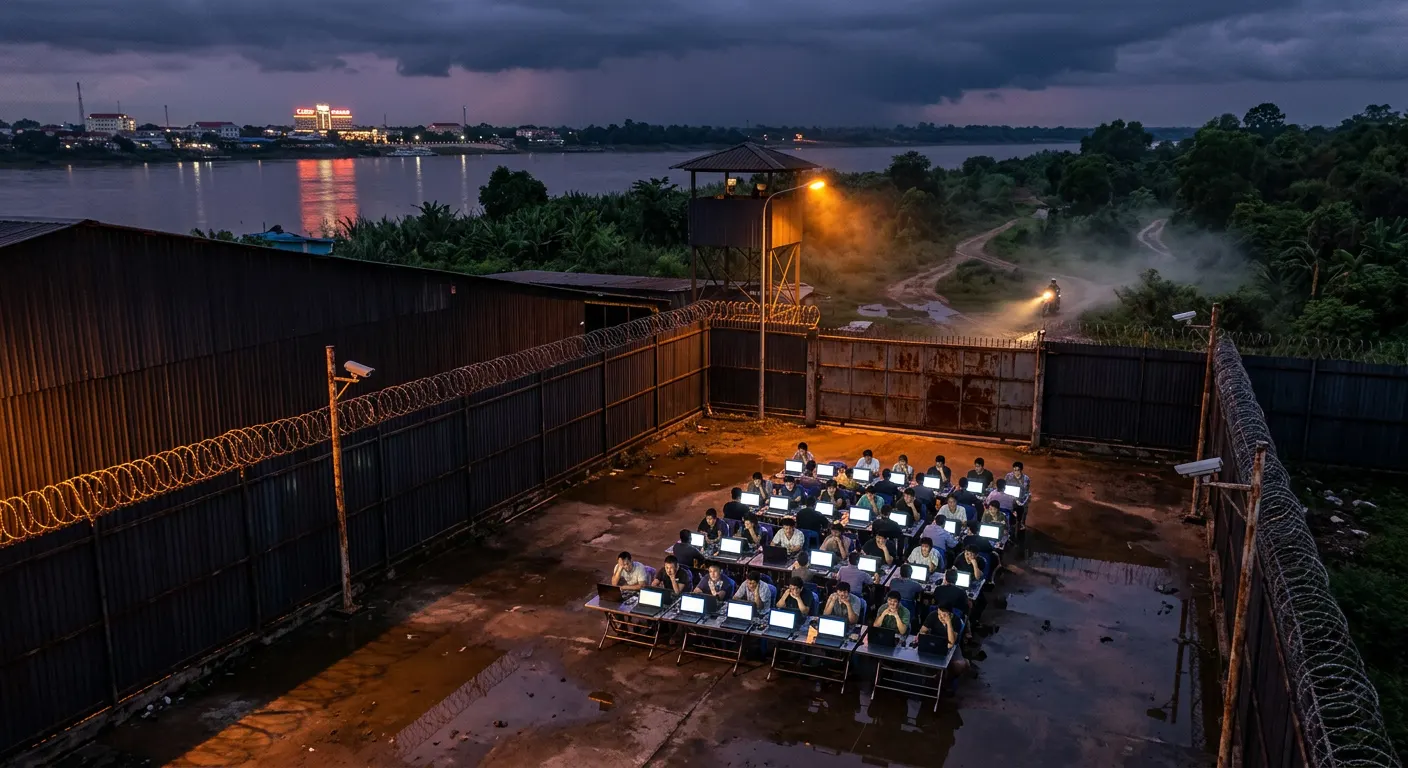
If you measured the fight against global fraud purely by press releases, the first half of 2026 would look like the year the good guys finally won. Coordinated takedowns on four continents. The largest healthcare fraud sweep in U.S. history. Record cryptocurrency seizures. Scam compounds bulldozed, malware infrastructure seized, and — in China — death sentences carried out against scam-center bosses.
And yet the money keeps flowing the wrong way. The Global Anti-Scam Alliance estimates $442 billion lost to scams across just the 42 countries it surveys, with 23% of adults reporting they lost money in the past year. The FBI’s IC3 logged a record $20 billion in reported U.S. cybercrime losses for 2025. Fraud is now, by most measures, the single largest category of crime on Earth.
At the year’s halfway mark, it’s worth taking stock of both columns of the ledger.
The Enforcement Wave: Arrests and Takedowns
January set the tone with new machinery, not just new cases. The Department of Justice stood up its Scam Center Strike Force to target the Southeast Asian compound industry, followed by a new National Fraud Enforcement Division — which promptly announced back-to-back “weeks of fraud enforcement” in May representing nearly $1 billion each in combined actions, plus $300 million in new prosecutorial funding.
February belonged to INTERPOL and the money trail. Operation Ramz, the first MENA-focused cybercrime operation of its kind, produced 201 arrests across thirteen Middle Eastern and North African countries, identified nearly 3,900 victims, and seized 53 servers. The same month, the DOJ seized $61 million in Tether traced to pig-butchering wallets — a warm-up for the record $225 million crypto seizure tied to global pig-butchering networks that followed.
Spring brought the compound war to the operators themselves. In April and May, an FBI-coordinated effort with the Dubai Police and China’s Ministry of Public Security — the largest of its kind — dismantled at least nine scam centers and arrested 276 people, with alleged managers and recruiters for the operations charged in San Diego. Europol and Eurojust took down an Albanian call-centre network that employed up to 450 workers in specialized departments and caused at least €50 million in damage across Europe.
Late May’s “Disruption Week” previewed a new model entirely. The DOJ’s Scam Center Strike Force convened the FBI, Secret Service, and foreign police alongside Apple, Google, Meta, Microsoft, Coinbase, and SpaceX — and in four days the group disrupted more than 1.4 million scam-linked social media and email accounts, froze $3.8 million in crypto, and triggered arrests in Thailand. Not a prosecution — an eviction, at platform scale.
June closed the half with two hammers. The 2026 National Health Care Fraud Takedown charged 455 defendants — 90 of them doctors and licensed professionals — over $6.5 billion in alleged fraud, seizing $182 million in assets, with fugitives extradited from Cyprus, Estonia, and the Philippines. And on June 24, Operation Endgame struck again: Europol-coordinated police seized the infrastructure behind the StealC and Amadey infostealers, recovering some 27 million stolen credentials and freezing €41 million in criminal crypto — draining, at least temporarily, one of the wells that feeds account-takeover fraud worldwide.
The Compound Economy Under Pressure
Southeast Asia’s scam industry absorbed its hardest year of blows — and kept operating. Cambodia’s crackdown, launched in mid-2025, had by spring 2026 closed more than 250 scam centres, produced over 1,000 criminal cases, and deported more than 13,000 foreign nationals. China prosecuted the Myanmar border clans and carried out executions of convicted scam-centre bosses — an escalation without precedent in fraud enforcement.
But the industry is mobile in a way law enforcement is not. Human rights monitors reported in late June that more than 5,300 trafficked people remain captive in Myanmar’s compounds. Amnesty International found evidence of state intervention at only about a quarter of Cambodia’s identified compound sites, and documented managers simply trucking their captive workforces to new locations when raids came. Operations are seeding new ground in Laos’s Golden Triangle, the Pacific, the Middle East, and Africa. The compounds aren’t dying; they’re metastasizing.
Why Losses Keep Rising Anyway
The supply side is industrializing faster than it’s being dismantled. Three dynamics explain the gap between record enforcement and record losses:
AI has removed the craftsmanship barrier. The FBI counted more than $893 million in AI-related fraud losses in 2025, and researchers now attribute roughly 11% of global fraudulent activity to deepfake-assisted schemes. Voice cloning has turned the grandparent scam into a production line; deepfake video has done the same for investment fraud and CEO impersonation.
Stolen data compounds. Every infostealer infection, every breach — travel companies, health systems, telecoms — feeds targeting engines that make the next scam more persuasive. That’s why the Endgame credential recovery matters: 27 million credentials is 27 million future account takeovers pre-empted. But the pipeline refills.
Fraud is a jobs program for organized crime. UN officials described the March UNODC-INTERPOL Global Fraud Summit as “a global wake-up call to organized fraud” — cartels, triads, and militia economies have all diversified into scamming because it out-earns drugs at lower risk. Enforcement raises the cost of doing business; it hasn’t yet made the business unprofitable.
And victims of the crackdowns themselves are falling through the cracks. The tens of thousands of trafficked workers freed from compounds since mid-2025 — many coerced into scamming under threat of torture — face detention, deportation delays, and in some cases prosecution in the countries that “rescued” them. NPR and Amnesty International both documented survivors of Cambodia’s raids left without repatriation support, a humanitarian gap that gives the industry its recruiting pitch: nobody is coming to help you either way.
The Second Half of 2026
Watch three things between now and December. First, whether Disruption Week becomes a rhythm — platform-scale account purges repeated quarterly would change scammers’ operating costs more than any single prosecution. Second, whether the Myanmar and Cambodia compounds face sustained regional pressure or another round of relocation theater. Third, the regulatory front: anti-fraud laws that force banks, telecoms, and platforms to eat scam losses — the model pioneered in the UK, Singapore, Australia, and now Taiwan — are the quiet structural change that makes prevention someone’s balance-sheet problem.
Protecting Yourself
Enforcement is winning battles; you still have to not be the easy target. The mid-year fundamentals haven’t changed: treat every unsolicited contact — call, text, DM, email — as unverified, no matter how much it knows about you. Never move money on the instruction of someone who contacted you first. Assume any investment opportunity that arrived through a stranger, a dating app, or a social media ad is a pig-butchering front. Use unique passwords and a password manager, because infostealers make reused passwords a liability across your whole life. And talk to your family — especially older relatives — about voice cloning and the family code word, before the crying call comes.
The scammers had a hard six months. Make sure they have a harder six ahead — starting with your own front door.