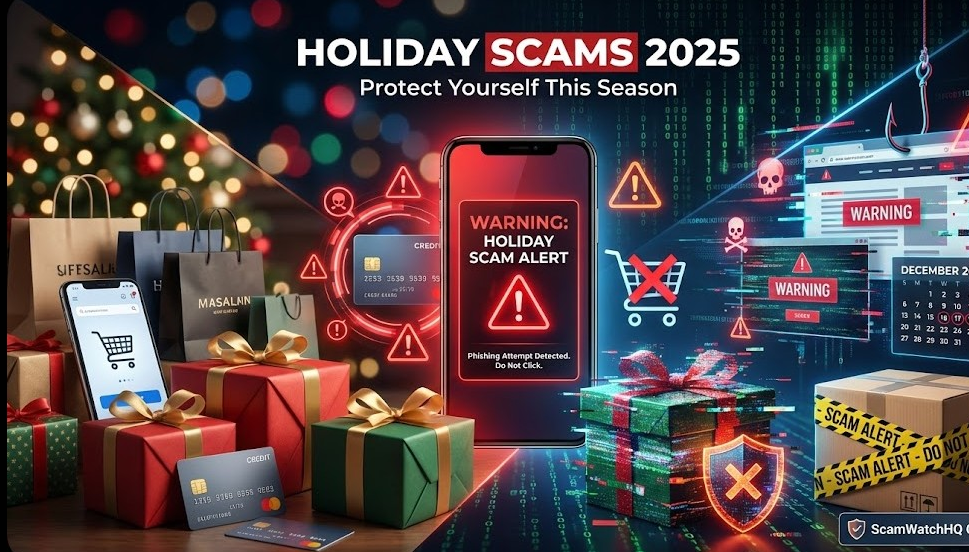
With less than two weeks until Christmas, scammers are working overtime to exploit rushed holiday shoppers. This year’s scams are more sophisticated than ever, powered by AI technology that makes fake websites and phishing emails frighteningly believable. Here’s everything you need to know to protect yourself this season.
Holiday Scams to Watch Out For: Timing and Tactics Scammers Use to Target You EarlyAs the holiday season approaches, excitement for celebrations, shopping, travel, and gift-giving fills the air. Unfortunately, scammers see this time of year as a golden opportunity to exploit the increased online activity, emotional engagement, and financial transactions. Holiday scams often begin much earlier than the actual holiday, catching people off-guard ScamWatchHQScamWatchHQ

The State of Holiday Fraud in 2025
The numbers are staggering: Americans lost over $101 billion to returns fraud and abuse in 2023, with package delivery scams accounting for $470 million in text-based scams alone. This holiday season brings unprecedented risks:
- 89% of Americans report being targeted by or experiencing some type of scam- Fake postal service websites surged 86% in the past month- USPS impersonation sites increased 850% month-over-month- Half of consumers (51%) encounter scams on social media every week- Credit card fraud cost consumers $199 million in 2024
Generative AI has made scams look more legitimate than ever, with criminals using the technology to create realistic phishing emails, clone legitimate websites, and even produce deepfake video ads featuring celebrities.
Home Winterization Scams: Don’t Let Fraudsters Leave You in the ColdThe Season of Vulnerability As autumn leaves fall and temperatures drop, homeowners across the country begin their annual ritual of preparing for winter. This seasonal transition brings legitimate concerns about heating costs, home maintenance, and weather protection. Unfortunately, it also brings something far more sinister: a wave of scammers who ScamWatchHQScamWatchHQ
1. Online Shopping & Fake Website Scams
The Threat
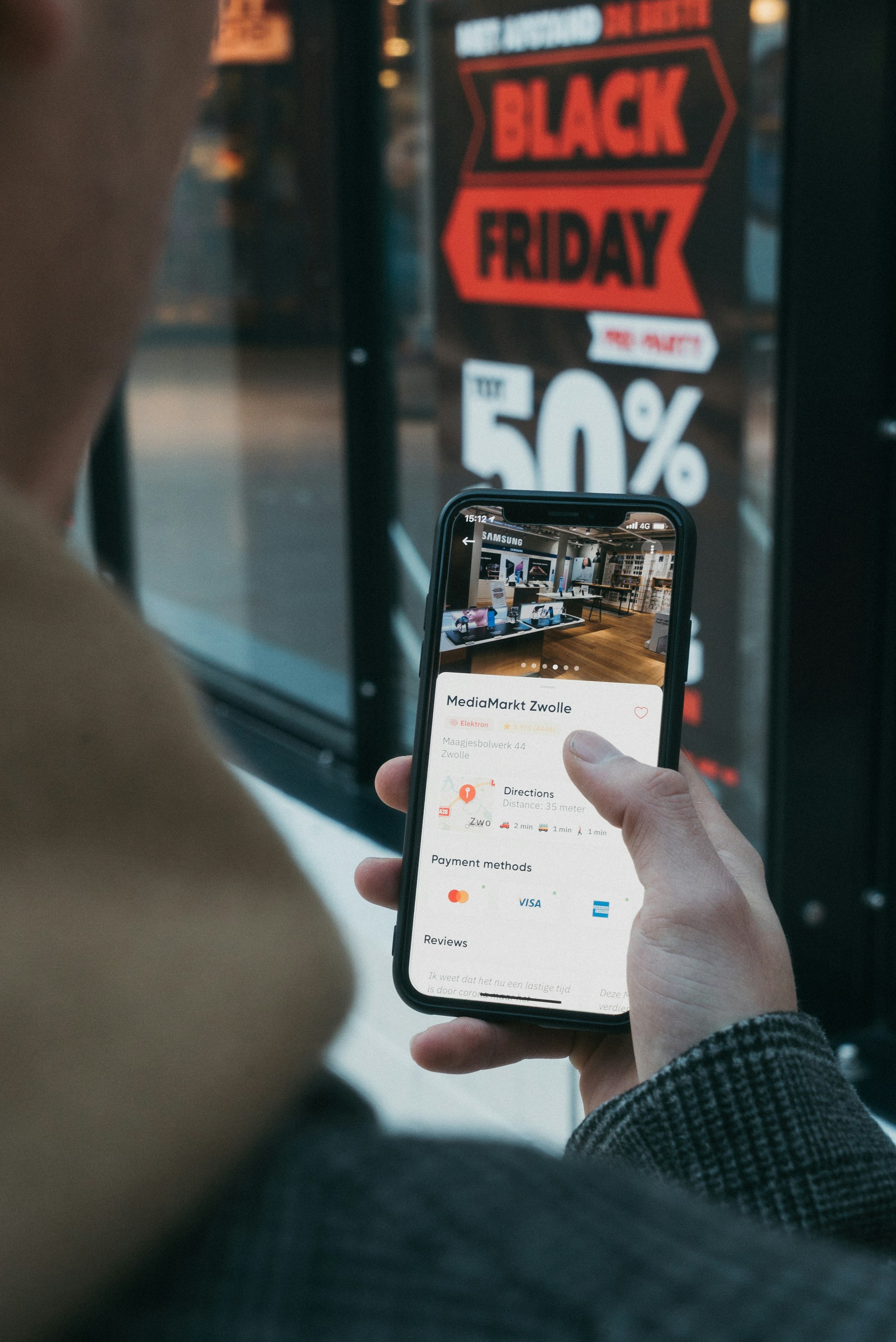
Scammers create fraudulent shopping sites that look nearly identical to well-known retailers, often advertising unusually low prices or limited-time holiday discounts. Social media platforms like Facebook, Instagram, and TikTok have become prime hunting grounds, with fake ads sitting right alongside legitimate ones.
Current Statistics:
- 39% of consumers reported fraud after buying through social media ads (up from 35% in 2024)- 46% of adults bought something advertised on social media in the last year- Only 50% correctly identified that social media ads are often untrustworthy
Common Tactics
Deepfake Celebrity Endorsements: AI cloning tools create realistic video ads with celebrities’ voices and faces promoting fake discounts on TikTok or Instagram.
Too-Good-to-Be-True Deals: Luxury goods, designer clothing, and electronics at incredibly low prices are almost always cheap counterfeits or complete scams.
Hot Toy Scams: High-demand items like the Easy Bake Ultimate Electric Oven, Ms. Rachel Emotions Learning Doll, and Klutz Lego Gravity Drop Activity Kit are being sold on fake sites that take your money and deliver nothing.
Advent Calendar Scams: Customers report receiving knock-off items, empty calendar doors, or nothing at all. When they try to contact the seller, the website disappears along with their money.
Holiday Scams 2025: $529 Million Lost as Black Friday Phishing Surges 692% and AI Deepfakes Target ShoppersThe holiday season is supposed to be about joy, family gatherings, and finding the perfect gifts. Instead, for 34 million Americans, it became a nightmare of drained bank accounts, stolen identities, and fraudulent charges. As Thanksgiving 2025 approaches and Black Friday deals flood your inbox, cybercriminals are already counting their ScamWatchHQScamWatchHQ
How to Protect Yourself
✅ Research Before Buying
- Search for the seller’s name + “review,” “complaint,” or “scam”- Check the BBB ScamTracker for reported issues- Look for HTTPS in the URL (the padlock symbol)- Type the retailer’s name directly into your browser instead of clicking ads
✅ Warning Signs of Fake Sites
- Prices drastically lower than competitors- Poor grammar or spelling errors- URLs with slight misspellings (e.g., “Amaz0n.com” instead of “Amazon.com”)- No physical address or contact information- Pressure to buy immediately (“Only 2 left in stock!”)- Payment only accepted via gift cards, wire transfer, cryptocurrency, or payment apps
✅ Safe Payment Methods
- Use credit cards instead of debit cards (better fraud protection)- Never pay with gift cards, wire transfers, or cryptocurrency- Keep all receipts and order confirmations- Set up account alerts to track transactions
From Holiday Shopping to Tax Refunds: The Most Common Scams Rising with the Season and Calendar ChangeAs the year winds down, the shift in seasons and the approach of a new calendar year bring a unique set of opportunities for scammers. From holiday shopping deals to tax refund promises, scammers know how to exploit the seasonal changes in behavior, making the end of the year a
 ScamWatchHQScamWatchHQ

2. Package Delivery & Shipping Scams
The Threat
With over 2.3 billion deliveries projected this holiday season (up 5% from last year), delivery scams have become one of the most prevalent threats. Criminals exploit the fact that shoppers are tracking multiple packages and may not remember every order.
New Twist for 2025: Scammers are capitalizing on consumer confusion about tariffs, claiming packages require tariff payments before delivery.
Common Scam Types
1. Phishing Messages Posing as Delivery Companies
These arrive as emails or texts that look like official notices from USPS, UPS, FedEx, or Amazon. They often contain:
- A “tracking link” you’re urged to click- Claims of delivery problems or missed deliveries- Requests to “update delivery preferences”- Demands for small fees to reschedule delivery
Warning: Clicking the link either takes you to a form asking for personal information or downloads malware onto your device.
2. Fake Missed Delivery Notices
Scammers place physical notes on your door claiming delivery problems and asking you to call a number. The number may be:
- An international number charging high per-minute rates- A scammer who will request your personal information- A recording designed to steal your credit card details
3. False “Package on Hold” Claims
Messages claim your package is being held at an airport, warehouse, or distribution center until you pay a fee. Victims have reported losing hundreds of dollars to these scams.
Example from BBB Scam Tracker: “They stated my package was on hold at the airport and asked me to Zelle money. Then again, something happened, and I had to Zelle money again. I lost $180.”
4. Fake “Incomplete Address” Messages
These typically claim your package can’t be delivered due to an incomplete address and urge you to click a link to “confirm” your information.
5. Brushing Scams with QR Codes
The U.S. Postal Inspection Service warns about receiving unexpected packages from unknown senders. Sometimes the “free” gift comes with a QR code leading to a fake website designed to steal your identity. Never scan QR codes from unexpected packages.
Scammers Don’t Take Holidays: A Year-Round Guide to Staying SafeThe holiday season is a time for joy, generosity, and celebration. Unfortunately, it’s also a prime time for scammers. As people shop for gifts, book travel, and donate to charities, scammers are lurking, ready to take advantage of the flurry of activity and exploit vulnerabilities. While scam activity tends to ScamWatchHQScamWatchHQ
How to Protect Yourself
✅ Verify Before You Click
- Never click links in unexpected delivery notifications- Go directly to the carrier’s official website and enter your tracking number- Use tracking links from your original order confirmation emails- Check your order history on the retailer’s website
✅ Recognize Red Flags
- Messages with urgency (“immediate action required”)- Requests for payment via random links- Unsolicited texts about packages you don’t remember ordering- Poor grammar or spelling errors- Sender addresses that don’t match the official domain
✅ Track Your Deliveries
- Keep a list of what you’ve ordered and expected delivery dates- Know which carriers are delivering your packages- Sign up for official tracking notifications directly from carriers- Review tracking updates regularly
✅ Protect Against Porch Pirates
With 58 million packages stolen last year (affecting 25% of Americans), physical theft is a major concern:
- Schedule deliveries when you’re home- Require signature confirmation for valuable items- Use package receiving services or ship to store locations- Ask neighbors to collect packages when you’re away- Install visible security cameras or video doorbells- Ship to secure pickup lockers when available- Consider shipping insurance for expensive items
✅ What Legitimate Carriers Do
- USPS, UPS, and FedEx never request payment or personal information through unsolicited texts or emails- They don’t ask for small “redelivery fees” via text- Legitimate tracking updates come from official domains (FedEx.com, UPS.com, USPS.com)
✅ If You Receive a Suspicious Message
- Forward suspicious emails to spam@uspis.gov- Forward text messages to 7726 (SPAM)- Report to the FTC at ReportFraud.ftc.gov- Check FedEx and UPS fraud alert pages for examples of known scams
 ScamWatchHQScamWatchHQ
3. Credit Card Fraud & Payment Scams
The Threat
Credit card fraud accounted for $199 million in losses in 2024, with criminals using increasingly sophisticated techniques. Visa and Mastercard warn that fraudsters are now “operating like tech startups,” building reusable infrastructure and deploying systematic attacks.
AI-Powered Evolution: Criminals are using artificial intelligence to:
- Create authentic-sounding text for fake websites- Generate convincing phishing emails- Produce realistic fake storefronts- Detect compromised cards twice as fast
Common Payment Scams
1. Fake E-Commerce Sites
Scammers clone legitimate retailer websites to steal credit card information. These sites often:
- Appear in social media ads- Offer prices too good to be true- Use URLs that look almost right (one letter different)- Have professional design that seems legitimate- Disappear after stealing your payment info
2. “Holiday Reward” Gift Card Scams
Bright messages claim you’ve qualified for a $750 or $1,000 gift card from Walmart, Target, or other major retailers. They ask you to:
- Answer a few questions- Provide personal information- Share your email or phone number- Complete surveys that collect data
Reality: These are data-harvesting operations designed to steal your information and potentially set you up for identity theft.
3. Gift Card Fraud
With 72% of consumers planning to purchase gift cards this season:
- Criminals steal card numbers and PINs from physical packaging- Cards are drained as soon as they’re activated- 33% of adults have given or received a gift card with no balance
How They Do It: Fraudsters record card numbers and PINs from retail displays, then rapidly drain funds once a legitimate customer activates the card.
4. Peer-to-Peer Payment Scams
75% of consumers used P2P platforms like Cash App, Vengo, and Zelle in the past year (up from 70% in 2024). Unlike credit cards, these offer less protection:
- Payments are instant and hard to reverse- Scammers pose as sellers requesting P2P payment- No chargeback protection like credit cards offer- Direct pipeline to your bank account
How to Protect Yourself
✅ Payment Best Practices
- Always use credit cards over debit cards (better fraud protection, no direct access to bank account)- Never pay with gift cards, wire transfers, or cryptocurrency- Be extremely cautious with P2P payment apps- Enable multifactor authentication on all accounts- Use strong, unique passwords for each account- Set up account alerts for all transactions
✅ Before Making a Purchase
- Verify the website URL carefully- Check for HTTPS and the padlock symbol- Read reviews from multiple sources- Check the BBB for complaints- Look up the company on Google with “scam” or “review”- Avoid clicking ads—type the retailer’s URL directly
✅ Monitor Your Accounts
- Review bank and credit card activity frequently (weekly during holidays)- Early detection dramatically improves recovery chances- Report unauthorized charges immediately- Check statements for recurring charges you didn’t authorize
✅ Gift Card Safety
- Buy gift cards from behind the customer service counter when possible- Inspect packaging for signs of tampering- Check for visible damage to the card or PIN area- Activate and verify balance immediately after purchase- Keep receipts until you confirm the card works
✅ QR Code Caution
Never scan QR codes from:
- Unexpected packages or “free” gifts- Emails or texts from unknown senders- Random flyers or promotional materials- Social media ads
Scammers use QR codes to hide malicious links that steal payment information or install malware.
✅ If You Suspect Fraud
- Contact your credit card company or bank immediately- Dispute charges while they’re fresh- Report to local law enforcement- File a complaint at ic3.gov (FBI Internet Crime Complaint Center)- Report to ReportFraud.ftc.gov
Graduation Gift Card Scams: Protecting Your Wallet and Your GraduateGraduation season is a time of joy, celebration, and giving. For many, gift cards are the perfect present—convenient, versatile, and loved by graduates of all ages. Unfortunately, this time of year also brings a surge in graduation gift card scams, where fraudsters use fake offers and phishing emails to
 ScamWatchHQScamWatchHQ

4. Return Fraud & Wardrobing
The Threat
Return fraud is costing retailers over $101 billion annually, with “wardrobing” accounting for nearly 70% of fraudulent returns. While this primarily affects retailers, understanding these schemes helps honest consumers avoid being caught in anti-fraud measures.
What is Wardrobing?
Wardrobing (also called “rent-a-return” or “wear and return”) is when customers:
- Purchase items with the intention of returning them- Use or wear the item (often for a special event)- Return it for a full refund, claiming it’s unused- Keep tags hidden while using the product
Statistics:
- 37-40% of shoppers admit to wardrobing apparel, shoes, or accessories- 50% of retailers experienced wardrobing in 2022- E-commerce returns expected to reach $850 billion in 2025- Less than half of returned items can be resold at full price
Why People Wardrobe
While not excusable, common motivations include:
- Social pressure to wear new outfits for events- Influence of social media (especially influencers)- Economic pressures and tight budgets- Desire to test products beyond normal try-on periods- One-time special occasions (weddings, galas, job interviews)
Impact on Honest Shoppers
Wardrobing affects legitimate customers through:
- Stricter return policies across all retailers- Longer processing times for returns- Requirements for original packaging and tags- Receiving “new” items that were previously worn- Higher prices to offset fraud losses- Account blocks or restrictions for frequent returners
How Retailers Are Fighting Back
Anti-Wardrobing Tags:
- Large, visible tags difficult to hide in photos- “Shark Tags” that can’t be replaced once removed- Tamper-evident security seals- Special ribbons that show if removed
Policy Changes:
- Shorter return windows- Store credit only (no cash refunds)- Restocking fees- Required inspections for high-value items- Account monitoring for serial returners
AI Detection:
- Automated systems flagging suspicious return patterns- Risk-based enforcement (high-risk customers face extra scrutiny)- Photo requirements before approving returns- Serial number tracking for electronics
How to Return Items Legitimately
To avoid being flagged as a potential fraudster:
✅ Keep Items in Resellable Condition
- Don’t remove tags until you’re sure you’re keeping the item- Try on at home without wearing outside- Keep all original packaging- Avoid stains, wrinkles, or odors
✅ Understand Return Policies
- Read policies before purchasing- Know the return window- Understand what’s required (tags, packaging, receipt)- Be aware of final sale items
✅ Be Honest About Item Condition
- Don’t claim items are unused if they’ve been worn- Disclose any defects or damage- Follow the retailer’s return process exactly
✅ Document Everything
- Keep receipts and order confirmations- Take photos of items before shipping returns- Save tracking numbers for returned packages- Keep records of customer service interactions
Red Flags That May Get You Flagged
Retailers watch for:
- High return rates (especially within days of receiving items)- Returns immediately after weekends or holidays- Missing tags on “unused” items- Items returned with subtle signs of wear- Same customer returning similar items repeatedly- Returns of high-value items like cameras or power tools after single use
 ScamWatchHQScamWatchHQ
5. Other Holiday Scams to Watch For
Fake Charity Scams
With 57% of people donating to charity during the holidays:
- 35% received fraudulent donation requests in the past year- Scammers create fake websites mimicking real charities- “Tap to donate” schemes approach people in person- Copycat organizations use similar names to legitimate charities
Protection:
- Research charities before donating (use Charity Navigator or GuideStar)- Never donate via gift cards or wire transfers- Verify the organization’s tax-exempt status- Be wary of high-pressure tactics
Employment Scams
With retailers hiring seasonal workers:
- Scammers post fake job listings- They request payment for “training materials” or “background checks”- They steal personal information from applications- They impersonate legitimate shipping and delivery companies
Protection:
- Research employers before applying- Never pay money to get a job- Be cautious with personal information- Verify job postings on company websites directly
Fake Road Toll Collection Texts
An emerging scam in 2025:
- Texts impersonate state road tollway services- Claim you owe toll fees with link to pay- Actually designed to steal payment information
Protection:
- Go directly to your state’s toll authority website- Never click links in unsolicited toll messages- Verify any charges through official channels
Emergency Response: What to Do If You’ve Been Scammed
Immediate Actions
If You Clicked a Suspicious Link:
- Disconnect from the internet2. Run a full antivirus scan3. Change passwords for all financial accounts (from a different device)4. Monitor accounts for unauthorized activity
If You Provided Payment Information:
- Contact your bank/credit card company immediately2. Request they stop, reverse, or dispute the charge3. Place a fraud alert on your credit reports4. Monitor your credit report for suspicious activity
If You Received a Stolen Package:
- Contact the delivery company2. File a police report3. Notify the retailer4. Check if shipping insurance covers the loss
If You Were a Victim of Return Fraud (as a consumer):
- Document the condition of items received2. Contact the retailer with photographic evidence3. Request replacement or refund4. Leave honest reviews to warn other shoppers
Reporting Resources
Federal Agencies:
- FBI Internet Crime Complaint Center: ic3.gov- Federal Trade Commission: ReportFraud.ftc.gov- U.S. Postal Inspection Service: spam@uspis.gov (email) or 7726 (text)
Industry Resources:
- BBB Scam Tracker: bbb.org/scamtracker- FedEx Fraud Alerts: fedex.com (search “fraud alerts”)- UPS Fraud Alerts: ups.com/fraud
Credit Protection:
- Place fraud alerts: Contact one of the three credit bureaus- Freeze your credit: Equifax, Experian, TransUnion- Monitor credit reports: annualcreditreport.com
Your Holiday Shopping Security Checklist
Before You Shop
- Enable multifactor authentication on all shopping accounts- [ ] Set up account alerts for all credit cards and bank accounts- [ ] Update antivirus and security software- [ ] Review current credit card statements for unauthorized charges- [ ] Create strong, unique passwords for online shopping accounts
While Shopping
- Shop only on secure networks (avoid public Wi-Fi)- [ ] Verify website URLs before entering payment info- [ ] Use credit cards instead of debit cards- [ ] Keep records of all purchases- [ ] Research unfamiliar retailers before buying- [ ] Avoid deals that seem too good to be true- [ ] Don’t click links in unsolicited emails or texts
Receiving Deliveries
- Track all packages actively- [ ] Know what you’ve ordered and when to expect delivery- [ ] Don’t click tracking links in unexpected messages- [ ] Verify delivery notifications through official channels- [ ] Schedule deliveries when you’re home- [ ] Use security cameras or package lockers when possible- [ ] Inspect packages for signs of tampering
Processing Returns
- Keep items in resellable condition- [ ] Save all packaging and tags until you’re sure- [ ] Read return policies carefully- [ ] Document item condition with photos- [ ] Keep all receipts and confirmation numbers- [ ] Ship returns with tracking numbers
Financial Monitoring
- Check account activity weekly during the holidays- [ ] Review all credit card statements thoroughly- [ ] Report suspicious charges immediately- [ ] Keep gift card receipts and verify balances- [ ] Monitor for recurring charges you didn’t authorize- [ ] Review credit reports for signs of identity theft
The Bottom Line
Holiday scams in 2025 are more sophisticated, widespread, and financially damaging than ever before. With AI-powered fraud, deepfake ads, and criminals operating with enterprise-level organization, shoppers must be more vigilant than in previous years.
Key Takeaways:
- Slow down - Scammers rely on rushed, distracted shoppers2. Verify everything - Never trust links in unsolicited messages3. Use credit cards - Better protection than debit cards or P2P apps4. Monitor actively - Check accounts weekly during the holidays5. Report immediately - Quick action improves recovery chances
The good news? By understanding these scams and following security best practices, you can protect yourself and your loved ones this holiday season. Stay informed, stay skeptical, and stay safe.
Additional Resources
Official Security Guidance:
- FTC Holiday Shopping Guide: ftc.gov/OnlineShopping- FBI Holiday Scams: fbi.gov/holidayscams- USPS Security Tips: uspis.gov
Consumer Protection:
- Better Business Bureau: bbb.org- National Consumers League: nclnet.org- AARP Fraud Watch Network: aarp.org/fraudwatchnetwork
Credit Monitoring:
- Free Credit Reports: annualcreditreport.com- Fraud Alerts: Contact Equifax, Experian, or TransUnion- Identity Theft Resources: identitytheft.gov
Stay Updated: Follow ScamWatchHQ for real-time scam alerts and consumer protection news throughout the holiday season and beyond.
This guide is current as of December 12, 2025. Scam tactics evolve rapidly—always verify information through official channels and trust your instincts. If something feels wrong, it probably is.
Have you encountered a scam not covered here? Report it to help protect others.