When INTERPOL announced the results of Operation Synergia III on March 13, 2026, the numbers told a story that should concern every internet user: 45,000 malicious IP addresses neutralized, 94 suspects arrested, 212 electronic devices seized, and 110 more individuals still under investigation. But behind those headline figures lies a more troubling reality — the sheer industrial scale at which cybercriminal networks now operate.
The operation, which ran from July 18, 2025 through January 31, 2026, involved law enforcement from 72 countries and territories working alongside private sector partners Group-IB, Trend Micro, and S2W. It represents the third — and by far the largest — iteration of INTERPOL’s Synergia initiative, a recurring campaign designed to disrupt the infrastructure underpinning phishing, malware distribution, and ransomware.
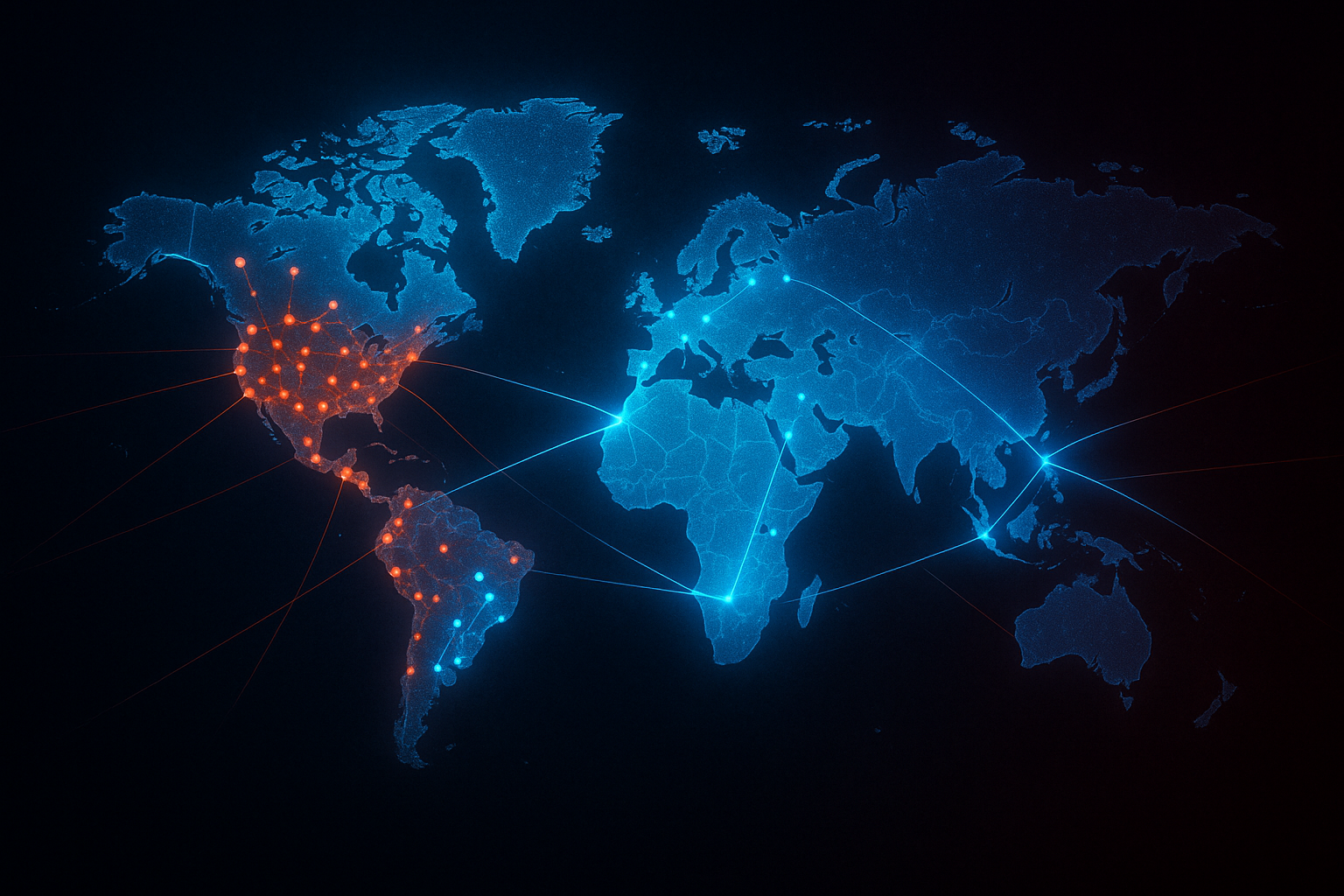
What makes Synergia III different from a typical law enforcement press release isn’t just the scale. It’s what the geographic distribution of arrests and seizures reveals about how scam operations have specialized, industrialized, and embedded themselves into regional economies.
The Operation: Six Months, 72 Countries, One Target
Operation Synergia III wasn’t a single raid. It was a sustained, six-month intelligence-gathering and disruption campaign that spanned every inhabited continent.
INTERPOL’s role was to transform raw data from private sector partners into actionable intelligence, coordinate cross-border collaboration, and provide tactical assistance to member countries as they conducted simultaneous operations. Preliminary investigations led to coordinated raids on key locations and the systematic disruption of malicious cyber infrastructure.
“Cybercrime in 2026 is more sophisticated and destructive than ever before, but Operation Synergia III stands as a powerful testament to what global cooperation can achieve,” said Neal Jetton, INTERPOL’s Director of the Cybercrime Directorate. “INTERPOL remains at the forefront of this fight, uniting law enforcement agencies and private sector experts to dismantle criminal networks, disrupt emerging threats and protect victims around the world.”
The participating countries ranged from major cyber powers like the United Kingdom, France, Japan, and India to nations less commonly associated with cybercrime enforcement — Eritrea, Guinea-Bissau, Eswatini, and South Sudan among them. That breadth matters. It signals that cybercrime infrastructure isn’t concentrated in a handful of jurisdictions anymore. It’s everywhere.
Regional Breakdown: How Scam Operations Specialize by Geography
Perhaps the most revealing aspect of Synergia III is how different the criminal operations looked depending on where investigators found them. This isn’t one monolithic cybercrime syndicate. It’s a constellation of specialized operations, each adapted to local conditions and targeting strategies.
Macau: 33,000 Fake Websites and the Casino Connection
The most staggering single finding came from Macau, China, where police identified more than 33,000 phishing and fraudulent websites. These weren’t crude, obvious fakes. They were sophisticated replicas of legitimate casino platforms, banking portals, government services, and payment processors.
The operation in Macau exploited a simple but effective model: victims either topped up accounts on fake gambling sites (money that went straight to criminals) or had their personal information and credit card details harvested through convincing login pages mimicking trusted institutions.
Thirty-three thousand sites from a single jurisdiction. That’s not a few hackers in a basement — it’s an automated content factory producing fraudulent infrastructure at industrial scale. The casino angle is particularly significant in Macau, where the gambling industry is central to the economy and legitimate casino brands carry enormous trust with consumers across Asia.
Togo: Romance Fraud as Organized Crime
In Togo, authorities arrested 10 suspects operating what police described as a fraud ring from a residential area. Their operation was notable for its division of labor — a hallmark of organized crime that has increasingly characterized the evolving scam landscape.
Some members specialized in technical crimes: hacking social media accounts and establishing the digital infrastructure needed for the operation. Others focused on social engineering — the human manipulation that turns compromised accounts into revenue.
Their method was insidious. After gaining access to a victim’s social media account, the criminals would contact the victim’s friends and family while impersonating the account holder. They’d build fake romantic relationships with these secondary targets or simply deceive them into believing they were communicating with someone they knew and trusted. The endgame was always the same: persuade these secondary victims to transfer money.
This two-stage approach — compromise accounts first, then exploit the victim’s social network — represents an evolution beyond traditional romance scams. It weaponizes existing trust relationships rather than trying to build new ones from scratch.
Bangladesh: High-Volume Financial Crime
Bangladesh saw the largest number of arrests: 40 suspects, along with the seizure of 134 electronic devices. The operations there covered a wider range of schemes — loan scams, job scams, identity theft, and credit card fraud.
The diversity of criminal activity in Bangladesh points to a mature cybercrime ecosystem where different groups specialize in different fraud types while potentially sharing infrastructure, stolen data, and money laundering channels. Victims of a loan scam today may find their stolen personal information fueling identity theft operations tomorrow.
The Synergia Series: An Escalating Campaign
Operation Synergia III didn’t emerge from nowhere. It’s the culmination of a deliberate, escalating strategy that INTERPOL has been building since 2023.
Synergia I (September – November 2023) was the proof of concept. Running just three months, it resulted in 31 arrests and the identification of 1,300 suspicious IP addresses and URLs linked to phishing, banking malware, and ransomware. Modest numbers, but it established the operational framework and partnership model.
Synergia II (April – August 2024) scaled dramatically. Over 95 countries participated, leading to 41 arrests and the takedown of 22,000 malicious IP addresses and 59 servers. The operation specifically targeted phishing, ransomware, and information stealers, and saw expanded collaboration with private sector intelligence providers.
Synergia III (July 2025 – January 2026) doubled the takedown numbers again: 45,000+ malicious IPs (more than double Synergia II), 94 arrests (more than double), and 212 devices seized across 72 participating countries.
The trajectory is clear. Each iteration runs longer, involves more countries, and produces larger results. But whether this reflects genuine progress against cybercrime or simply a growing understanding of just how vast the problem is depends on your perspective.
The Public-Private Partnership Model
A critical element of all three Synergia operations — and one that deserves more attention — is the role of private sector intelligence partners. Group-IB, Trend Micro, and S2W aren’t just passive data providers. They’re active participants in tracking illegal cyber activities, identifying malicious servers, and mapping criminal infrastructure.
This matters because law enforcement agencies, even well-resourced ones, can’t maintain the real-time visibility into global threat landscapes that cybersecurity companies have. Group-IB’s threat intelligence feeds, Trend Micro’s global sensor network, and S2W’s dark web monitoring capabilities provide the raw material that INTERPOL transforms into operational intelligence.
This model mirrors what we’ve seen in other major cybercrime takedowns in 2025, including Operation Endgame, which dismantled 1,025 servers used by malware operators, and Operation Checkmate, which targeted the BlackSuit ransomware empire. In each case, private sector intelligence was the catalyst that made law enforcement action possible.
The question going forward is whether this model scales fast enough. Cybercriminals are adopting AI-powered tools that accelerate their operations faster than traditional enforcement can keep up. When 33,000 fraudulent websites can be spun up in a single jurisdiction, the bottleneck isn’t intelligence — it’s the speed of coordinated action.
What 45,000 Malicious IPs Tell Us About Scam Infrastructure in 2026
The scale of Synergia III forces a reckoning with how we think about cybercrime infrastructure.
It’s distributed, not centralized. The fact that 72 countries participated isn’t ceremonial. Criminal infrastructure is genuinely spread across dozens of jurisdictions precisely because this makes it harder to take down. Seize servers in one country and operations shift to another.
It’s specialized. Macau’s fake casino sites, Togo’s romance fraud rings, and Bangladesh’s financial crime operations aren’t running the same playbook. They’re adapted to local regulatory environments, cultural contexts, and target populations. This specialization makes them harder to combat with one-size-fits-all approaches.
It’s industrial. Thirty-three thousand fraudulent websites in Macau alone means automated deployment, templating systems, and hosting infrastructure designed for rapid scaling. These aren’t hand-crafted phishing pages. They’re products of what security researchers increasingly call “scam-as-a-service” platforms.
It regenerates. The history of cyber takedowns shows that infrastructure frequently reconstitutes within weeks or months. When authorities dismantled LummaC2 malware infrastructure last year, the operators had replacement domains online within 24 hours. While law enforcement was ready for that specific case, the pattern holds across the ecosystem.
The Bigger Picture: Are We Winning?
It’s tempting to look at 45,000 malicious IPs taken down and 94 arrests and declare progress. And in a meaningful sense, it is progress — each disrupted server means phishing campaigns that didn’t reach victims, malware that wasn’t deployed, and money that wasn’t stolen.
But context matters. Security researchers estimate that millions of malicious domains are active at any given time. The scam trends defining 2026 include AI-generated phishing that’s virtually indistinguishable from legitimate communications, deepfake-powered impersonation, and increasingly sophisticated social engineering. Taking down 45,000 IPs is significant — but it’s a fraction of the total hostile infrastructure online today.
What Synergia III demonstrates most clearly is that the enforcement model is maturing. The intelligence pipeline from private sector to INTERPOL to national law enforcement is getting faster and more effective. The geographic reach is expanding. The arrest-to-takedown ratio is improving.
But the adversaries are maturing too. And they have an asymmetric advantage: it’s cheaper and faster to spin up new malicious infrastructure than it is to coordinate a 72-country law enforcement operation to take it down.
What This Means for You
If you’re reading this thinking “this doesn’t affect me,” consider that 33,000 fake banking and government websites in Macau alone means there are likely hundreds of thousands of similar sites targeting English-speaking users worldwide. The romance scam operation in Togo weaponized hacked social media accounts — which means anyone whose friend or family member has been compromised could become a secondary target.
Practical steps:
- Verify before you trust. If a friend or family member contacts you with an unusual financial request through social media, verify through a different channel — call them directly.
- Check URLs carefully. Fake casino, banking, and government sites are designed to look identical to legitimate ones. Bookmark trusted sites and access them directly rather than clicking links.
- Enable multi-factor authentication. The Togo operation relied on hacking social media accounts as a first step. MFA makes this significantly harder.
- Report suspicious activity. Every phishing site reported helps services like Group-IB and Trend Micro map criminal infrastructure for the next takedown operation.
Looking Ahead
Operation Synergia III will not be the last in this series. INTERPOL has clearly committed to the Synergia framework as a recurring, escalating campaign. If the pattern holds, Synergia IV will likely launch later in 2026 with even broader participation and more aggressive targets.
The real measure of success won’t be the next round of headline numbers — it will be whether the intelligence-sharing model and operational tempo can keep pace with an adversary that’s getting faster, more automated, and more sophisticated every quarter.
For now, 94 suspected cybercriminals are off the street, 45,000 malicious servers are dark, and 72 countries have demonstrated that coordinated action against cybercrime isn’t just possible — it’s becoming routine. That’s worth something. Whether it’s enough remains to be seen.
Sources: INTERPOL Official Release, Help Net Security, The Register