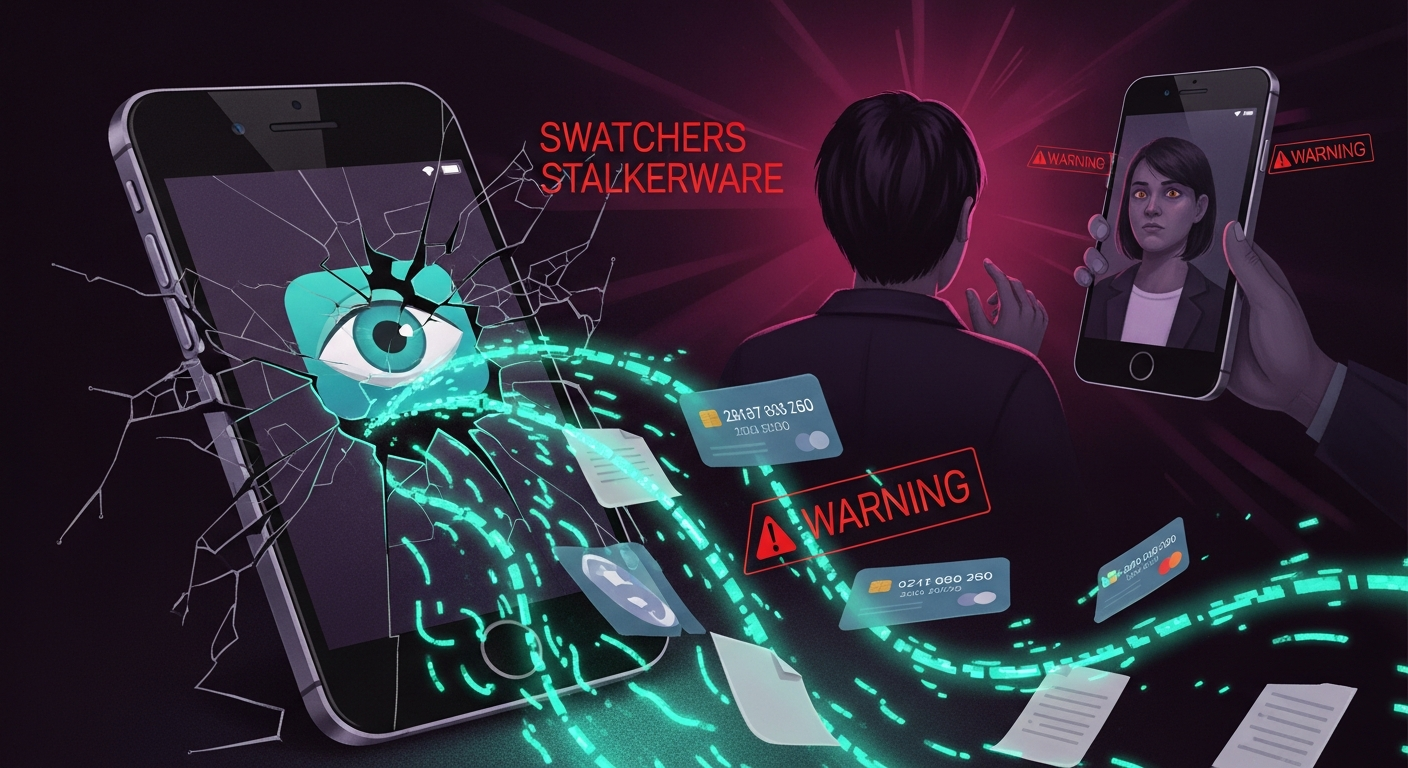
The intersection of luxury consumption and cybercrime has reached a critical inflection point. Following the massive data breach at LVMH—the world’s largest luxury conglomerate—and the record-breaking $25 million fine levied against Dior’s South Korean operations, sophisticated fraud networks are exploiting compromised customer data to execute remarkably convincing luxury brand impersonation schemes that are bilking consumers of millions while devastating brand trust built over generations.
Luxury Brands Under Siege: The 2025 Cyberattack Wave Targeting High-End RetailFrom Gucci to Chanel, cybercriminals are systematically targeting luxury retailers in unprecedented coordinated campaigns The luxury retail sector is experiencing an unprecedented wave of cyberattacks in 2025, with some of the world’s most prestigious brands falling victim to sophisticated cybercriminal campaigns. From Kering’s portfolio of Gucci, Balenciaga, and Alexander McQueen Breached CompanyBreached Company
The LVMH Breach: When Luxury Meets Cyber Vulnerability
LVMH Moët Hennessy Louis Vuitton, with its portfolio of 75 prestigious brands including Louis Vuitton, Dior, Fendi, Givenchy, and Bulgari, represents the pinnacle of luxury retail. The conglomerate generates over €80 billion in annual revenue, serving the world’s wealthiest consumers. That made it an irresistible target.
While LVMH has remained characteristically tight-lipped about the specifics, cybersecurity researchers and underground marketplace activity paint a troubling picture. The breach, which appears to have occurred over several months in late 2025, compromised customer databases across multiple LVMH brands.
What Was Taken
Based on dark web listings and victim reports, the stolen data includes:
- High-net-worth customer profiles: Names, addresses, phone numbers, and email addresses of LVMH’s premium client base- Purchase histories: Detailed records showing what products customers bought, when, and for how much- VIP status information: Loyalty tiers, personal shoppers assigned, private sale access- Payment details: Partial credit card information and billing addresses- Behavioral data: Shopping preferences, wishlist items, browsing history- Personal shopping notes: Comments from sales associates about customer preferences, sizes, style tastes, and major life events (anniversaries, birthdays)
“This isn’t just a list of email addresses,” explains luxury retail security consultant Philippe Moreau. “This is a complete dossier on some of the world’s wealthiest consumers, their buying habits, their tastes, their predictable spending patterns. For sophisticated fraudsters, it’s an instruction manual.”
The South Korea Connection: A $25 Million Warning Shot
The timing of the breach coincided with South Korean authorities imposing a record ₩30 billion (approximately $25 million USD) fine on Christian Dior Couture Korea for deceptive business practices. While technically separate issues, the convergence has created a perfect storm.
The fine stemmed from Dior misleading consumers about product sourcing, quality, and manufacturing origins—eroding trust at exactly the moment when distinguishing authentic from fraudulent became critically important.
“The South Korea situation created public skepticism about luxury brand transparency,” notes consumer protection attorney Jennifer Kim in Seoul. “When consumers already doubt whether brands are being honest with them, they’re more vulnerable to scams that exploit that uncertainty.”
The Korean Market: Ground Zero for Luxury Fraud
South Korea has emerged as a critical front in luxury brand impersonation schemes for several reasons:
- Highest luxury spending per capita: South Koreans spend more on luxury goods than any other nationality relative to population2. E-commerce dominance: 70%+ of retail transactions occur online, creating more digital attack surface3. Status-driven consumption: Cultural emphasis on luxury brands makes them particularly coveted targets4. Sophisticated fraud infrastructure: Well-developed cybercrime networks with technical capabilities
Following the Dior fine and LVMH breach, Korean authorities reported a 340% increase in luxury brand impersonation fraud in Q4 2025 alone.
Luxury Brands Under Siege: The Growing Cyber Threat to High-End RetailThe luxury fashion industry, once considered insulated from the digital vulnerabilities plaguing mainstream retail, is now facing an unprecedented wave of sophisticated cyber attacks. Two major incidents in 2025 have exposed the sector’s alarming security gaps, with Louis Vuitton and Dior both falling victim to devastating data breaches that compromised Breached CompanyBreached Company
How the Scams Work: Weaponizing Stolen Data
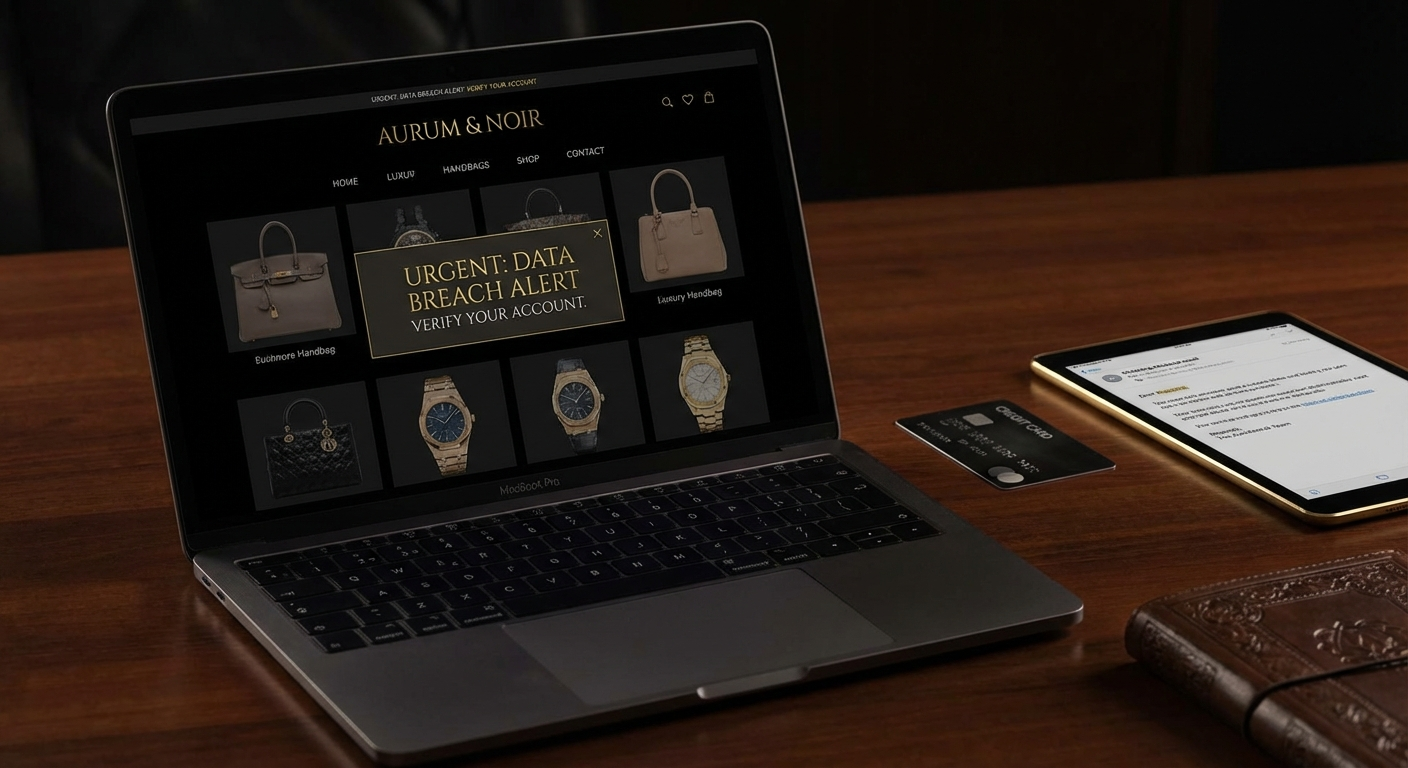
What makes the current wave of luxury impersonation scams so effective is the integration of real customer data with sophisticated social engineering. Fraudsters aren’t sending generic phishing emails—they’re crafting personalized messages that reference actual purchase history and authentic customer relationships.
The VIP Private Sale Scam
Victims receive personalized invitations to “exclusive VIP sales” for their favorite LVMH brands. The emails address them by name, reference their VIP status tier, mention their personal shopper by name, and feature products aligned with their previous purchases.
“I got an email from what appeared to be my Louis Vuitton personal shopper, Marie, who I’d worked with for three years,” recounts Alexandra Chen, a Hong Kong-based finance executive. “It mentioned the handbag I’d put on my wishlist during my last appointment and offered me first access to a limited edition release. Everything was perfect—the email format, the branding, even Marie’s signature style of writing.”
The invitation leads to convincing replica websites featuring actual upcoming product releases (information scraped from legitimate preview sites and fashion media). Victims make purchases that never arrive, with payment going directly to fraudsters.
Average loss per victim in these scams: $8,400 USD.
Hong Kong Scams 2025: Asia’s Financial Crown Jewel Under Siege – When Triads Go Digital and Pig Butchering Meets High FinanceExecutive Summary Hong Kong, one of the world’s premier financial hubs and Asia’s gateway for capital flows, faces an unprecedented fraud crisis that threatens its reputation as a secure, sophisticated business center. In 2025, residents and businesses lost HK$5.02 billion ($644.9 million) in the first eight months ScamWatchHQScamWatchHQ
The Repair and Authentication Scheme
Leveraging purchase history data, scammers contact customers claiming their recently purchased items need to be recalled for “quality issues” or offering complimentary authentication services.
“They knew I’d bought a Dior saddle bag six weeks earlier,” explains Marcus Thompson, a London barrister. “The email said there was a manufacturing defect with a batch from that period and offered free repair and authentication. I just needed to ship it to their ‘authorized service center’ and pay shipping insurance.”
Victims send authentic luxury goods to fraudsters, never seeing them again. In some sophisticated variants, scammers return convincing counterfeits, allowing victims to remain unaware for months while the authentic item is resold.
The Personal Shopper Hijacking Scam
Perhaps most insidious are schemes targeting the personal relationships luxury brands cultivate with high-spending clients. Fraudsters, armed with names of real personal shoppers and details of prior interactions, impersonate these trusted advisors.
“The text message came from a number very similar to my Hermès personal shopper’s,” shares Dubai-based entrepreneur Fatima Al-Rashid. “It referenced our last conversation about finding a specific Birkin color. She said one had just become available but needed a decision within hours. The wire transfer instructions seemed normal—I’d wired payment before for special pieces.”
Al-Rashid lost $45,000 USD.
These scams exploit the informal, relationship-based nature of luxury retail. Wealthy customers are accustomed to communicating via personal cell numbers, WhatsApp, and WeChat. High-value purchases are often arranged through direct conversations rather than formal e-commerce systems. This creates ambiguity that fraudsters manipulate ruthlessly.
The Counterfeit Connection: Digital Meets Physical Fraud
The LVMH breach has also supercharged traditional counterfeit operations. Armed with customer data, counterfeiters are executing “precision strikes” rather than casting wide nets.
Targeted Counterfeit Marketing
Instead of setting up obvious fake storefronts, sophisticated operations now:
- Target customers who previously bought specific items, offering “gray market” deals on related products- Reference authentic product knowledge gleaned from purchase histories to build credibility- Use stolen customer data to create fake reviews and social proof- Infiltrate private luxury goods resale groups with seemingly legitimate profiles
“They’re applying big data analytics to counterfeiting,” explains anti-counterfeiting investigator James Wu. “Instead of making a million fake bags and hoping to sell them, they’re making a thousand bags targeted at customers they know want them, with personalization that makes each buyer feel they’ve discovered a secret deal.”
South Korea Scams 2025: The Voice Phishing Pandemic – When Your Phone Becomes the EnemyExecutive Summary South Korea is experiencing what experts are calling a “scam pandemic”—an explosive surge in voice phishing (voice fraud) and cryptocurrency scams that has left 26% of adults victimized in just the past year, with losses totaling $1.4 billion USD. In the first quarter of 2025 alone, ScamWatchHQScamWatchHQ
The “Insider Deal” Fraud
A particularly effective variant involves scammers posing as current or former employees of luxury brands, offering “insider access” to products at employee discount prices.
“I was contacted on LinkedIn by someone claiming to be a Louis Vuitton marketing manager,” recounts Seattle-based tech entrepreneur David Park. “She said she had access to employee sales and could help me buy certain pieces at 40% off. She provided an employee ID, referenced internal product codes, knew the correct retail prices. I bought three items over two months before realizing they were counterfeits.”
The stolen customer data helps fraudsters understand which products specific victims covet, allowing them to craft irresistible “opportunities.”
The Asian Markets: Epicenter of Luxury Fraud
While luxury brand impersonation is global, Asian markets have become the epicenter of both victimization and fraud infrastructure.
China: The Volume Leader
Despite government crackdowns, China remains the world’s largest source and market for counterfeit luxury goods. The LVMH breach data is actively traded on Chinese dark web forums, with the most detailed customer profiles commanding premium prices.
Chinese consumers, who account for approximately 40% of global luxury spending, are simultaneously the biggest victims and the biggest market for counterfeiters.
“The irony is profound,” notes Beijing-based luxury market analyst Li Wei. “Chinese consumers spend billions on authentic luxury goods to signal status and success, while Chinese criminal networks simultaneously undermine that entire signaling system by flooding markets with counterfeits.”
Recent busts in Guangzhou and Shenzhen revealed operations combining traditional counterfeiting with cyber capabilities, using stolen customer data to seed convincing fake reviews on Xiaohongshu (Little Red Book) and WeChat, driving victims to elaborately designed fake e-commerce platforms.
South Korea: The Testing Ground
South Korea has become a proving ground for advanced luxury fraud techniques. The country’s tech-savvy population, combined with intense luxury consumption and now the Dior scandal, creates ideal conditions.
“Fraudsters test new approaches in Korea first,” explains Seoul-based cybercrime investigator Park Min-jun. “The population is smaller, more digitally connected, and fast to adopt new platforms. If a scam works in Korea, it scales globally.”
Korean fraud rings have pioneered:
- Deepfake sales videos: AI-generated videos of luxury brand ambassadors promoting fake sales- AR-enabled counterfeit previews: Augmented reality apps that let victims “try on” luxury items before purchasing counterfeits- Blockchain fake authentication: Creating fake NFTs and blockchain “certificates of authenticity” for counterfeit goods
Singapore and Hong Kong: The Money Laundering Hubs
While mainland China and South Korea generate most of the fraud, Singapore and Hong Kong serve as financial gateways. Luxury goods—both authentic and counterfeit—are high-value, easily transportable, and relatively difficult to trace, making them ideal for money laundering.
“You’ll see patterns where counterfeit operations in Guangzhou connect through payment processors in Hong Kong, ship ‘authentic’ goods bought with stolen payment information through Singapore, and wire profits to accounts in multiple jurisdictions,” explains financial crimes investigator Thomas Brandt. “The LVMH breach feeds all stages of this ecosystem.”
The Economic Impact: Beyond Individual Victims
The surge in luxury brand impersonation fraud following the LVMH breach carries consequences far beyond individual financial losses:
Brand Equity Erosion
LVMH’s brands trade on heritage, exclusivity, and trust built over decades or even centuries. Each successful fraud chips away at that equity.
“When customers can’t distinguish a real Dior email from a fake one, when counterfeiters have the same customer data as authentic boutiques, the entire value proposition collapses,” argues luxury brand strategist Isabella Russo. “Why pay $5,000 for a bag when you can’t even trust the brand to protect your information?”
Secondary luxury market data shows concerning trends:
- Resale values for LVMH brands down 8-12% since the breach became public- Authentication request volumes up 340% at major resale platforms- Customer lifetime value declining as wealthy buyers diversify away from compromised brands
Market Distortion
The counterfeit market, estimated at $450 billion globally, has traditionally operated parallel to authentic markets. The LVMH breach data allows it to integrate more deeply.
“You’re seeing counterfeiters operate like legitimate businesses,” notes intellectual property attorney Rachel Foster. “They have customer databases, purchase histories, targeted marketing campaigns, customer service. They’re mimicking authentic luxury retail operations so closely that distinctions blur.”
This creates a “market for lemons” problem. When buyers can’t reliably distinguish authentic from fake, they discount all luxury goods, depressing prices and undermining incentives for authentic production.
Regulatory Consequences
The $25 million Dior fine in South Korea represents just the beginning. Regulators across Asia, Europe, and North America are scrutinizing luxury brands’ data protection practices with new intensity.
“LVMH generates massive profits from consumers’ aspirational purchasing,” argues consumer protection advocate Dr. Sarah Mitchell. “With those profits comes a responsibility to protect customer data. The breach reveals that luxury brands have been as lax about cybersecurity as they’ve been aggressive about trademark enforcement.”
Potential regulatory responses include:
- Mandatory breach insurance: Requiring luxury brands to maintain insurance covering customer losses from data breaches- Liability regime changes: Making brands strictly liable for losses from impersonation fraud- Enhanced authentication requirements: Mandating technical measures to verify brand communications- Personal data minimization: Limiting the customer data luxury brands can collect and retain
The Technology Arms Race: Authentication and Anti-Fraud
Both luxury brands and fraudsters are locked in an escalating technological competition.
Brand Countermeasures
LVMH and competitors are deploying:
- Blockchain authentication: Using NFTs and distributed ledgers to create unforgeable provenance records- Biometric verification: Requiring facial recognition or fingerprint authentication for high-value purchases- AI-powered communication verification: Tools that help customers determine whether messages actually come from brands- Physical product authentication: Embedding NFC chips, holograms, and other difficult-to-replicate features- Supply chain transparency: Using technology to track products from manufacture through sale
“Technology is necessary but insufficient,” cautions retail security expert Dr. Alan Foster. “Fraudsters have access to the same tools. What matters is implementation quality and user experience. If authentication is cumbersome, customers won’t use it.”
Fraudster Adaptation
Criminal networks are matching these measures with their own innovations:
- Deepfake technology: Creating convincing video and audio of brand representatives- Blockchain counterfeiting: Creating fake NFTs and blockchain records- Social engineering automation: Using AI to generate personalized phishing messages at scale- Cloning authentication systems: Replicating brand verification tools to add credibility to fraud
“It’s an arms race with no clear end,” reflects cybersecurity researcher Dr. Yuki Tanaka. “Every defensive measure spawns adaptive countermeasures. The only certainty is escalation.”
What Consumers Can Do: Practical Protection Strategies
For luxury consumers navigating this treacherous landscape, several strategies can reduce risk:
Verification Protocols
- Never respond directly to unexpected communications: Always contact brands through official channels you look up independently2. Verify through multiple channels: If you receive an email, call the store to confirm before taking action3. Scrutinize URLs carefully: Fraudsters use domains like “louis-vuitton-vip.com” or “dior-exclusive.com” that appear legitimate at quick glance4. Question urgency: Legitimate luxury brands rarely pressure immediate decisions5. Use official apps exclusively: Avoid web-based interfaces for high-value transactions when branded apps exist
Transaction Security
- Use credit cards, never debit cards or wire transfers: Credit cards offer dispute resolution and fraud protection- Document everything: Screenshot communications, save emails, photograph products- Insist on authenticity guarantees: Demand documentation you can verify independently- Buy from authenticated sellers only: Use platforms with robust authentication programs for secondary market purchases
Post-Breach Actions
If you’ve purchased from LVMH brands:
- Assume your data was compromised: Act preventatively even without confirmation2. Monitor financial accounts obsessively: Set up transaction alerts for all accounts3. Use unique passwords: Never reuse passwords across luxury brand accounts4. Enable two-factor authentication: Add extra security layers wherever possible5. Be suspicious of all unexpected contact: Treat unsolicited messages as malicious until proven otherwise
The Investigation: Who’s Behind the LVMH Breach?
While attribution in cybercrime remains notoriously difficult, investigators have identified several potential actors:
Chinese Organized Crime Networks
Given the vast counterfeit infrastructure in China and the immediate appearance of LVMH data on Chinese-language forums, mainland Chinese organized crime groups are prime suspects.
“Chinese counterfeit networks have been evolving for decades,” explains Interpol cybercrime investigator Marie Dubois. “They have the technical sophistication, the motivation, and the market access to exploit this breach at scale.”
Eastern European Cybercrime Syndicates
The technical execution of the breach suggests Eastern European involvement—particularly Russian-speaking groups known for sophisticated persistent threats.
“The operational security, the lateral movement within LVMH’s networks, the slow data exfiltration to avoid detection—these are hallmarks of Eastern European groups,” notes threat intelligence analyst Boris Petrov.
Insider Threats
Some investigators theorize the breach involved insiders—current or former LVMH employees who either directly stole data or provided access to external attackers.
“The specificity of the data suggests someone with deep knowledge of LVMH’s systems,” argues corporate security consultant Amanda Lee. “This might not be purely external.”
State-Sponsored Actors
While less likely, some analysts haven’t ruled out state-sponsored involvement. High-net-worth individuals’ data has intelligence value, and luxury spending patterns can reveal economic trends.
“If you wanted to understand wealth concentration, capital flows, and consumption patterns among elites globally, this data would be invaluable,” suggests economic intelligence analyst Dr. Robert Chang.
Looking Forward: The Future of Luxury Retail Security
The LVMH breach and subsequent fraud wave represent an inflection point for luxury retail. Several scenarios are possible:
Scenario 1: Security Transformation
Luxury brands fundamentally reimagine data practices, implementing zero-trust architectures, minimal data collection, and robust customer protection measures. The industry becomes a cybersecurity leader.
Likelihood: Low. Transformation requires massive investment with no immediate revenue return.
Scenario 2: Regulatory Mandate
After continued breaches and escalating consumer losses, regulators impose strict data protection requirements, mandatory breach insurance, and brand liability for impersonation fraud. Change comes from outside.
Likelihood: Moderate. The Dior fine suggests regulatory patience is wearing thin.
Scenario 3: Market-Driven Evolution
Consumers increasingly favor brands with strong security reputations, creating competitive incentive for investment. Security becomes a luxury differentiator.
Likelihood: Low to Moderate. Wealthy consumers prioritize exclusivity and status over security.
Scenario 4: Fragmented Status Quo
Brands implement patchwork improvements while fighting regulatory oversight. Fraud continues at high levels, becoming an accepted “cost of doing business.”
Likelihood: High. Easiest path that preserves short-term profitability.
Conclusion: When Luxury Meets Reality
The LVMH data breach and the resulting surge in luxury brand impersonation fraud have exposed an uncomfortable truth: the luxury industry’s traditional strengths—exclusivity, personal relationships, discretion—have become vulnerabilities in the digital age.
For decades, luxury brands built moats around their products through brand equity, craftsmanship, and carefully cultivated customer relationships. Those moats are now breached. When fraudsters possess the same customer data as legitimate brands, when counterfeits are marketed with the same personalization as authentic goods, when trust has been systematically undermined, the value proposition collapses.
The $25 million fine against Dior in South Korea, while focused on deceptive business practices rather than data security, underscores a broader reckoning. Luxury brands have enjoyed premium pricing while often lagging in the consumer protection measures expected of more regulated industries. That era is ending.
For luxury consumers, the lesson is stark: the price of a handbag now includes the cost of vigilance. The dream of effortless luxury—where trusted brands handle details while you enjoy beautiful products—has collided with a reality where every interaction carries fraud risk, where authenticity is uncertain, and where your data may be weaponized against you.
As one victim of the LVMH breach impersonation scams reflected: “I spent $12,000 on a bag partly because I wanted the experience of being valued by a prestigious brand. Now I spend hours verifying every communication, questioning every interaction. The luxury is gone—just the price remains.”