Scams used to rely on volume.
Now they rely on precision.
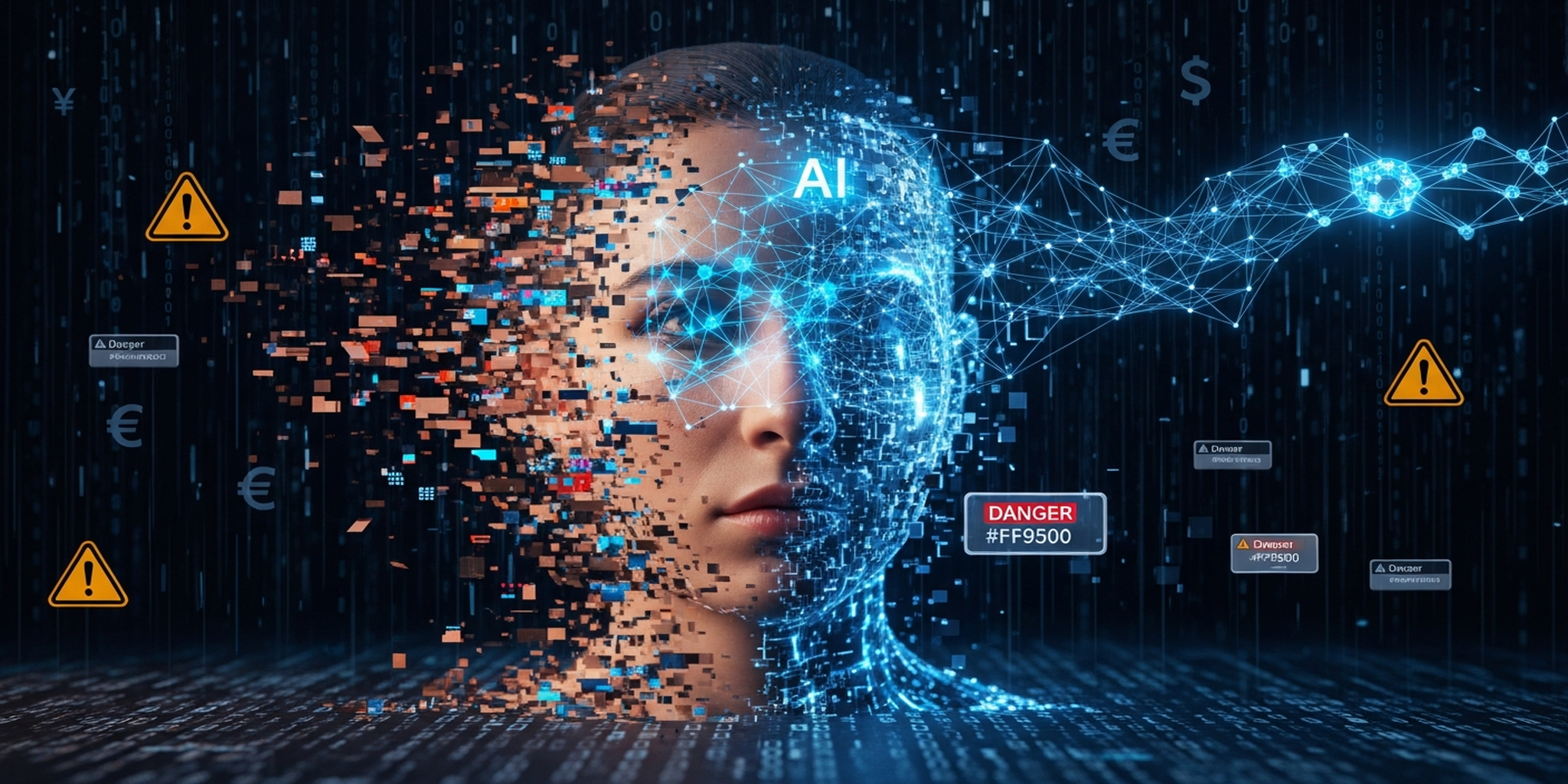
Artificial intelligence has fundamentally changed the economics of fraud. What once required call centers and mass phishing kits can now be automated, personalized, and scaled globally with minimal cost.
And regulation is not keeping pace.
As governments debate AI governance frameworks, threat actors are already deploying AI-enhanced deception campaigns that blur the line between automation and manipulation.
For consumers, professionals, and small businesses alike, the risk landscape in 2026 looks very different.
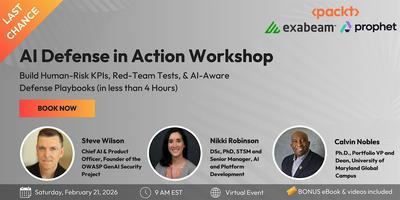
AI Defense in Action – Feb 21
40% discount code: CISOMP40
AI Defense in ActionA live, high-intensity workshop for security leaders and practitioners to build human-risk KPIs, red-team tests & AI-aware defense playbooks Eventbrite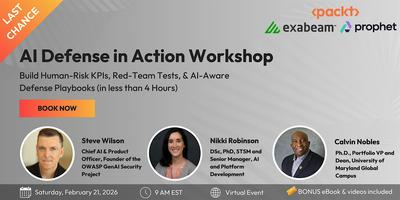
The Shift: From Mass Spam to Behavioral Targeting
Traditional scams relied on probability:
Send 1 million emails. Hope 0.1% respond.
AI changes that math.
Modern fraud operations now use:
- AI-generated spear phishing emails- Deepfake voice cloning for executive impersonation- Synthetic identity creation at scale- Automated social engineering chatbots- AI-enhanced data scraping for personalization
Tools built on large language model architectures similar to OpenAI platforms can generate persuasive, context-aware messages in seconds.
But unlike legitimate enterprise use, criminal actors remove ethical safeguards.
The result?
Scams that feel human.
Deepfake Impersonation Is Moving Down-Market
Voice cloning and video deepfakes were once rare and expensive.
That barrier has collapsed.
Fraud groups are now using:
- Stolen social media clips- Public earnings calls- Podcast appearances- YouTube interviews
to train voice models and impersonate:
- CEOs- CFOs- Family members- Political figures- Law enforcement
In multiple jurisdictions, financial institutions have already reported cases of voice-cloned executives authorizing fraudulent transfers.
This is no longer theoretical.
Synthetic Identity Fraud Is Accelerating
Another rapidly growing threat is synthetic identity fraud.
Instead of stealing one real identity, attackers:
- Combine real Social Security numbers with fabricated names- Use AI to generate realistic profile photos- Create layered digital footprints- Build fake credit histories
These identities can pass basic verification systems.
Financial institutions and fintech platforms are particularly vulnerable.
Unlike traditional identity theft, synthetic identities often go undetected for months — sometimes years.
AI-Powered Phishing Is Harder to Spot
Classic phishing emails had obvious red flags:
- Broken grammar- Poor formatting- Suspicious tone
AI has eliminated those signals.
Modern phishing emails:
- Mirror company writing style- Reference recent real events- Use correct grammar and formatting- Adapt tone dynamically
Because large language models are trained on vast public datasets, attackers can generate phishing campaigns tailored to specific industries, roles, or even internal project language.
Detection is now a behavioral problem, not a grammar problem.
Regulatory Gaps Are Creating Opportunity for Criminals
While frameworks like the EU AI Act aim to regulate high-risk AI applications, enforcement takes time.
In the U.S., agencies like the Federal Trade Commission are signaling scrutiny of deceptive AI practices — but fraud groups operate across borders.
This creates a temporary asymmetry:
Legitimate organizations must slow down for compliance. Criminal networks move at algorithmic speed.
That asymmetry benefits attackers — at least in the short term.
What Individuals and Small Businesses Can Do Now
Until regulatory convergence tightens enforcement globally, defense must be proactive.
1. Verify Voice Requests
If a financial or urgent request comes via voice:
- Call back using a known official number.- Establish pre-agreed verification phrases internally.
2. Harden Email Authentication
Ensure SPF, DKIM, and DMARC are configured correctly to reduce spoofing risk.
3. Monitor for Synthetic Profiles
Watch for:
- Recently created LinkedIn accounts with AI-generated photos- Minimal engagement history- Vague employment claims
4. Train for AI-Enhanced Social Engineering
Security awareness training must now include:
- Deepfake examples- AI-generated phishing scenarios- Business email compromise case studies
5. Segment Financial Authority
Never allow a single communication channel to authorize large transfers.
Why This Matters Beyond Consumer Fraud
AI-enabled scams do not just affect individuals.
They target:
- Healthcare systems- Critical infrastructure vendors- Supply chains- Small government contractors- SaaS startups
The same tactics used in consumer fraud are now being weaponized in enterprise compromise campaigns.
Which means AI governance is not just a regulatory discussion.
It’s a fraud containment discussion.
The Strategic Blind Spot
Many organizations are focused on how they deploy AI.
Far fewer are focused on how AI is deployed against them.
That asymmetry is where losses occur.
Fraud defense in 2026 requires:
- Technical awareness- Behavioral verification protocols- Cross-functional governance- Incident response modernization
And increasingly, leadership-level understanding of how regulatory convergence intersects with AI risk.
Looking Ahead
As AI governance frameworks mature globally, enforcement pressure will increase on both developers and deployers of high-risk systems.
But the fraud ecosystem will continue evolving.
Understanding the mechanics of AI-driven deception is now a baseline requirement for risk-aware professionals.
We’ll be discussing these governance gaps — and how organizations can align privacy, security, and AI risk oversight — in an upcoming workshop focused on operational AI governance and real-world threat modeling.
Readers of ScamWatchHQ can access additional details (including limited discount access) here:
 Eventbrite