The March 2026 Global Scam Purge: How Law Enforcement Hit Every Layer of the Cybercrime Stack at Once
Something unprecedented happened in the first two weeks of March 2026. If you followed the individual headlines, you saw three separate law enforcement operations announced days apart:
- March 11-12: FBI, DOJ, and Thai Police — backed by Meta — raided Southeast Asian scam compounds, disabled 150,000 accounts, arrested 21 suspects, and identified 300+ human trafficking victims
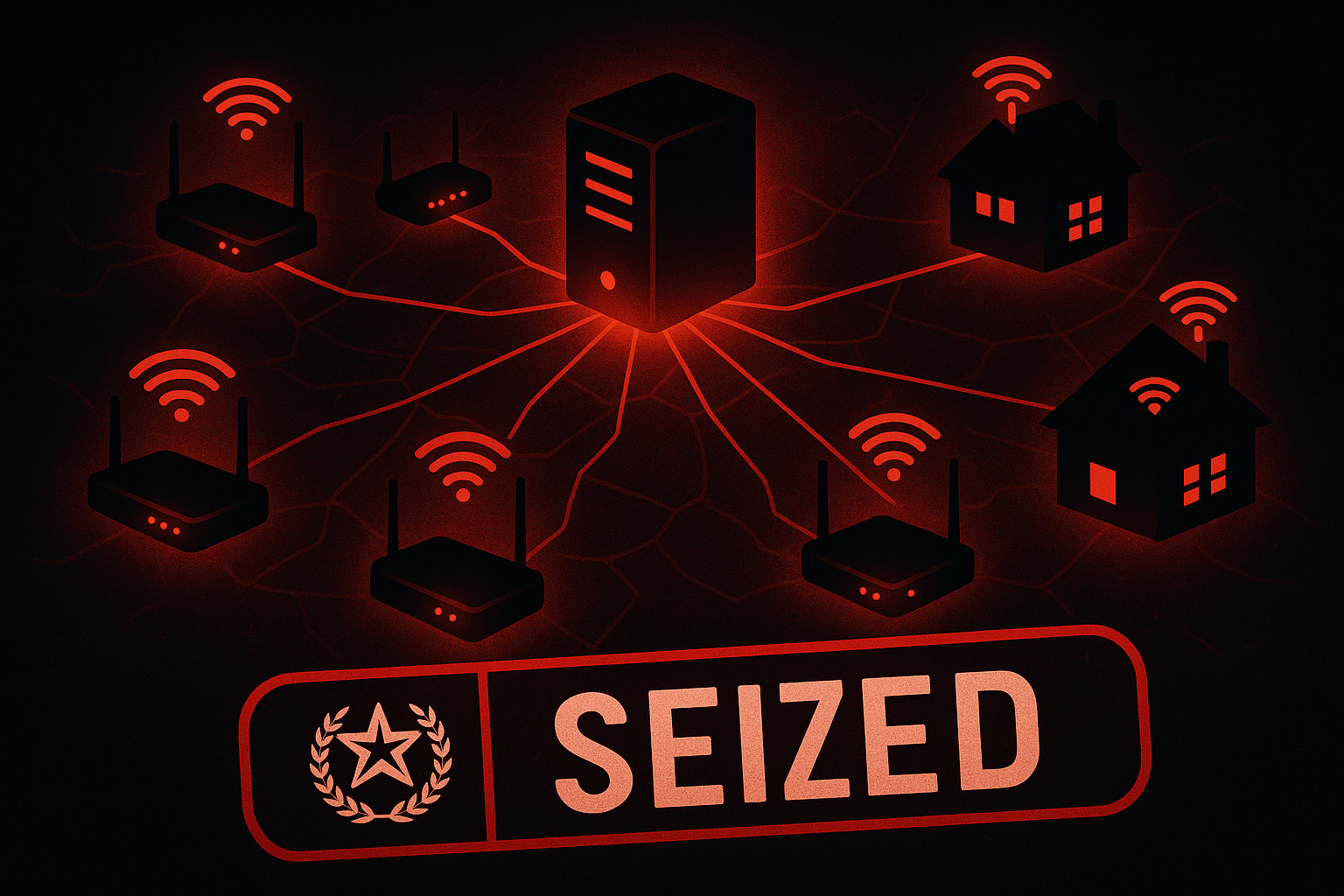
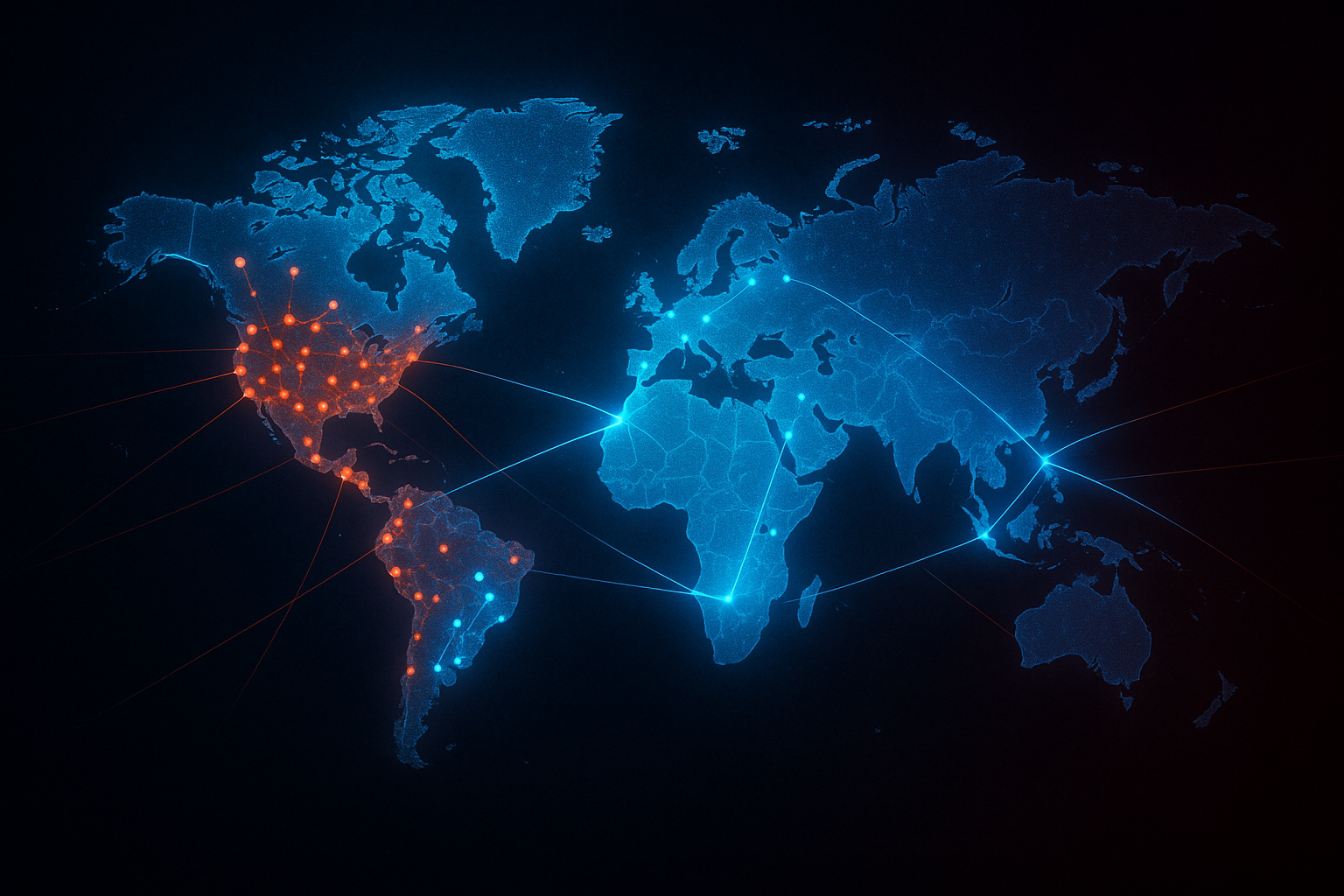
- March 12-13: DOJ and Europol seized SocksEscort, a 16-year-old criminal proxy network built on 369,000 infected routers across 163 countries
- March 13: INTERPOL announced the results of Operation Synergia III — 45,000 malicious IPs neutralized, 94 arrested, 212 devices seized across 72 countries
Three operations. Three announcements. One week.
This was not a coincidence.
The Stack Attack: Hitting Every Layer at Once
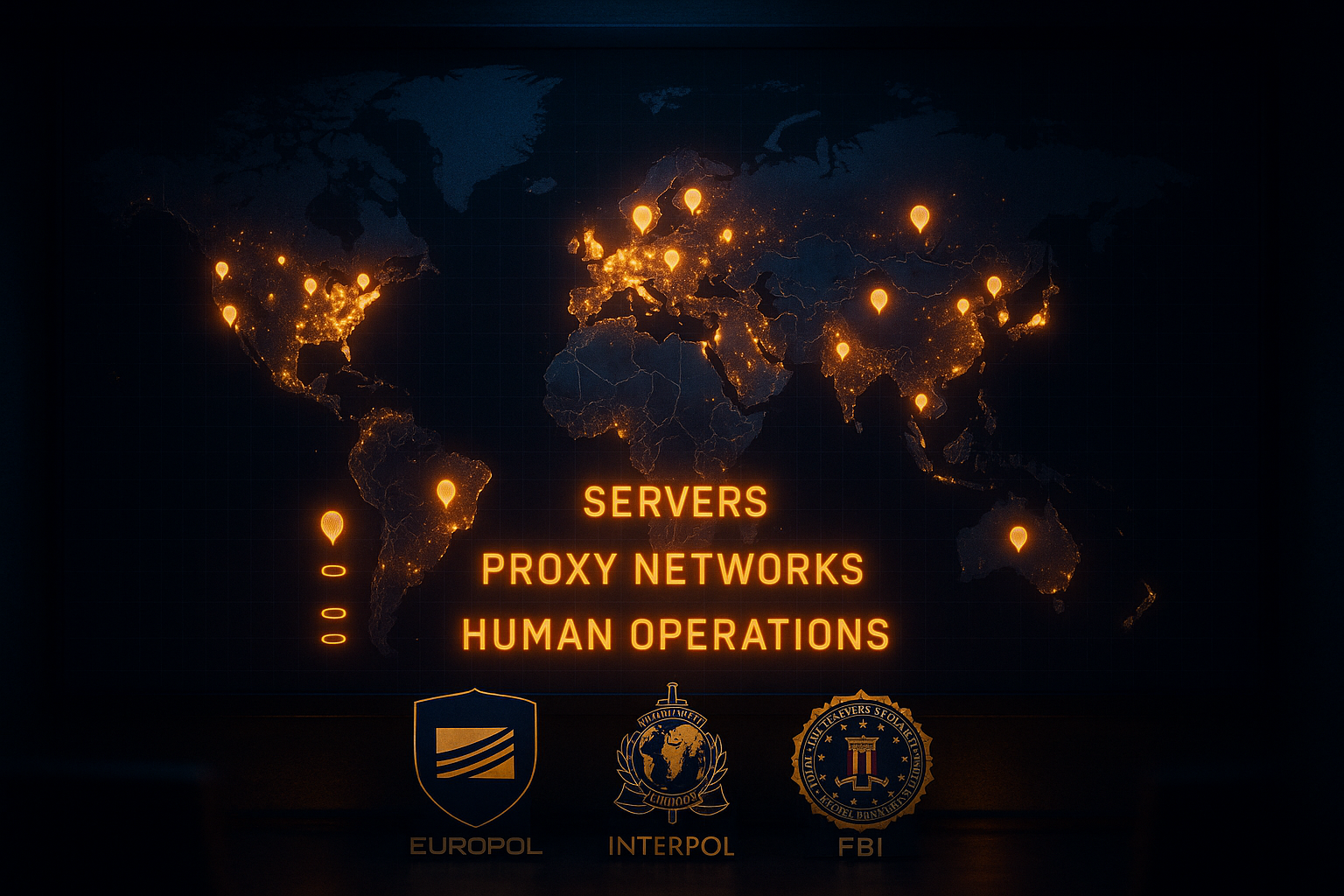
Modern cybercrime runs on a technology stack, just like any legitimate business. At the top are the human operators — the scammers in call centers, the fraudsters behind keyboards. In the middle is the server infrastructure — phishing pages, malware distribution networks, C2 servers. At the bottom is the anonymity layer — the proxy networks, VPNs, and botnets that hide the criminals’ real locations.
Historically, law enforcement has attacked one layer at a time. Arrest the scammers, and new ones take their place. Seize the servers, and the criminals spin up replacements. Take down a proxy network, and another fills the gap.
March 2026 was different. For the first time, we saw coordinated operations hitting all three layers simultaneously:
Layer 1: The Human Operations (Thailand Raids)
The FBI, DOJ Scam Center Strike Force, and Royal Thai Police struck the people layer — the actual human beings running scam operations out of compounds across Southeast Asia.
The Numbers:
- 150,000+ accounts disabled by Meta across Facebook, Instagram, and WhatsApp
- 21 arrests by Thai police
- 300+ human trafficking victims identified — many of them forced into scam work under threat of violence
- 10+ nations cooperating: Thailand, U.S., U.K., Canada, Korea, Japan, Singapore, Philippines, Australia, New Zealand, and Indonesia
This wasn’t a random raid. It built on a pilot program from December 2025 that removed 59,000 scam accounts and generated six arrest warrants. The March operation was the scaled-up version — bigger, faster, and with Meta’s engineering teams providing real-time intelligence to law enforcement on the ground.
What Meta Found Inside: The scale of the scam compound economy is staggering. Meta reported removing 10.9 million accounts connected to criminal scam centers on Facebook and Instagram in 2025 alone. They blocked 159 million scam ads in the same period. These aren’t individual fraudsters — they’re industrial operations with office buildings, shifts, scripts, and performance metrics.
The human trafficking dimension makes this even more disturbing. Many of the people running scams in these compounds aren’t willing participants. They’re victims themselves — lured to Southeast Asia with promises of legitimate jobs, then forced to work in scam centers under threat of violence. Identifying 300+ trafficking victims in a single operation suggests the true scale of forced labor in the scam industry is massive.
The UK Response: The same week, the U.K. government announced a new Online Crime Centre backed by £30 million in funding. The centre will bring together government, police, intelligence agencies, banks, mobile networks, and tech firms to identify and shut down criminal accounts, websites, and phone numbers at scale. It includes plans to deploy AI-powered “scam-baiting chatbots” to waste fraudsters’ time and gather intelligence.
Layer 2: The Server Infrastructure (Operation Synergia III)
While the human operations were being raided in Thailand, INTERPOL’s Operation Synergia III was dismantling the server infrastructure that keeps scams operational. (Read our full coverage here.)
The Numbers:
- 45,000+ malicious IP addresses taken down
- 94 suspects arrested, 110 more under investigation
- 212 electronic devices and servers seized
- 72 countries participating over a 6-month operation (July 2025 – January 2026)
- Private sector partners: Group-IB, Trend Micro, and S2W providing threat intelligence
The operation targeted the infrastructure layer specifically — phishing servers hosting fake login pages, malware distribution networks, and ransomware C2 infrastructure. When you hear “45,000 malicious IPs,” think of it as 45,000 addresses where scam websites, malware downloads, and command-and-control servers were operating.
The Macau Discovery: Perhaps the most revealing finding came from Macau, where police identified more than 33,000 fraudulent websites — fake casino platforms, spoofed banking portals, and government impersonation sites — all operated as industrial-scale fraud infrastructure from a single jurisdiction.
Layer 3: The Anonymity Infrastructure (SocksEscort)
The deepest layer — the one that makes everything else possible — is the anonymity network. SocksEscort was one of the largest criminal proxy services ever documented, and its takedown represents a direct hit on the infrastructure that allows criminals to operate without being traced. (Read our full coverage here.)
The Numbers:
- 369,000 infected routers across 163 countries
- 16 years of continuous operation (2009-2026)
- 35,000+ active proxies at any given time
- 34 domains and 23 servers seized in seven countries
- 124,000 paying criminal customers over the network’s lifetime
Without proxy networks like SocksEscort, most online fraud becomes dramatically harder. Bank fraud detection systems flag foreign IP addresses. Account takeover attempts fail when the login doesn’t match the victim’s location. Ransomware operators can’t hide their negotiations. The proxy layer is the invisibility cloak that makes everything else work.
Why This Matters: The Coordination Theory
Seventy-two countries don’t coordinate a six-month simultaneous operation by accident. The FBI doesn’t raid scam compounds in Thailand the same week Europol seizes a proxy network and INTERPOL announces the results of a global infrastructure sweep by coincidence.
What we’re seeing is the emergence of a new model for fighting cybercrime — one that recognizes you can’t just arrest scammers or seize servers or take down proxies in isolation. You have to hit all three layers at once:
- Remove the people (Thailand raids) → The scam centers lose their operators
- Remove the infrastructure (Synergia III) → The phishing sites, malware servers, and C2 infrastructure go dark
- Remove the anonymity (SocksEscort) → The remaining criminals can’t hide their operations
Each operation amplifies the others. When you lose your proxy network on the same day your servers get seized and your call center gets raided, there’s no fallback. You can’t just spin up new servers if you have no proxies to hide behind. You can’t recruit new scammers if the old ones are in custody and the trafficking victims have been freed.
The Private Sector Connective Tissue
The critical enabler across all three operations was private sector threat intelligence. Group-IB, Trend Micro, and S2W fed INTERPOL. Black Lotus Labs tracked SocksEscort for years before the takedown. Meta’s investigators provided real-time intelligence to law enforcement during the Thailand raids.
This isn’t law enforcement versus criminals anymore. It’s an alliance of governments, tech companies, and cybersecurity firms operating from shared intelligence and executing coordinated strikes. The private sector provides the visibility that law enforcement lacks — they see the scam accounts, the malicious traffic patterns, the botnet infrastructure — and law enforcement provides the legal authority to act.
The Timeline Pattern
Look at the dates:
| Date | Operation | Target Layer |
|---|---|---|
| Jul 2025 – Jan 2026 | Operation Synergia III (execution phase) | Infrastructure |
| Dec 2025 | Meta/Thai Police pilot (59K accounts removed) | Human operations |
| Feb 2026 | Operation Moonlander (Anyproxy/5socks takedown) | Anonymity |
| Mar 11, 2026 | FBI/Meta/Thai Police raids | Human operations |
| Mar 12, 2026 | SocksEscort seizure | Anonymity |
| Mar 13, 2026 | Synergia III results announced | Infrastructure |
The pattern is clear: a sustained, months-long campaign with the final strikes concentrated in a single week for maximum disruption.
And it didn’t stop there. The same week saw:
- The U.K. announcing its £30 million Online Crime Centre
- Meta launching new anti-scam detection features on Messenger and WhatsApp
- Expanded advertiser verification programs to prevent scam ads
When the government announcements, law enforcement operations, platform policy changes, and new funding all land in the same week, you’re not watching separate events. You’re watching a coordinated campaign.
What This Means for You
If You’ve Been Scammed
The coordinated nature of these operations means more intelligence is being gathered and shared than ever before. If you’ve been a victim of an online scam — particularly one involving fake investment platforms, romance fraud, or pig butchering schemes — reporting it now has more value than ever:
- U.S.: Report to the FBI at ic3.gov and the FTC at ReportFraud.ftc.gov
- U.K.: Report to Action Fraud at actionfraud.police.uk
- International: Report to your national cybercrime authority and at econsumer.gov
If You’re Worried About Your Router
The SocksEscort takedown highlights the ongoing risk to consumer routers. Read our full guide on protecting your router — but the short version: reboot it, update it, change the default password, and replace it if it’s more than 5 years old.
If You’re on Social Media
Be aware that scam operations are industrial and sophisticated. Meta removed 10.9 million scam-connected accounts in 2025 and blocked 159 million scam ads. Despite these numbers, scam accounts continue to be created. The new Messenger and WhatsApp detection features help, but vigilance remains your best defense:
- Be suspicious of unsolicited investment opportunities
- Don’t trust strangers who seem romantically interested and quickly move to discussing money
- Verify any “too good to be true” offers through independent channels
- Never send money, cryptocurrency, or gift cards to someone you haven’t met in person
What Comes Next
The March 2026 operations disrupted the scam industry at every level. But disruption isn’t elimination. Proxy networks will be rebuilt. New scam centers will open. Fresh server infrastructure will be provisioned.
What’s changed is the model. Law enforcement has demonstrated it can coordinate across 72+ countries, partner with the private sector for real-time intelligence, and execute simultaneous strikes on multiple layers of the cybercrime stack. That capability doesn’t disappear after one operation.
The scam industry just learned that there’s no safe layer anymore. Your servers, your proxies, and your people are all targets — simultaneously. And the intelligence-sharing infrastructure that made March 2026 possible is only getting stronger.
The purge isn’t over. It’s just beginning.
Sources
- Meta, “Global Law Enforcement Agencies, With Support From Meta, Disrupt Major Criminal Scam Networks Based in Southeast Asia,” March 11, 2026
- The Guardian, “Meta disables more than 150,000 accounts in crackdown on south-east Asian scam networks,” March 11, 2026
- The Hacker News, “Meta Disables 150K Accounts Linked to Southeast Asia Scam Centers in Global Crackdown,” March 12, 2026
- U.S. Department of Justice, “Authorities Dismantle Global Malicious Proxy Service,” March 13, 2026
- Europol, “Europol and international partners disrupt ‘SocksEscort’ proxy service,” March 13, 2026
- INTERPOL, “Operation Synergia III results,” March 13, 2026
- UK Government, “Fraud Strategy 2026 to 2029,” March 2026
- Axios, “Meta, Thai police disable 150,000 accounts, arrest 21 in global scam crackdown,” March 11, 2026