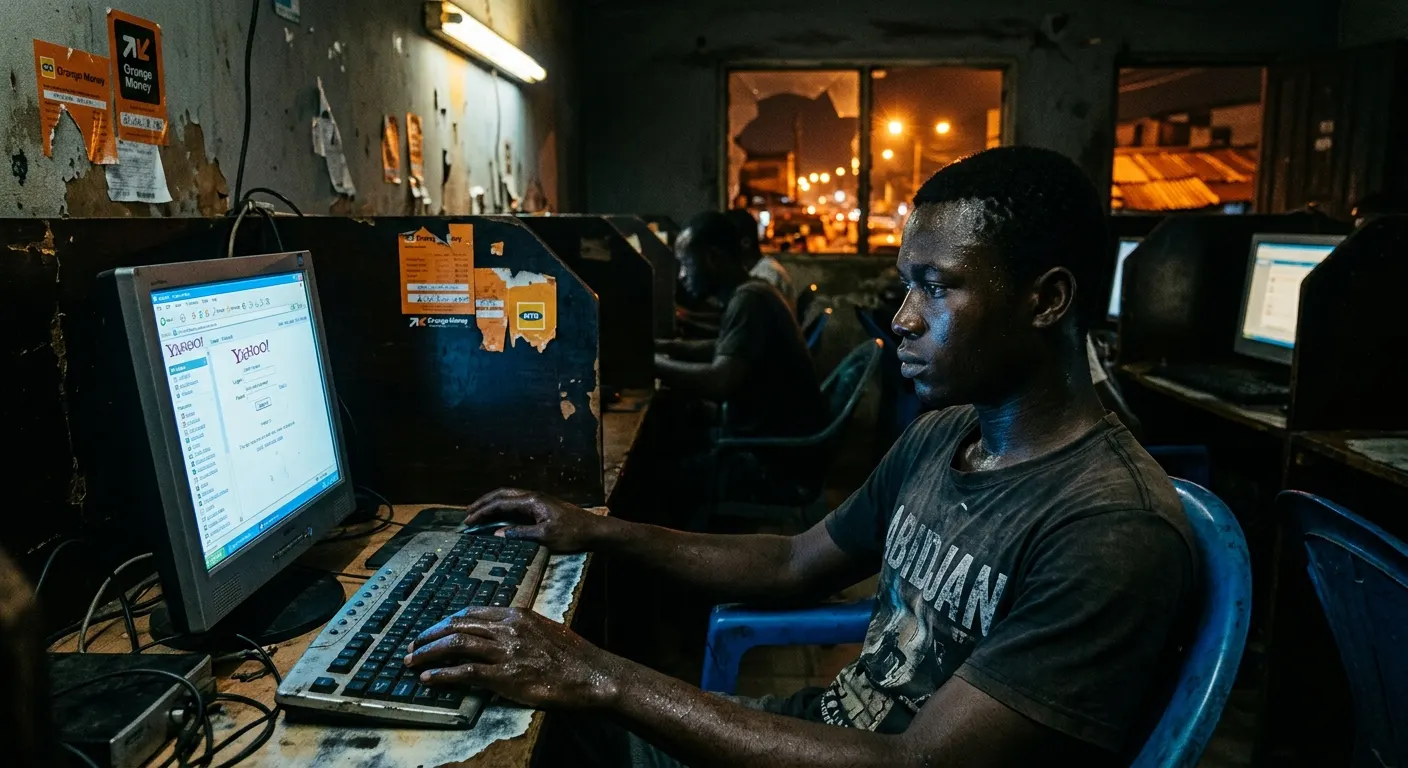
Executive Summary: The Fraud Starts at the Registration Desk
Most country fraud profiles begin with the scam and work backwards to the infrastructure. Tanzania is best understood the other way round, because the entire national fraud economy rests on one structural failure: the identity that a SIM card is registered to often is not the identity of the person holding it.
Tanzania has built one of Africa’s most successful mobile money systems — more than 76 million mobile money accounts in a country of roughly 68 million people, moving tens of trillions of shillings a year. M-Pesa, Tigo Pesa, Airtel Money and Halopesa are not a supplement to banking here. For most Tanzanians, they are banking.
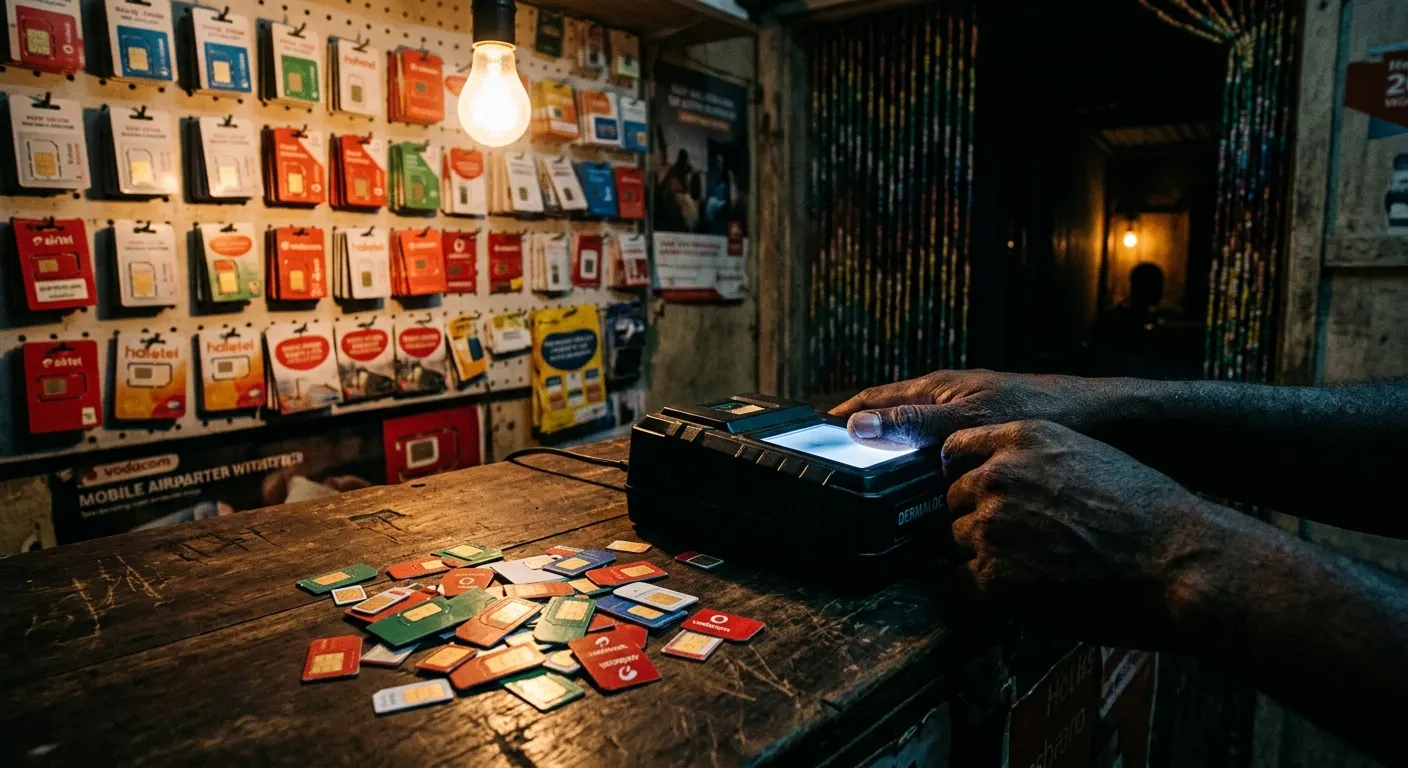
That system authenticates on the phone number. Which means the security of the entire national payment infrastructure depends on the person sitting at a plastic table with a fingerprint scanner, registering SIM cards for a commission.
The Numbers on the Crackdown
The scale of enforcement tells you the scale of the problem.
Between March 2025 and March 2026, Tanzanian authorities blocked 62,879 SIM cards and restricted 60,177 National Identification Authority (NIDA) numbers from being used to register new lines, all in connection with fraud cases.
Sixty thousand national ID numbers is not a rounding error. It represents tens of thousands of Tanzanians whose legal identity had been attached to lines they did not control — and who then found themselves locked out of registering a phone in their own name.
The Tanzania Communications Regulatory Authority (TCRA) flagged and disconnected 7,334 fraud-linked lines in the second quarter of 2026 alone, which it characterised as a 25% reduction from earlier peaks. Reported fraud losses exceeded Sh5 billion in 2024, of which roughly Sh288.7 million was recovered — a recovery rate under 6%.
How the Rogue Agent Scheme Works
The mechanism is almost disappointingly simple, and an anonymous registration agent in Ifakara described it plainly to Tanzanian reporters.
A customer comes in to register a SIM. Their fingerprint is captured and their NIDA number recorded. Then the agent tells them “the fingerprint was not captured properly” and asks them to scan again.
The second scan registers a different SIM card, to the customer’s identity, which the customer never sees and never receives. That card is now a fully documented, legally registered line belonging to a real Tanzanian with a real national ID — and it is in the hands of a fraud network.
A March 5, 2026 police operation in Kilombero District, Morogoro made the scale concrete: 198 SIM cards seized, 88 of them recovered from a single registration agent, registered under different people’s names. Ten suspects were arrested, connected to more than Sh12 million stolen from victims.
There is a price list. An illegally registered SIM originally traded for around Sh25,000; the black market rate has since fallen to Sh10,000–15,000 — a price drop that indicates supply, not scarcity. Morogoro and Rukwa record the highest volumes of attempted scams.
Halohalo, Makeya and Mjomba Mjomba
Tanzanians have names for the fraud, which is usually a sign it has become ordinary.
Halohalo is the umbrella term for the dominant network model — a structure combining scammers who make the calls with rogue agents who supply the registered lines. The two roles are complementary and mutually dependent: the caller needs a line that survives a police trace, and the agent needs a buyer for the identities they harvest.
Makeya and Mjomba Mjomba (“uncle uncle”) describe local variants, the latter built on the relative-in-trouble pretext familiar worldwide.
The scripts themselves are the standard global repertoire, localised:
- Mobile operator impersonation — a caller claiming to be from Vodacom, Airtel or Tigo reporting an account problem and requesting a PIN or a confirmation code.
- Government and security official impersonation — a claimed police officer, TRA tax official, or NIDA representative.
- Fake job offers — pay a processing fee for a position that does not exist. Effective in a country with substantial youth unemployment.
- Fabricated emergencies — a relative in hospital or under arrest, requiring an immediate transfer.
- Spiritual healing and prosperity promises — payment for intervention in health, business or family matters, a category that thrives where formal financial services are least trusted.
The human cost sits in ordinary sums. In Morogoro, Emil Yohana lost Sh25,000 to a fraudulent text message. In Dodoma, Mariam Khamis watched her father lose Sh350,000 — university tuition money.
SIM Swap and the AI Layer
Tanzania reports rising SIM swap fraud, and the reason is specific: telecom operators have struggled to implement real-time biometric verification at the point of SIM replacement. Where verification is manual and commission-driven, a persuasive request plus a cooperative agent is enough to move a phone number — and every mobile money balance and one-time password that number controls — to a new card.
Layered on top is an emerging AI problem that Tanzanian regulators have begun naming explicitly: voice and face cloning. A convincing clone requires only a few seconds of audio, which social media supplies in abundance. In a fraud economy already built on impersonating operators, officials and relatives by phone, synthetic voice removes the last inconsistency that alert victims used to catch.
The Response: An Alliance Instead of an Arrest Campaign
Tanzania’s institutional answer has moved beyond blocking lines after the fact. The government has convened a standing forum bringing together the TCRA, the Tanzania Police Force cybercrime unit, and the telecommunications operators, tasked with establishing a real-time threat intelligence sharing protocol.
The logic mirrors what Belgium and other jurisdictions have concluded independently: fraud crosses institutional boundaries faster than institutions share information. A line blocked by one operator, or a NIDA number flagged by one bank, is useless intelligence if it takes weeks to reach the others.
The harder problem is the agent network itself. Registration is distributed across thousands of small commission-earning kiosks precisely because that distribution is what made mass mobile money adoption possible. Centralising it would restore security and destroy access. Tanzania is trying to keep both, which is the genuinely difficult part of the policy — and the reason the SIM blocking numbers stay high year after year.
Protecting Yourself in Tanzania
Watch the fingerprint scanner. If an agent tells you a scan failed and asks you to scan again, ask to see the registration confirmation for the specific SIM you are receiving. Confirm on the spot, before you leave, that only one line was registered.
Check what is registered to your NIDA number. Each operator provides a self-service code to list lines registered to your identity — use it, and report anything you do not recognise to the operator and to TCRA immediately.
Register at operator-owned outlets where possible. Branded company shops carry accountability that a roadside kiosk does not.
Never share a PIN or a one-time code with anyone, for any reason. No operator, no bank, no police officer, no NIDA official will ever ask. This single rule defeats the majority of Halohalo scripts.
Treat every unexpected call about your money as false until you call back. Hang up and dial the operator’s official customer care number yourself. Do not use a number provided by the caller or contained in a message.
Agree a family verification question. Voice cloning has arrived, and Mjomba Mjomba is exactly the script it improves. A private question with an answer that is not on social media is the defence that still works.
Never pay a fee to receive a job, a prize, or a loan. Legitimate employers and lenders deduct costs from what they pay you; they do not ask you to send money first.
If your line suddenly loses service, act immediately. An unexplained loss of signal is the signature of a SIM swap in progress. Contact your operator from another phone at once and freeze mobile money transactions.
Report to TCRA and the police cybercrime unit even for small amounts. The Sh5 billion figure is built from Sh25,000 losses, and the recovery rate — under 6% — will only improve when reporting becomes fast enough to follow the money. Speed matters far more than the size of the loss.