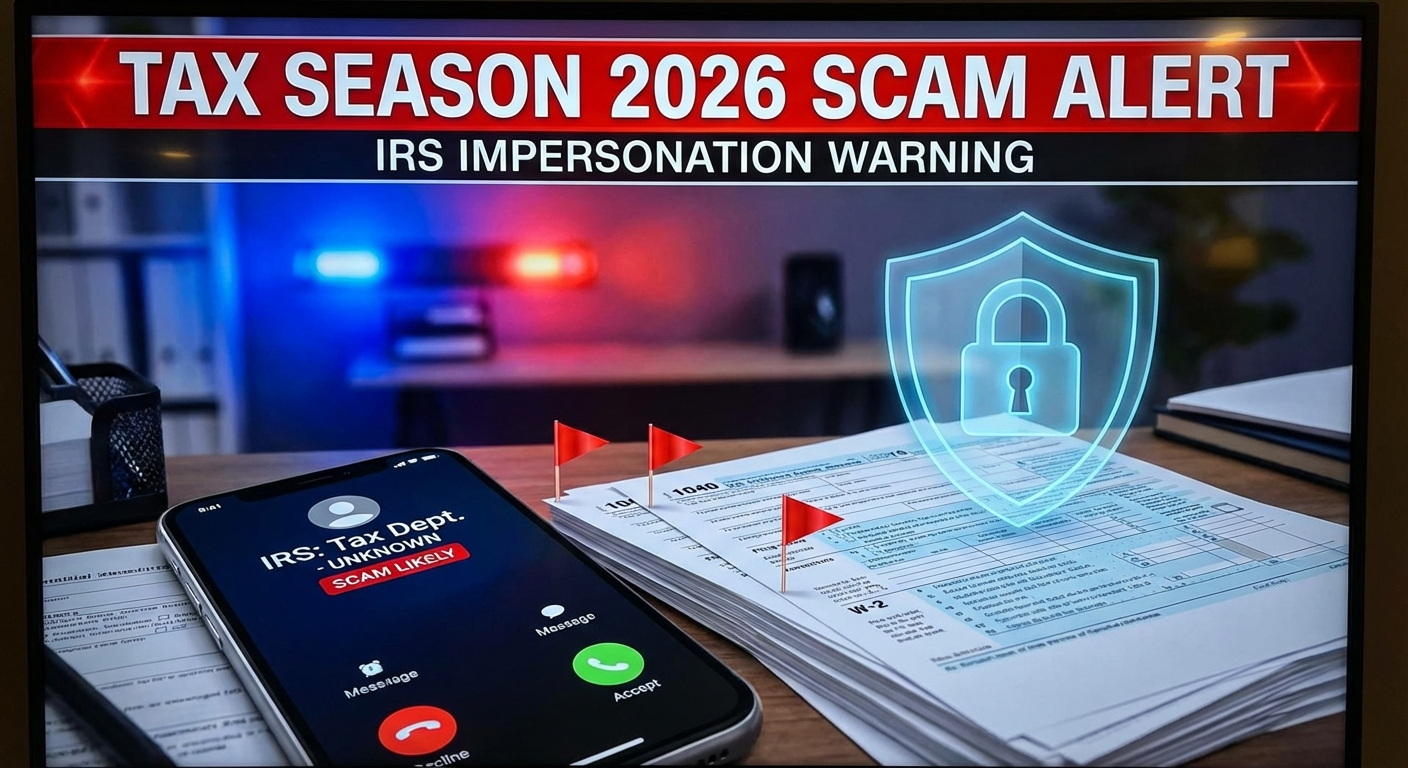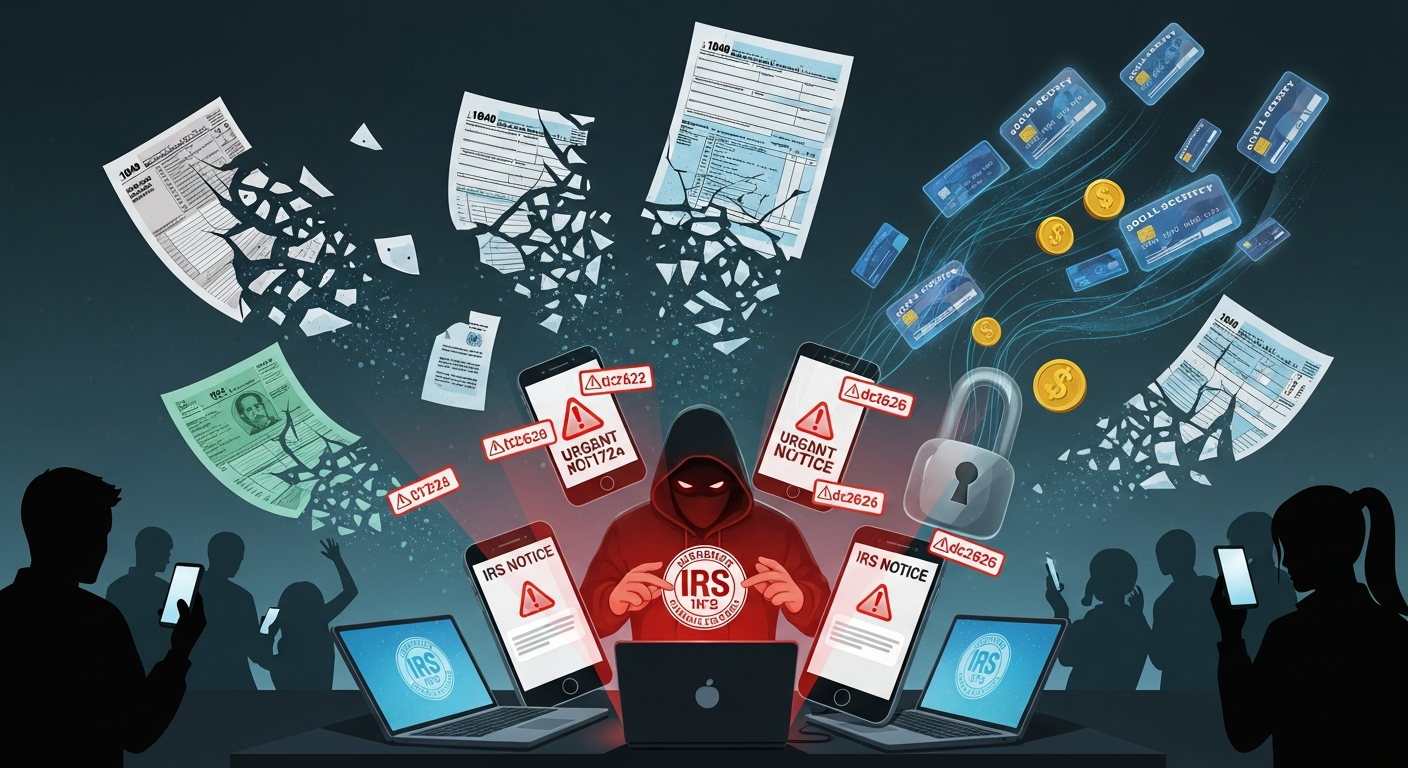
Tax filing season officially opened on January 27, 2026—and criminals are already working overtime. If you’re one of the estimated 160 million Americans preparing to file this year, scammers have you in their crosshairs.
The numbers are staggering: $9.1 billion was lost to tax-related fraud in 2024 alone, according to the IRS. And the IRS Criminal Investigation division identified $4.5 billion in tax fraud during fiscal year 2025—more than double the amount uncovered the previous year.
Nearly one in four Americans—23 percent—have lost money to a scam claiming to be from the IRS or a state tax agency, according to a 2025 McAfee survey. When victims do lose money, the amounts are devastating:
- 81% lost over $500- 51% lost over $1,000- 5% lost over $10,000
This isn’t a problem that affects “other people.” Tax scams are hitting Americans across every age group, income level, and education background. And this year, scammers are deploying new AI-powered tactics that make their schemes harder to detect than ever.
Here are the seven tax scams you need to watch for right now—and exactly what to do if you’re targeted.
Tax Season 2026 Scam Alert: The Complete Guide to Protecting Yourself From IRS Imposters, AI Voice Cloning, and Refund TheftTax season is here, and so are the scammers. The window between late January and mid-April represents the most lucrative period of the year for criminals targeting American taxpayers. In 2026, these attacks have reached unprecedented sophistication—from AI-generated voice calls that sound indistinguishable from real IRS agents to elaborate ScamWatchHQScamWatchHQ
1. IRS Impersonation Scams: Now With AI Voice Cloning
The classic IRS impersonation scam has evolved into something far more dangerous. Criminals are no longer just calling with thick foreign accents and obvious scripts. They’re now using AI voice cloning to create convincing American accents and natural-sounding conversations.
Experts issued warnings in December 2025 about a surge in AI voice clone scams targeting taxpayers. The technology has become sophisticated enough that scammers can generate realistic voices in real-time, making it nearly impossible to distinguish from a genuine caller.
How It Works
You receive a phone call from someone claiming to be an IRS agent or a representative from official-sounding organizations like the “Tax Resolution Oversight Department” or “Tax Mediation and Resolution Agency.” The caller ID may even be spoofed to show an IRS number.
The scammer will claim:
- You owe back taxes- There’s a problem with your tax filing- You’re under criminal investigation- A warrant has been issued for your arrest
They create extreme urgency, demanding immediate payment via:
- Gift cards- Wire transfers- Cryptocurrency- Prepaid debit cards
Some scammers leave voicemails saying, “This may be our only attempt to reach you,” hoping you’ll panic and call back immediately.
The Red Flags
The IRS will NEVER:
- Call you demanding immediate payment- Threaten arrest or deportation- Require payment via gift cards, wire transfers, or cryptocurrency- Ask for credit or debit card numbers over the phone- Initiate contact via phone, text, email, or social media about taxes owed
The IRS’s first contact will ALWAYS be a letter sent through the U.S. mail.
What To Do
If you receive a suspicious call:
- Hang up immediately. Don’t engage, even to argue.2. Never call back a number left in a voicemail.3. Check your tax status directly at IRS.gov/payments/view-your-tax-account4. If you actually owe taxes, the IRS website will show it.5. Report the scam to the Treasury Inspector General for Tax Administration (TIGTA) and at ReportFraud.ftc.gov
Tax Season Aftermath: Scams to Watch Out for Post-FilingTax season is finally over, and you’ve filed your returns—phew! But before you kick back and relax, there’s something you need to know: scammers aren’t done with you yet. In fact, the weeks and months after tax season are prime time for fraudsters to strike. They’
 ScamWatchHQScamWatchHQ

2. Phishing Texts and Emails: The “Refund on Hold” Trap
The FTC and IRS are seeing a massive wave of fake text messages and emails about tax refunds in 2026. These phishing attacks exploit people’s eagerness to receive their refunds.
Common Messages Look Like This
“IRS Notice: Your tax refund is on hold due to a filing discrepancy under updated 2026 rules. Verify your identity now to avoid delays.”
At first glance, these messages may appear credible. But clicking the link takes you to a fake IRS website designed to harvest your personal information.
What They’re After
- Social Security numbers- IRS login credentials- Bank account information- Credit/debit card numbers- Date of birth- Driver’s license information
Once they have this data, criminals can:
- File a fraudulent tax return in your name- Steal your actual refund- Open credit accounts using your identity- Sell your information on the dark web
How Scammers Reach You
According to 2025 data, people received suspicious tax-related messages via:
- Phone calls: 30%- Text messages: 27%- Facebook/Facebook Messenger: 5%- WhatsApp: 3%- Instagram/Instagram DMs: 2%
The Critical Truth
The IRS does not send text messages, emails, or social media messages to discuss your tax account or refund. Period.
If you receive any unsolicited message about your taxes:
- Do not click any links2. Do not reply3. Do not call any phone numbers in the message4. Forward phishing emails to phishing@irs.gov5. Check your refund status only at IRS.gov/refunds
 ScamWatchHQScamWatchHQ
3. “Ghost” Tax Preparers: The Vanishing Fraudsters
The Better Business Bureau is warning about a surge in “ghost preparer” scams this tax season—and these are some of the hardest to detect until it’s too late.
How Ghost Preparers Operate
Ghost preparers often set up legitimate-looking tax preparation businesses. They may have storefronts, websites, and professional-looking materials. They promise fast service and larger refunds than competitors.
The catch? They don’t sign your tax return.
Here’s the scam:
- They prepare your return with fabricated deductions or credits to inflate your refund2. They charge you hefty fees3. They direct part of your refund to their own accounts4. They never sign the return (as legally required)5. When the IRS catches the fraud—you’re held responsible6. When you try to find them, they’ve vanished
Because they didn’t sign the return, there’s no paper trail linking them to the fraud. You’re left holding the bag.
Warning Signs
Watch for preparers who:
- Promise larger refunds without seeing your documents- Base their fee on a percentage of your refund- Ask you to sign a blank or incomplete return- Direct the refund to be deposited into their account, not yours- Won’t provide their IRS Preparer Tax Identification Number (PTIN)- Refuse to e-file (so there’s no electronic record)- Won’t give you a copy of your return
Protect Yourself
- Verify any tax preparer on IRS.gov’s Directory of Federal Tax Return Preparers- Check their credentials and reviews on BBB.org- Never sign a blank return- Ensure the preparer signs and includes their PTIN- Make sure your refund goes to YOUR bank account- Get a complete copy of your return before leaving
4. Tax Identity Theft: Someone Filed As You
In this devastating scam, criminals use your stolen personal information to file a tax return before you do—and pocket your refund.
How It Happens
Criminals obtain your Social Security number through:
- Data breaches- Phishing attacks- Stolen mail- Dark web purchases- W-2 phishing attacks on employers
They then file a fake return early in the season, claiming fabricated income and deductions. By the time you file your legitimate return, the IRS rejects it because “a return has already been filed with your Social Security number.”
The Nightmare Aftermath
Resolving tax identity theft typically takes:
- 6-12 months to resolve- Multiple contacts with the IRS- Filing extensive paperwork- Potential delays to your actual refund of many months
During this time, you cannot receive your legitimate refund.
Signs You’re a Victim
- Your e-filed return is rejected because a return was already filed with your SSN- You receive an IRS notice about income you didn’t earn- You receive a refund you didn’t request- You get a notice that more than one return was filed using your SSN- IRS records show wages from an employer you don’t recognize
Prevention and Response
To prevent tax identity theft:
- File as early as possible- Get an IRS Identity Protection PIN (IP PIN) at IRS.gov/ippin- Protect your Social Security number like your life depends on it- Use strong, unique passwords for tax software accounts- Monitor for data breaches at HaveIBeenPwned.com
If you’re a victim:
- Respond immediately to any IRS notice2. Complete IRS Form 14039 (Identity Theft Affidavit)3. File a report at IdentityTheft.gov4. Consider a credit freeze with all three bureaus
 ScamWatchHQScamWatchHQ
5. W-2/1099 Phishing: Targeting Your Employer
This sophisticated scam doesn’t target you directly—it targets your employer’s payroll or HR department to steal YOUR data.
The Attack Method
Criminals send carefully crafted emails to company payroll or HR staff, impersonating:
- A CEO or company executive- A board member- A government official- An auditing firm
The email urgently requests W-2 forms, employee lists, or payroll information for all employees. If successful, the scammer obtains Social Security numbers, salaries, and addresses for potentially hundreds or thousands of employees.
Why It’s So Dangerous
Unlike targeting individuals one at a time, a single successful W-2 phishing attack can compromise every employee at a company. Criminals can then:
- File fraudulent returns for each victim- Sell the data on criminal marketplaces- Use the information for additional identity crimes
What Employees Can Do
- Ask your HR department if they’re trained on W-2 phishing attacks- Encourage your company to implement verification procedures for data requests- Consider asking when your employer will file your W-2 and file your return promptly after receiving it
What Employers Must Do
- Never send W-2 data via email- Require verbal confirmation for any data requests- Train HR and payroll staff on phishing tactics- Implement multi-step verification for sensitive data access- Report attacks to phishing@irs.gov
6. Refund Advance Traps: The Hidden Fee Nightmare
Tax refund advance loans—sometimes called “refund anticipation loans”—can seem like a lifeline when you need cash immediately. But they often come with devastating hidden costs.
How the Scam Works
Predatory tax preparers advertise “instant refunds” or “same-day cash.” What they don’t tell you:
- The “advance” is actually a high-interest loan against your expected refund- Fees can eat up 10-20% or more of your refund- You’re charged whether or not your actual refund comes through- Interest rates can exceed 200% APR when calculated annually
The Math
Let’s say you’re expecting a $3,000 refund:
- Refund advance fee: $150-300- Tax prep fee: $200-400- Additional “administrative” fees: $50-100- What you actually receive: $2,200-2,600
Meanwhile, if you e-file and choose direct deposit, the IRS typically delivers refunds within 21 days—and it costs nothing extra.
Red Flags
- Promises of “instant” or “same-day” refunds- Pressure to sign up for refund advances- Fees that aren’t clearly disclosed upfront- Preparers who push the advance as your only option- Any preparer who bases their fee on a percentage of your refund
The Better Option
File electronically with direct deposit. Most taxpayers receive refunds within 21 days—for free. If you need the money urgently, explore other options before accepting high-fee advances.
7. “Offer in Compromise” Mills: Fake Tax Debt Relief
If you’ve seen late-night TV ads promising to settle your IRS debt “for pennies on the dollar,” you’ve encountered offer in compromise (OIC) mills. Most are scams.
The Reality
The IRS does have a legitimate Offer in Compromise program for taxpayers who genuinely cannot pay their full tax debt. However, most people don’t qualify.
OIC mills:
- Charge high upfront fees ($3,000-10,000+)- Submit generic applications regardless of your actual eligibility- Rarely get applications approved- Leave you with less money AND your original tax debt- Often miss critical IRS deadlines during the process
Recent Case Example
In Washington State alone, the BBB received 88 tax scam reports in early 2026. In one case, a woman lost $4,000 to a company calling itself “Federal Tax Law Group” that claimed it could reduce or eliminate her tax debt but delivered nothing.
Warning Signs
- Promises to settle your debt “for pennies on the dollar”- Guarantees of a specific outcome- High upfront fees before reviewing your case- Pressure to sign immediately- No discussion of your actual financial situation
Legitimate Alternatives
If you owe back taxes:
- Go directly to IRS.gov to explore payment plans- Use the IRS Pre-Qualifier tool to check OIC eligibility- Consult with an enrolled agent, CPA, or tax attorney—check credentials first- The IRS Fresh Start program offers legitimate payment options
Who’s Most at Risk?
Tax scam data reveals surprising patterns:
Young adults (18-24) are actually the most likely to fall victim to tax scams—not seniors as many assume. They’re also most likely to have information stolen via Instagram and WhatsApp.
Young men are significantly more likely to lose money than young women.
Older adults (65-74) are heavily targeted with payment scams (demands for back taxes, fake refund schemes).
Middle-aged adults (35-54) face a mix of identity theft and payment scams.
What Scammers Demand
When scammers make contact, they most commonly demand:
- Social Security numbers or tax IDs: 40%- Immediate payment of “back taxes”: 27%- Bank account numbers: 18%- Credit/debit card information: 17%
Never provide any of this information to an unexpected caller, emailer, or text message.
If You’ve Been Scammed: Act NOW
If you believe you’ve been targeted:
- Stop all communication with the scammer immediately2. Do not send any money or provide additional information3. Contact your bank if you’ve shared financial information4. Place a fraud alert on your credit reports5. Report the scam:
- IRS impersonation: TIGTA.gov- Other tax scams: ReportFraud.ftc.gov- Identity theft: IdentityTheft.gov6. Monitor your accounts closely for unauthorized activity7. Consider a credit freeze with Equifax, Experian, and TransUnion
The Golden Rules of Tax Season Safety
Protect yourself with these non-negotiable rules:
- The IRS initiates contact by mail—ALWAYS. Any phone call, text, or email claiming to be the IRS is a scam.2. File early. The earlier you file, the less time criminals have to file a fraudulent return in your name.3. Get an IP PIN. The IRS Identity Protection PIN adds a layer of security to your tax filings. Get yours at IRS.gov/ippin.4. Never pay via gift cards, wire transfers, or crypto. No legitimate agency requests these payment methods.5. Verify tax preparers. Check credentials on IRS.gov and BBB.org before trusting anyone with your financial information.6. Check your refund status only at IRS.gov. Never click links in texts or emails—go directly to the source.7. Guard your Social Security number. Treat it as the most sensitive piece of information you own.
Stay Vigilant All Season
Tax scammers don’t take breaks between January and April. They’re working around the clock, refining their tactics, and deploying new technologies like AI voice cloning to make their schemes more convincing.
Your best defense is awareness. Share this article with friends and family—especially elderly relatives and young adults who may be frequent targets. The more people who recognize these scams, the fewer victims criminals can claim.
Have you encountered a tax scam this season? Report it, stay calm, and remember: if someone demands immediate action and threatens consequences, it’s almost certainly a scam.
File safely. Stay alert. And don’t let criminals steal what’s rightfully yours.
If you found this article helpful, share it with someone who needs to see it. Tax scammers count on silence—don’t give it to them.