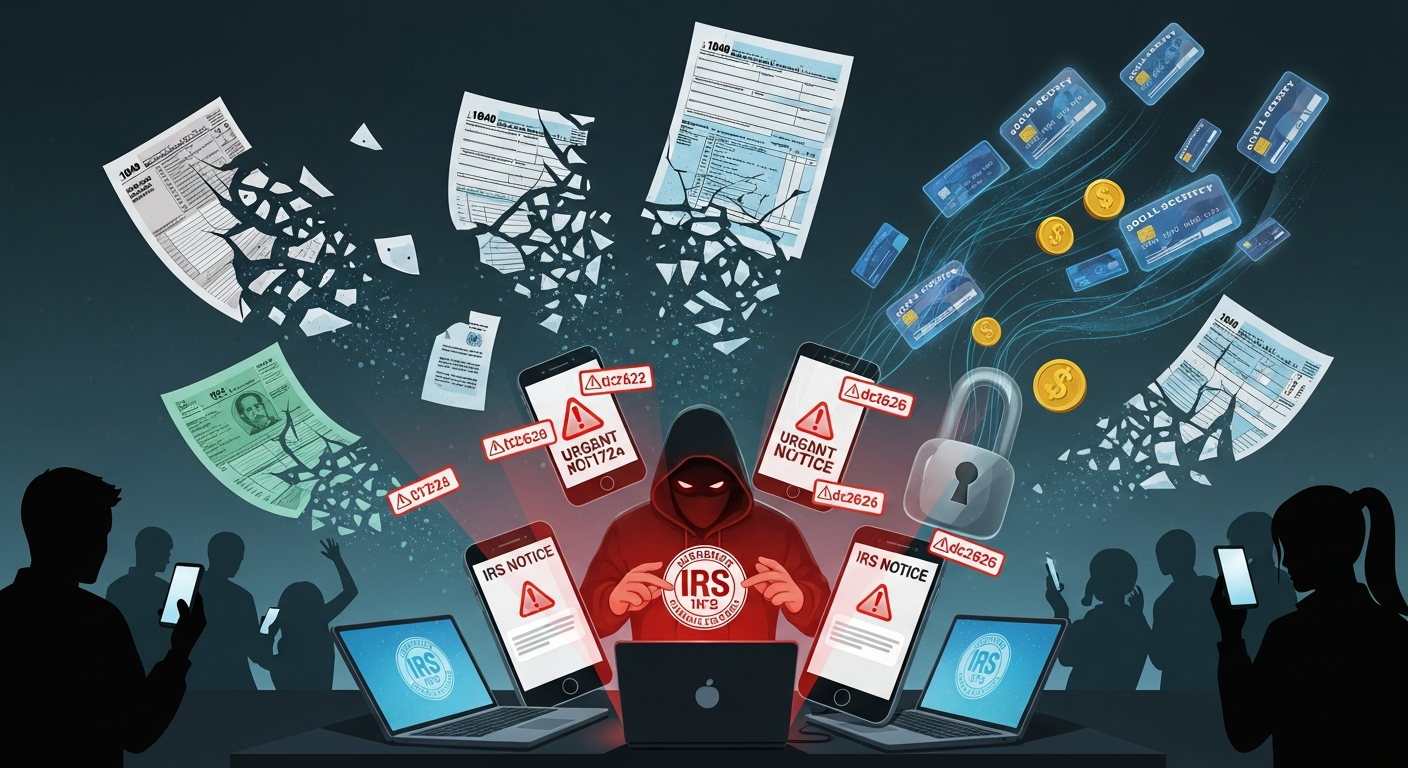
Tax season is here, and so are the scammers. The window between late January and mid-April represents the most lucrative period of the year for criminals targeting American taxpayers. In 2026, these attacks have reached unprecedented sophistication—from AI-generated voice calls that sound indistinguishable from real IRS agents to elaborate phishing campaigns that mirror official government communications down to the last pixel.
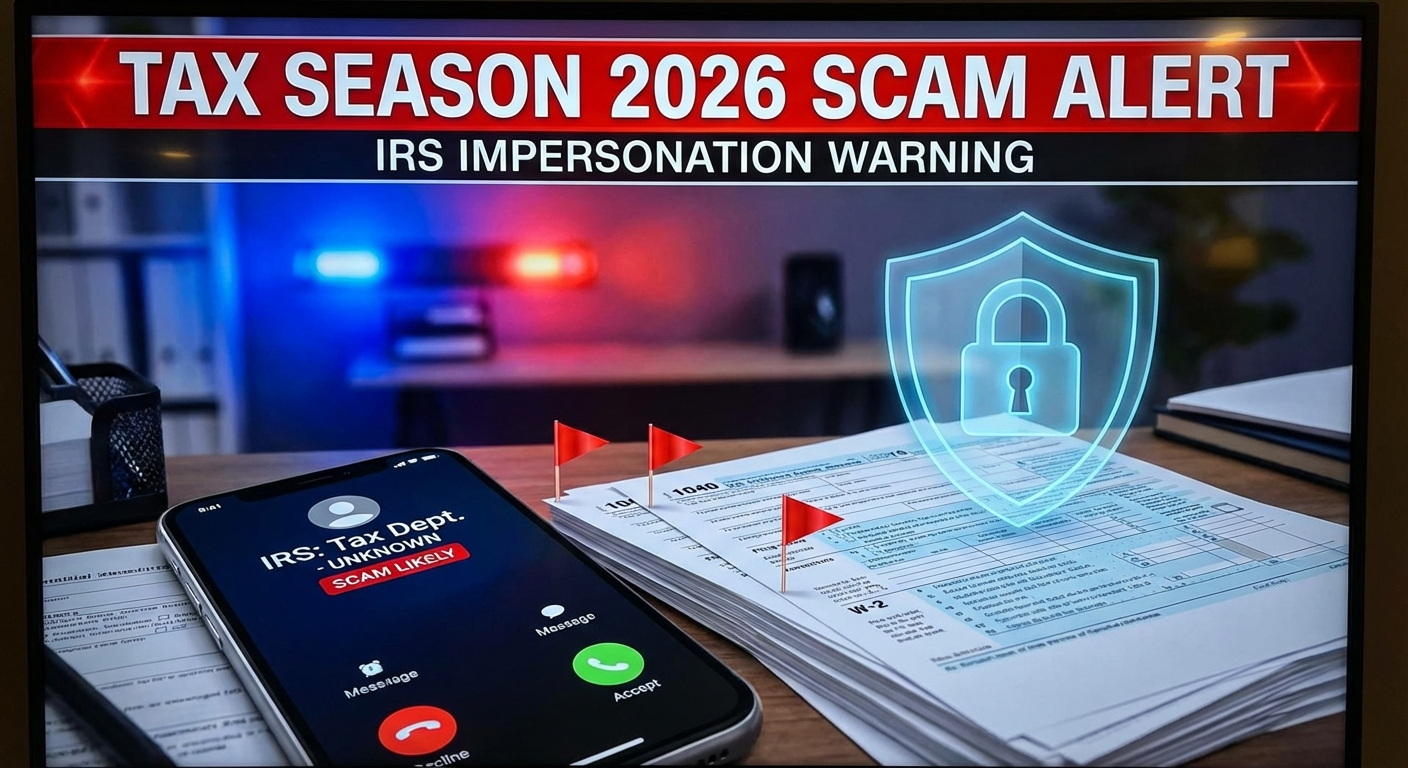
The Federal Trade Commission issued a stark warning on January 30, 2026, alerting Americans to a massive surge in phone scams from fraudsters posing as IRS officials and fake “tax resolution” agencies. The Better Business Bureau, IRS Criminal Investigation, and Treasury Inspector General for Tax Administration have all echoed these warnings. This year’s tax scam landscape is the most dangerous in history.
This guide will arm you with everything you need to know: the five most prevalent scam types targeting taxpayers in 2026, how to identify them instantly, what the IRS will absolutely never do, and exactly what steps to take if you’ve been targeted.
Tax Season Aftermath: Scams to Watch Out for Post-FilingTax season is finally over, and you’ve filed your returns—phew! But before you kick back and relax, there’s something you need to know: scammers aren’t done with you yet. In fact, the weeks and months after tax season are prime time for fraudsters to strike. They’ ScamWatchHQScamWatchHQ
The 2026 Tax Scam Landscape: A Perfect Storm
Several factors have converged to make 2026 particularly treacherous for taxpayers:
Filing season changes and confusion. The IRS’s ongoing modernization efforts, combined with updated tax code provisions, have created confusion that scammers exploit. When taxpayers are uncertain about legitimate processes, they become vulnerable to criminals who confidently provide false information.
AI-powered deception. Voice cloning technology has matured to the point where scammers can generate convincing audio of “IRS agents” in real-time. These AI voices don’t have the robotic quality of older automated systems—they sound human, professional, and authoritative.
Economic pressure. With many Americans anxious about their financial situations, the promise of a larger refund or the threat of tax penalties creates the emotional urgency scammers depend on.
Sophisticated infrastructure. Modern scam operations function like businesses, with call centers, professional-looking websites, and coordinated multi-channel campaigns that can be difficult to distinguish from legitimate communications.
The Five Most Dangerous Tax Scams of 2026
1. IRS Impersonation Calls: “Pay Now or Be Arrested”
How it works: You receive an unexpected phone call from someone claiming to be an IRS agent or a representative from an official-sounding organization like the “Tax Resolution Oversight Department” or “Tax Mediation and Resolution Agency.” The caller states that you owe back taxes, penalties, or interest, and demands immediate payment to avoid arrest, driver’s license revocation, or asset seizure.
The 2026 twist: According to the FTC’s January 30, 2026 Consumer Alert, scammers are now offering to connect you with a “tax resolution officer” who can perform a “red flag check” on your credit and enroll you in an “IRS liability reduction program.” These fake programs don’t exist—they’re designed to extract personal information or illegal upfront fees.
Warning signs:
- Unexpected calls demanding immediate payment- Threats of arrest, deportation, or license suspension- Requests for payment via gift cards, cryptocurrency, or wire transfers- Pressure to act immediately without time to verify- Caller ID showing “IRS” or a Washington D.C. number (easily spoofed)- Voicemails stating “This may be our only attempt to reach you”
Real-world example: The caller says, “This is Officer Johnson with the IRS Criminal Investigation Division. You have an outstanding tax liability of $4,847 from 2023. A federal arrest warrant will be issued within two hours unless you resolve this immediately. I can transfer you to our payment processing department.”
Tax Scams: Protecting Yourself from Financial FraudTax season can be a stressful time for many, and unfortunately, it’s also a prime opportunity for scammers to prey on unsuspecting individuals and businesses. This article will explore three common types of tax scams: IRS impersonation scams, tax refund fraud, and W-2 phishing scams. Understanding these fraudulent activities and ScamWatchHQScamWatchHQ

2. Fake Refund Phishing Emails and Texts (“Smishing”)
How it works: You receive an email or text message appearing to come from the IRS, a state tax agency, or a tax preparation service. The message claims your refund has been “approved,” “recalculated,” or “delayed” and asks you to click a link to verify your identity, update your banking information, or claim additional funds.
The 2026 twist: These phishing messages have become remarkably sophisticated, incorporating real IRS logos, formatting that mirrors official communications, and personalized details that may have been harvested from previous data breaches. Some campaigns even reference legitimate IRS programs or recent tax code changes to appear authentic.
Warning signs:
- Unsolicited emails or texts about your refund- Links to verify identity or update banking information- Urgent language about expiring refunds- Email addresses that don’t end in .gov- Requests for Social Security numbers or bank account details via email- Generic greetings like “Dear Taxpayer” instead of your name
Real-world example: “URGENT: Your 2025 tax refund of $3,247.00 has been approved but requires identity verification within 48 hours or funds will be returned to the Treasury. Click here to verify: [malicious link]“
3. Ghost Preparer Fraud: The Invisible Thief
How it works: A “ghost preparer” is an unscrupulous tax preparer who completes your return but refuses to sign it or include their Preparer Tax Identification Number (PTIN). By staying invisible, they avoid accountability while charging fees based on the size of your refund. These fraudsters often inflate deductions, claim fake credits, or simply steal your refund by directing it to their own accounts.
The 2026 twist: Ghost preparers have increasingly moved online, advertising through social media, local community forums, and even door-to-door solicitation. Some offer “guaranteed” refunds or claim special relationships with the IRS that allow them to secure larger returns.
Warning signs:
- Preparers who won’t sign your return or provide their PTIN- Fees based on a percentage of your refund rather than flat rates- Promises of unusually large refunds- Requests to sign a blank return- Refunds directed to the preparer’s bank account rather than yours- Cash-only payment requirements with no receipts- Preparers who won’t give you a copy of your return- Aggressive marketing promising “secret” deductions or loopholes
Real-world example: A preparer advertises “Guaranteed $5,000+ refunds! No upfront fees—we take our cut from your refund.” They file a return with fabricated deductions, pocket a substantial portion of the inflated refund, and disappear when the IRS comes calling with penalties.
4. W-2 Phishing: Targeting HR and Payroll Departments
How it works: This Business Email Compromise (BEC) scam targets HR and payroll professionals. Criminals impersonate company executives—typically the CEO or CFO—and send urgent emails requesting copies of all employee W-2 forms or wage and tax statements. With this information, criminals file fraudulent tax returns for dozens or hundreds of employees.
The 2026 twist: These attacks have become highly targeted, incorporating details about company structure, executive writing styles, and current business events. Some attackers monitor companies for weeks before striking, timing their requests to coincide with busy periods when rushed employees are less likely to verify unusual requests.
From Holiday Shopping to Tax Refunds: The Most Common Scams Rising with the Season and Calendar ChangeAs the year winds down, the shift in seasons and the approach of a new calendar year bring a unique set of opportunities for scammers. From holiday shopping deals to tax refund promises, scammers know how to exploit the seasonal changes in behavior, making the end of the year a ScamWatchHQScamWatchHQ
- Urgent email requests for bulk W-2 data- Requests from executives sent from personal email accounts- Unusual timing or phrasing in executive communications- Pressure to bypass normal verification procedures- Requests to keep the matter confidential
Impact: When successful, these attacks compromise the tax and personal information of every affected employee, who may not discover the theft until their legitimate returns are rejected months later.
5. AI Voice Cloning: The New Frontier of Tax Fraud
How it works: Using readily available AI technology, scammers create synthetic voice recordings that sound indistinguishable from real human speech. These voices are used in phone scams to impersonate IRS agents, delivering convincing performances that can fool even skeptical targets.
The 2026 reality: Voice cloning technology has advanced to the point where a scammer needs only a few seconds of sample audio to clone a voice. This technology is being deployed in tax scam calls, with AI “agents” that can respond naturally to questions, express appropriate levels of concern, and never break character. The robotic tells that once helped identify automated scam calls have largely disappeared.
Warning signs:
- Even “perfect” calls from the IRS should be treated with suspicion- Ask questions only a real IRS agent could answer- Request case numbers and callback information- Hang up and call the IRS directly using verified phone numbers- Trust your instincts—if something feels wrong, it probably is
What the Real IRS Will NEVER Do
Understanding the IRS’s actual procedures is your best defense against impersonation scams. The IRS has been clear and consistent about how they communicate with taxpayers:
The IRS Will NEVER:
- Call to demand immediate payment using gift cards, prepaid debit cards, wire transfers, or cryptocurrency. These untraceable payment methods are exclusively used by scammers.2. Threaten to bring in local police, immigration officers, or other law enforcement to arrest you for not paying. Tax issues are civil matters handled through established administrative processes.3. Demand payment without giving you the opportunity to question or appeal the amount owed. You always have the right to dispute tax liabilities through proper channels.4. Ask for credit or debit card numbers over the phone. The IRS does not process payments this way during unsolicited calls.5. Contact you by email, text message, or social media to request personal or financial information. The IRS’s first communication is always by mail.6. Leave pre-recorded, urgent, or threatening voicemails. Messages claiming warrants will be issued or threatening arrest are always scams.7. Require a specific payment method. While the IRS accepts various payment forms, they never mandate unusual methods like gift cards or cryptocurrency.8. Ask you to make checks payable to anything other than “U.S. Treasury.” Requests for checks payable to individuals or agencies are fraudulent.9. Revoke your driver’s license, business licenses, or immigration status for unpaid taxes. They don’t have this authority.10. Call about an unexpected refund requiring you to verify personal information. Legitimate refund issues are handled by mail.
How to Verify Legitimate IRS Communications
When you’re uncertain whether a communication is real, follow these verification steps:
For Phone Calls:
- Hang up immediately. Never provide information to someone who called you unexpectedly.2. Call the IRS directly at 1-800-829-1040. This is the only verified number for individual taxpayer inquiries.3. Log into your IRS online account at IRS.gov to check your actual tax status, payment history, and any outstanding issues.4. Request the caller’s name, badge number, and callback number. Legitimate IRS employees will provide this information without hesitation—but always verify independently rather than calling back the number they provide.
For Emails or Text Messages:
- Never click links in unsolicited tax-related messages.2. Forward suspicious emails to [email protected]. The IRS investigates these reports.3. Check the sender’s actual email address (not just the display name). IRS emails always come from addresses ending in .gov.4. Go directly to IRS.gov by typing the address in your browser, never through email links.
For Written Correspondence:
- Look for official IRS notice numbers (like CP2000, CP503, etc.). You can search these on IRS.gov to verify they’re legitimate notice types.2. Check the mailing address. Legitimate IRS correspondence comes from recognized service centers.3. Verify through your online account. Official notices will be reflected in your IRS account.4. Call the IRS directly if you’re uncertain, using the number on IRS.gov—not any number provided in the letter.
Red Flags When Choosing a Tax Preparer
Selecting a legitimate tax preparer is crucial for protecting both your refund and your identity. Watch for these warning signs:
Immediate Disqualifiers:
- No PTIN. All paid tax preparers must have a valid Preparer Tax Identification Number. Ask to see it.- Refuses to sign your return. This is the hallmark of a ghost preparer. By law, any paid preparer must sign and include their PTIN.- Percentage-based fees. Legitimate preparers charge based on form complexity, not refund size. Percentage fees incentivize fraudulent inflation.- Promises results before reviewing your documents. No honest preparer can guarantee a specific refund amount without examining your complete tax situation.- Directs your refund to their account. Your refund should always go to YOUR bank account, never the preparer’s.- Wants you to sign a blank or incomplete return. Never sign anything you haven’t reviewed completely.
Due Diligence Steps:
- Verify their PTIN using the IRS Return Preparer Office directory at IRS.gov.2. Check for credentials. Look for CPAs, Enrolled Agents, or tax attorneys who have passed rigorous examinations and maintain continuing education.3. Research their reputation. Check Better Business Bureau ratings, online reviews, and state licensing boards for complaints.4. Ask about their experience with situations similar to yours (self-employment, investments, rental properties, etc.).5. Get a clear fee estimate in writing before work begins.6. Ensure they’ll be available after filing in case questions arise or amendments are needed.
What To Do If You’ve Been Targeted
If you suspect you’ve been victimized by a tax scam, take these steps immediately:
If You Received a Suspicious Call, Email, or Text:
- Don’t engage. Hang up, don’t click links, and don’t reply.2. Report it.
- Forward phishing emails to: [email protected] Report IRS impersonation to: Treasury Inspector General for Tax Administration (TIGTA) at tigta.gov- File an FTC complaint at: ReportFraud.ftc.gov- Forward suspicious texts to: 7726 (SPAM)3. Save evidence. Screenshot messages, note phone numbers and caller IDs, and save voicemails for investigators.
If You’ve Already Shared Personal Information:
- Alert the IRS immediately. File an identity theft affidavit (Form 14039) and request an Identity Protection PIN.2. Place a fraud alert or credit freeze. Contact all three credit bureaus:
- Equifax: 1-800-525-6285- Experian: 1-888-397-3742- TransUnion: 1-800-680-72893. File a report with the Federal Trade Commission at IdentityTheft.gov for a personalized recovery plan.4. Monitor your accounts closely for unauthorized activity. Check bank statements, credit reports, and tax transcripts regularly.5. Consider identity theft protection services that monitor for misuse of your personal information.
If You Paid a Scammer:
- Contact your financial institution immediately. Some payment methods may be reversible if reported quickly.2. For gift cards: Contact the issuing company—some can freeze remaining balances.3. For wire transfers: Contact your bank immediately. Wire recalls are possible within 24-48 hours.4. For cryptocurrency: Report to the FBI’s Internet Crime Complaint Center (IC3) at ic3.gov. While crypto recovery is difficult, reporting helps investigations.5. File a police report with your local law enforcement for documentation purposes.
If Your Return Was Rejected Due to Prior Filing:
- File Form 14039 (Identity Theft Affidavit) with the IRS immediately.2. Submit a paper return with supporting identity documents.3. Respond to any IRS letters requesting verification promptly.4. Request an Identity Protection PIN for future filings.
The IRS Identity Protection PIN Program: Your Shield Against Tax Identity Theft
The Identity Protection Personal Identification Number (IP PIN) is a six-digit code that prevents someone else from filing a tax return using your Social Security number. Even if criminals have your personal information, they cannot file a fraudulent return without your current-year IP PIN.
How It Works:
- The IRS issues you a unique, randomly generated six-digit PIN each year- You include this PIN on your tax return (paper or electronic)- Returns filed without your correct IP PIN are rejected- The PIN changes annually for security
Who Should Get One:
The IP PIN program is now open to all taxpayers who can verify their identity—not just confirmed identity theft victims. If you’re concerned about tax identity theft, you should strongly consider opting in.
How to Get Your IP PIN:
Option 1: Online (Fastest)
- Visit IRS.gov/IPPIN2. Create or sign into your ID.me account3. Complete identity verification4. Receive your IP PIN immediately
Option 2: By Mail (For Those Unable to Verify Online)
- File Form 15227 (Application for an Identity Protection Personal Identification Number)2. The IRS will call you to verify your identity3. Your IP PIN will be mailed within 4-6 weeks
Option 3: In-Person
- Schedule an appointment at a Taxpayer Assistance Center2. Bring two forms of picture identification3. Receive your IP PIN on-site
Important IP PIN Rules:
- Never share your IP PIN with anyone except the IRS or your trusted tax preparer when filing- Memorize it or store it securely—the IRS cannot retrieve it if lost- Get a new one annually—IP PINs expire and are reissued each January- Report misuse immediately if you suspect your IP PIN has been compromised
Prevention Checklist: Staying Safe This Tax Season
Use this checklist to protect yourself throughout tax season 2026:
Before Filing:
- Obtain an IRS Identity Protection PIN- [ ] Gather all tax documents and verify W-2 information matches your records- [ ] Research and select a reputable tax preparer (or use IRS Free File)- [ ] Check your IRS online account for any unexpected activity- [ ] Place a credit freeze if you’re not actively applying for credit
During Filing:
- File as early as possible to beat potential identity thieves- [ ] Use secure, encrypted connections when filing online- [ ] Verify your preparer signs and includes their PTIN- [ ] Review your return completely before signing- [ ] Confirm your refund goes to YOUR bank account
After Filing:
- Track your refund only through IRS.gov “Where’s My Refund”- [ ] Save copies of your return and all supporting documents- [ ] Monitor your credit reports for suspicious activity- [ ] Shred any paper documents containing personal information- [ ] Remain vigilant—scams continue year-round, not just during tax season
Year-Round Protection:
- Be skeptical of unexpected calls, emails, or texts about taxes- [ ] Never provide personal information to unsolicited callers- [ ] Use strong, unique passwords for tax software and financial accounts- [ ] Enable multi-factor authentication wherever possible- [ ] Review your annual Social Security statement for unreported income (sign of identity theft)
Conclusion: Knowledge Is Your Best Defense
Tax scams succeed because they exploit fear, urgency, and confusion. Scammers count on victims being too frightened or rushed to verify their claims. By understanding how the IRS actually operates—and how it doesn’t—you transform yourself from a potential victim into an informed citizen who can spot fraud instantly.
Remember the core principles:
- The IRS initiates contact by mail, not phone, email, or text- You always have time to verify before taking action- Legitimate tax issues are resolved through established processes, not immediate payment demands- When in doubt, hang up and call the IRS directly at 1-800-829-1040
Tax season doesn’t have to be scary. Armed with the knowledge in this guide, you can file confidently while protecting your refund, your identity, and your peace of mind.
Stay vigilant. Stay informed. Stay protected.
Have you encountered a tax scam? Report it immediately to the Treasury Inspector General for Tax Administration at tigta.gov, forward phishing emails to [email protected], and file a complaint at ReportFraud.ftc.gov.