When most people think of West African cybercrime, they picture the infamous “Nigerian Prince” emails—crude attempts to trick victims into sending money based on implausible inheritance stories. That stereotype is dangerously outdated. Today’s West African fraud networks operate sophisticated data breach ecosystems combining technical expertise, psychological manipulation, and organizational complexity rivaling legitimate multinational corporations. And increasingly, Senegal has emerged as the region’s cybercrime nerve center.
Beyond the Stereotype: The Evolution of West African Cybercrime
To understand Senegal’s current role, we must first dismantle misconceptions about West African fraud. The region’s cybercrime sophistication has grown exponentially over two decades, driven by several factors:
The Digital Divide Creates Opportunity
West Africa’s rapid mobile connectivity growth—from near-zero internet penetration in 2000 to over 60% in urban areas today—created a generation of digitally native young people in economies with limited formal employment opportunities.
“You have millions of educated young people, fluent in multiple languages, technologically competent, and economically desperate,” explains Dr. Kwame Osei, a Lagos-based cybercrime researcher. “That’s a talent pool that inevitably flows toward informal and illicit digital economies.”
Skills Transfer and Criminal Education
Early crude scams generated wealth for pioneering fraudsters, who then invested in infrastructure and education. Today, cybercrime training programs operate openly in some West African cities, offering courses in:
- Phishing and social engineering- Data breach exploitation- Business email compromise tactics- Cryptocurrency money laundering- Operational security and anti-forensics
“It’s professionalized,” notes Interpol West African cybercrime coordinator Jean-Baptiste Koffi. “You have mentorship structures, apprenticeship models, specialized roles. It mirrors legitimate business development.”
Geographic Advantages
West Africa’s position between Africa, Europe, and the Americas provides several strategic benefits:
- Time zone bridging: Can operate during business hours across three continents- Language diversity: Multilingual populations can target Francophone, Anglophone, and Lusophone markets- Regulatory gaps: Weak enforcement, corruption, and limited international cooperation create operational freedom- Financial opacity: Underdeveloped banking systems and high cash economy usage facilitate money laundering
The Data Breach Supply Chain Emerges
Most critically, West African fraud networks recognized that data breaches elsewhere create opportunities everywhere. Rather than focusing solely on executing breaches, they’ve built sophisticated ecosystems for acquiring, analyzing, and weaponizing stolen data.
Senegal: The Dakar Data Hub
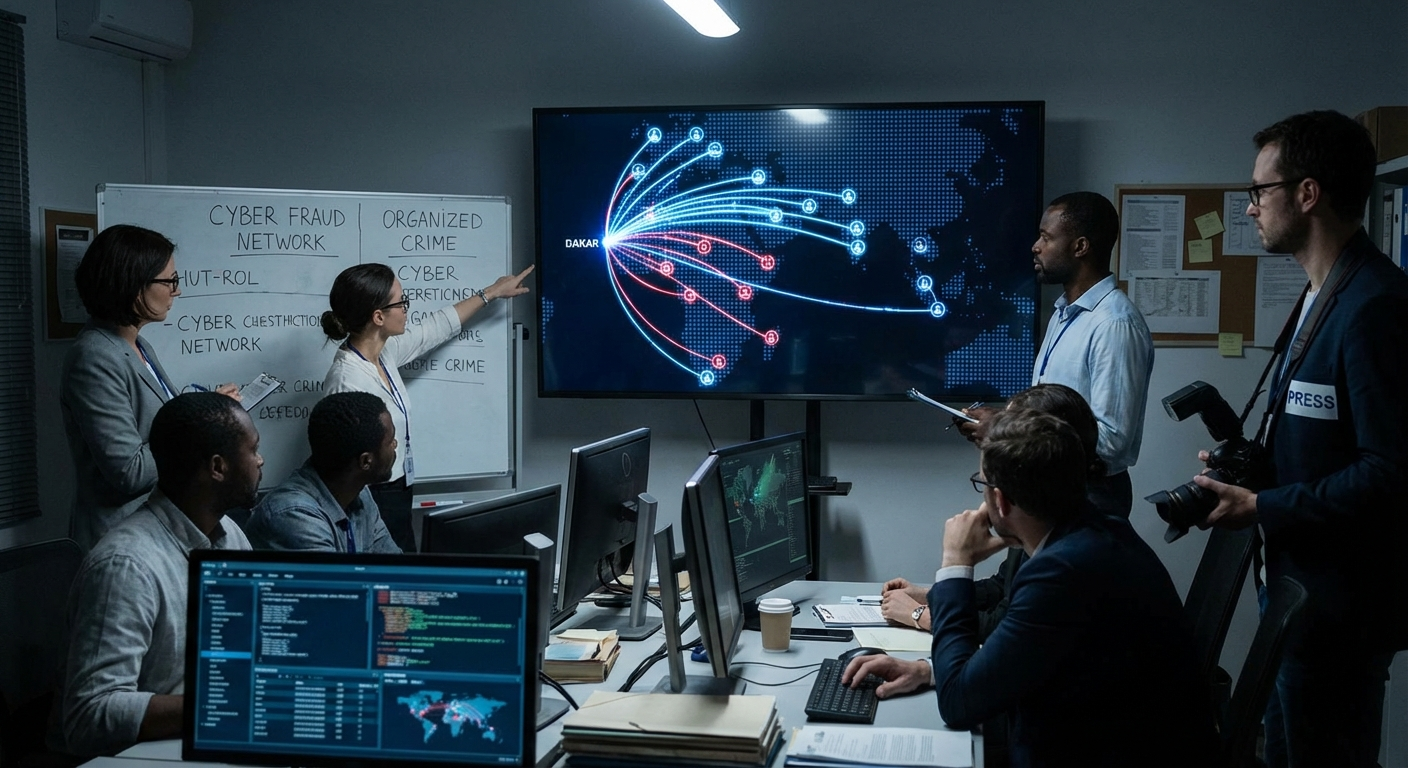
While Nigeria remains West Africa’s largest cybercrime center by volume, Senegal—and particularly its capital, Dakar—has emerged as the region’s most sophisticated data breach exploitation hub.
Why Senegal?
Several factors have positioned Senegal as cybercrime’s rising star:
Political Stability: Unlike neighbors experiencing coups and civil unrest, Senegal has maintained democratic governance and relative stability, allowing criminal infrastructure to develop.
Infrastructure Investment: Submarine fiber optic cables landing in Dakar have made Senegal one of Africa’s best-connected countries. Fast, reliable internet enables sophisticated cyberoperations.
French Connection: As a Francophone nation with strong ties to France and broader Francophonie, Senegal provides access to European victims while maintaining comfortable operational distance.
Education System: Senegal’s universities produce thousands of technically skilled graduates annually into an economy with insufficient formal sector jobs.
Strategic Geography: Dakar’s position on Africa’s western tip makes it a natural transit point for goods and data flowing between continents.
Cultural Factors: Unlike Nigeria’s Yoruba-dominated fraud culture or Ghana’s Akan networks, Senegal’s fraud ecosystem draws from Wolof entrepreneurial traditions emphasizing collective action and risk-sharing.
The Dakar Model: How It Works
Senegal’s cybercrime ecosystem operates through a sophisticated division of labor:
Tier 1: Data Acquisition Specialists
These operatives don’t typically execute breaches themselves—instead, they maintain relationships with hackers globally, purchasing stolen databases on dark web marketplaces. They specialize in assessing data quality, negotiating bulk purchases, and managing cryptocurrency transactions.
“Think of them as importers,” explains cybersecurity investigator Marie Diallo, based in Dakar. “They acquire raw materials—data—from international suppliers and distribute it domestically for processing and exploitation.”
Recent investigations have uncovered Dakar-based data brokers with access to:
- 40+ million credit card records- 200+ million email credentials- Personal data from financial services breaches across three continents- Healthcare records from U.S. and European systems- Government database leaks from multiple countries
Tier 2: Data Enrichment and Analysis Teams
Raw breach data is often incomplete or outdated. Senegalese operations have developed sophisticated processes for enriching and validating stolen information:
Social Media Cross-Referencing: Using automated tools to match breach data with social media profiles, building comprehensive victim profiles including family relationships, employment history, interests, and behavioral patterns.
OSINT Enhancement: Applying open-source intelligence techniques to augment breach data with publicly available information from business directories, real estate records, court documents, and other sources.
Validation Services: Systematically testing whether email addresses are active, whether credit cards still work, whether phone numbers connect. This “cleaning” increases data value significantly.
Psychological Profiling: Analyzing communication patterns, purchase histories, and social media activity to identify psychological vulnerabilities and optimal manipulation strategies for individual victims.
“It’s data science applied to fraud,” notes financial crimes investigator Thomas Arnaud. “They’re using machine learning models to predict which victims are most likely to fall for which scams.”
Tier 3: Specialized Scammers
Armed with enriched data and detailed victim profiles, specialized fraud operators execute scams:
Romance Scammers: Build long-term relationships with victims, often over months or years. Senegalese operators are particularly known for sophisticated romance scams targeting middle-aged women in Europe and North America.
“They create complete fictional identities—military personnel deployed overseas, oil rig engineers, doctors with Médecins Sans Frontières,” explains relationship fraud expert Dr. Sophie Bernard. “The detail is extraordinary because they have real data to build from. They know your deceased spouse’s name from obituaries, your children’s names from Facebook, your retirement savings from financial breaches. They tailor everything.”
Business Email Compromise (BEC) Specialists: Impersonate executives or vendors, convincing companies to wire money or redirect payroll. Senegalese BEC operations have evolved to target international development NGOs, which often have limited cybersecurity infrastructure despite handling significant funds.
Tax and Government Impersonation: Pose as tax authorities, police, or government officials, exploiting victims’ fear of legal consequences. Particularly effective in countries where government dysfunction creates plausibility.
Cryptocurrency Investment Scams: Leverage data breach information to target victims with fake investment opportunities in cryptocurrency, forex trading, or other financial instruments.
Credential Resale Operations: Don’t directly scam victims but package validated credentials into specialized databases sold to other criminals—corporate email access, financial institution credentials, government system logins.
Tier 4: Money Mules and Laundering
Profits must be extracted and laundered. Senegalese networks have developed sophisticated financial infrastructure:
International Money Mule Networks: Recruiting individuals globally to receive fraudulent transfers and forward funds onward, making transactions harder to trace.
Cryptocurrency Mixing: Using bitcoin mixers, privacy coins, and complex wallet networks to obscure transaction trails.
Trade-Based Laundering: Purchasing goods that can be easily shipped and resold—electronics, luxury items, even vehicles—effectively converting fraudulent transfers into difficult-to-trace physical assets.
Hawala Networks: Leveraging informal value transfer systems common in West Africa and Middle East to move money without banking paper trails.
Real Estate Investment: Dakar’s booming real estate market provides opportunities to invest fraud proceeds in legitimate-appearing property.
Case Studies: Senegalese Operations in Action
Several recent investigations illuminate how Senegalese data breach exploitation operates in practice:
Operation Romance Castle
In 2024, French and Senegalese authorities dismantled a network operating from a nondescript apartment building in Dakar’s Plateau district. The operation:
- Employed 45 people working in shifts around the clock- Simultaneously maintained “relationships” with over 8,000 victims across Europe and North America- Used stolen data from dating sites, social media breaches, and financial services databases to create hyper-personalized romantic approaches- Generated approximately €4.2 million annually
“Victims described conversations where their ‘boyfriend’ referenced specific details no one else should know—their late husband’s favorite song, their daughter’s college major, their own childhood pet’s name,” recalls lead investigator Captain François Durand. “The breach data made them psychic.”
The operation’s documentation revealed sophisticated tracking systems monitoring each victim’s psychological state, identifying optimal moments to request money, and even A/B testing different manipulation strategies.
The NGO Targeting Network
A Dakar-based group specializing in business email compromise focused specifically on international development and humanitarian organizations. Between 2023-2025, they successfully compromised:
- 14 different NGO email systems across Africa and Asia- Redirected over $2.8 million in intended program funding- Used stolen organizational credentials to monitor grant announcements, targeting newly funded programs
Their success relied on understanding that NGOs often employ international staff working remotely with limited IT security, create email accounts for short-term consultants with weak vetting, and process urgent transactions related to humanitarian crises where normal controls may be bypassed.
“They studied the sector’s vulnerabilities with MBA-level strategic thinking,” reflects one victimized organization’s security director. “They knew our workflows better than we did.”
The Medical Records Marketplace
Investigators discovered a Senegalese operation acquiring breached healthcare data from U.S. providers and creating a specialized marketplace targeting:
- Pharmaceutical fraud rings needing patient data to file false insurance claims- Identity thieves seeking medical records for synthetic identity creation- Extortion operations threatening to expose embarrassing medical histories- Medical equipment suppliers running billing fraud schemes
“They weren’t just selling raw data—they were providing tailored packages for specific fraud applications,” explains healthcare fraud investigator Dr. Patricia Kim. “If you wanted to file false diabetic supply claims, they’d sell you records specifically of diabetic patients with verified insurance. They created product differentiation in the fraud market.”
The Intersection of Poverty and Crime
Understanding Senegalese cybercrime requires grappling with difficult socioeconomic realities. The operators aren’t shadowy figures—they’re often educated young people navigating limited opportunities.
The Economics of Survival
“My brother studied computer science at university,” shares Amadou, a 28-year-old former cybercrime participant who asked that his full name not be used. “He graduated with honors but couldn’t find work. The formal sector economy can’t absorb the graduates we produce. After two years unemployed, he was approached by someone offering to teach him skills that would earn money. What was he supposed to do?”
Amadou describes an ecosystem where:
- Entry-level roles in fraud operations pay 3-5x typical Senegalese wages- Successful operators can earn in months what formal employment might pay in years- Cybercrime proceeds support extended families, fund weddings, build homes- Success is admired, not condemned, in communities where poverty is grinding
“People know what their neighbors do, but if those neighbors are supporting elderly parents, sending siblings to school, building community infrastructure—there’s social acceptance,” explains sociologist Dr. Aissatou Kane. “Morality is complicated when the choice is between crime and destitution.”
Youth Unemployment as Criminal Recruitment
Senegal faces a demographic challenge: 60% of the population is under 25, unemployment rates among young people exceed 40%, and the formal economy generates perhaps 50,000 new jobs annually while hundreds of thousands enter the workforce.
“It’s a mathematical crisis,” argues economist Dr. Omar Gueye. “We produce more educated young people than our economy can employ. Those people will find ways to earn. We shouldn’t be surprised when some of those ways are illicit.”
Cybercrime recruiters actively target universities, internet cafés, and youth unemployment centers. Their pitch is seductive:
- Learn marketable technical skills- Work from anywhere with just a laptop- Earn more than a doctor or lawyer in Senegal- Victimize wealthy foreigners who’ll never miss the money- Low risk compared to traditional street crime
The Rationalization Framework
Interviews with active and former Senegalese cybercrime operators reveal common justifications:
Historical Grievance: “France colonized Senegal, extracted resources, created the conditions for our poverty. Now we’re just rebalancing the equation.”
Victimless Crime Perception: “We target wealthy Europeans and Americans who have everything. The insurance covers their losses. No one really gets hurt.”
Economic Warfare: “Rich countries exploit Africa’s resources—minerals, labor, land. This is just reverse exploitation using the tools we have.”
Survival Necessity: “My choices were starve or scam. I chose to eat. You would too.”
Systemic Critique: “Your banks and corporations scam people legally through hidden fees, predatory loans, rigged systems. We’re more honest about it.”
While these rationalizations don’t excuse the harms inflicted on victims, they illuminate the social and economic contexts producing cybercrime networks.
The Victim Perspective: Global Harm, Local Indifference
The Senegalese data breach ecosystem generates victims worldwide, each with devastating personal stories:
Catherine’s Story: Romance Scam
Catherine Martinez, a 54-year-old widow from Arizona, lost $127,000 to a Senegalese romance scammer over 18 months. The scammer, posing as a U.S. Army colonel stationed in Syria, obtained her personal information from multiple breaches:
- Her late husband’s name and death date from obituary databases- Her financial information from a bank breach- Her social media activity showing loneliness and grief- Her email communications with friends discussing retirement savings
“He knew things no stranger should know,” Catherine recalls. “He mentioned my husband’s military service, asked about my daughter by name, knew I’d recently paid off my mortgage. Every conversation felt like he truly knew me, understood me. How could that not be real?”
The psychological devastation extends beyond financial loss. “I don’t trust my own judgment anymore,” Catherine reflects. “If I could be fooled that completely, how do I trust anyone? How do I rebuild?”
TechStart Inc.: BEC Destruction
A Seattle-based startup lost $340,000 to a business email compromise executed by Senegalese operators who:
- Compromised their CFO’s email through credential stuffing using breached passwords- Monitored communications for two months, learning internal processes and terminology- Waited until the CEO was traveling internationally- Sent convincing wire transfer instructions for a fake acquisition payment
The financial loss, while insured partially, created cascading consequences:
- Destroyed investor confidence, killing a planned funding round- Forced staff layoffs to manage cash flow- Damaged client relationships when word spread- Created legal liability questions about cybersecurity negligence
The company ultimately sold at a significant discount to a competitor. “The fraud didn’t just cost us money—it destroyed five years of work building something meaningful,” reflects founder Jennifer Park.
The Invisible Victims
Beyond individual cases are systemic impacts:
Healthcare Systems: When medical records are breached and exploited, entire systems face increased costs passed on to all patients through higher insurance premiums and medical costs.
NGOs and Development Aid: Money stolen from humanitarian organizations represents food not distributed, vaccines not administered, development programs not funded. Victims in crisis zones never know they were impacted.
Economic Trust: Large-scale fraud erodes trust in digital commerce and communication, increasing transaction costs for everyone as businesses implement more security measures.
Vulnerable Populations: Elderly and financially unsophisticated victims disproportionately targeted face poverty, social isolation, and psychological trauma.
The Technical Infrastructure: How Senegal Enables Cybercrime
Senegal’s role in global cybercrime depends on specific technical and infrastructure elements:
Telecommunications and Internet
- Fiber Optic Networks: Multiple submarine cables (ACE, MainOne, SAT-3/WASC) provide redundant, high-speed connectivity- Mobile Money Systems: Orange Money, Wave, and other mobile payment platforms facilitate financial transactions- Cybercafés and Shared Spaces: Despite increasing home connectivity, communal internet access spaces provide operational security- VPN and Proxy Services: Easy access to tools obscuring geographic location and identity
Financial Infrastructure
- Weak Banking Oversight: Limited Know Your Customer (KYC) enforcement makes opening accounts and moving money easier- Cryptocurrency Access: Growing cryptocurrency exchanges and peer-to-peer markets- International Money Transfer: Western Union, MoneyGram, and other services facilitate rapid fund movement- Informal Networks: Hawala and similar systems operate parallel to formal banking
Operational Security
- Limited Surveillance: Government technical surveillance capabilities lag behind wealthier nations- Corruption: Law enforcement corruption can be purchased at relatively low cost- Legal Gaps: Cybercrime laws exist but enforcement is inconsistent and often focuses on politically motivated targets rather than fraud operations- International Cooperation Barriers: Mutual legal assistance treaties exist but processing requests takes months or years
Skills and Knowledge
- Educational Institutions: Universities and technical schools produce capable programmers and IT professionals- Informal Training: Mentorship networks and underground education systems transfer fraud skills- Language Capabilities: French, English, Arabic, and Portuguese language skills enable targeting across multiple regions- Cultural Knowledge: Diaspora connections provide insights into target markets’ cultures and behaviors
Law Enforcement Challenges: Why It’s So Hard to Stop
Despite awareness of Senegalese cybercrime operations, law enforcement faces substantial obstacles:
Resource Limitations
“We have maybe 20 officers dedicated to cybercrime for a country of 17 million people,” explains a Senegalese law enforcement official speaking on condition of anonymity. “European or American agencies might have hundreds or thousands. We’re outnumbered and outresourced.”
Limited budgets mean:
- Inadequate technical tools for digital forensics- Insufficient training in cybercrime investigation techniques- No resources for long-term undercover operations- Inability to follow money trails across multiple jurisdictions
Corruption and Political Interference
“When successful cybercrime operators are generating significant wealth, some of that inevitably flows to officials who might otherwise investigate them,” notes a Western diplomatic security officer in Dakar. “It’s not universal, but it’s common enough to obstruct investigations.”
Additionally, cybercrime investigations can become politically weaponized—used to target opposition figures or competitors while protecting connected operators.
International Cooperation Gaps
Even when Senegalese authorities want to act, cooperation with foreign law enforcement faces hurdles:
- Language barriers: Documentation often in different languages- Legal incompatibility: Different legal systems and evidentiary standards- Bureaucratic delays: Requests routed through diplomatic channels taking months- Priority mismatches: High-priority cases for one jurisdiction are low-priority for another- Resource asymmetry: Foreign agencies want Senegalese help but provide limited reciprocal assistance
Technical Sophistication Gap
“Cybercriminals are often more technically capable than investigators,” admits a cybercrime prosecutor. “They use encryption, cryptocurrency, the dark web—tools we don’t fully understand ourselves. It’s like bringing a knife to a gunfight.”
Social Acceptability
Perhaps most challenging is that many Senegalese don’t view cybercrime against foreign victims as serious criminality.
“If you arrest someone for stealing from a neighbor, that’s clearly wrong—community understands and supports prosecution,” explains sociologist Dr. Kane. “But if you arrest someone for scamming a rich American or French person? Many view that as unjust. The operator is supporting family, contributing to the local economy. The victim is distant, abstract, wealthy. Social legitimacy for enforcement is weak.”
The Regional Context: West Africa’s Cybercrime Ecosystem
While focusing on Senegal, it’s essential to understand the broader regional context:
Nigeria: The Volume Leader
Nigeria remains West Africa’s largest cybercrime center, particularly Lagos. Nigerian operations tend toward high-volume, lower-sophistication approaches—sending millions of phishing emails, running crude romance scams, executing straightforward BEC attacks.
“Nigeria is the factory floor of West African cybercrime—lots of operators, lots of activity, relatively low sophistication but making up for it in volume,” explains regional cybercrime analyst Dr. Chidi Okonkwo.
Ghana: The Middleman
Ghana, particularly Accra, has evolved into a intermediary hub—operators who broker between Nigerian volume producers and more sophisticated Senegalese or Ivorian operations.
“Ghanaian networks often handle recruitment, training, money mule coordination,” notes Interpol’s Koffi. “They’re the supply chain managers of regional cybercrime.”
Côte d’Ivoire: The Financial Hub
Abidjan has emerged as a financial center for laundering cybercrime proceeds, with relatively developed banking systems and connections to French financial networks.
Regional Cooperation
Cybercrime networks don’t respect borders. A typical operation might involve:
- Data purchased by Senegalese brokers from Eastern European hackers- Initial victim contact by Nigerian-based romance scammers- Account compromise and money movement executed from Ghana- Funds laundered through Côte d’Ivoire- Profits invested in real estate in Senegal, Nigeria, and Morocco
“It’s truly transnational,” emphasizes Interpol’s West Africa coordinator. “You can’t address Senegalese cybercrime without addressing the regional ecosystem.”
Solutions: What Would Actually Work?
Addressing Senegalese and broader West African cybercrime requires moving beyond simplistic “arrest more criminals” approaches:
Economic Development
“The fundamental driver is lack of legitimate opportunity,” argues development economist Dr. Sarah Thompson. “Every resource spent on enforcement without addressing root causes is treating symptoms, not disease.”
Effective approaches include:
- Youth employment programs: Creating formal sector opportunities for technical skills- Entrepreneurship support: Helping technically skilled young people launch legitimate businesses- Skills matching: Better connecting education with labor market demands- Regional economic integration: Expanding markets for goods and services
Technical Capacity Building
Rather than expecting Senegalese law enforcement to solve problems with inadequate resources, wealthy nations benefiting from addressing cybercrime should invest in:
- Training programs for investigators and prosecutors- Equipment and tools for digital forensics- Technical assistance for developing legal frameworks- Long-term embedded advisors to transfer knowledge
“It can’t be occasional one-week training sessions,” emphasizes a U.S. law enforcement advisor. “It requires sustained, multi-year capacity building with real resources.”
International Cooperation Reform
Current international cooperation mechanisms were designed for traditional crimes, not cybercrime. Reforms needed include:
- Faster mutual legal assistance: Streamlined processes for cybercrime-related requests- Information sharing platforms: Secure systems for rapid intelligence exchange- Joint investigation teams: Multi-national teams working together in real-time- Victim support coordination: Helping victims across jurisdictions navigate reporting and recovery
Private Sector Responsibility
Companies suffering breaches ultimately create the data supply chain fueling Senegalese fraud operations. Enhanced responsibility includes:
- Breach notification reform: Faster, more comprehensive disclosure to affected individuals- Victim support obligations: Companies should fund identity theft protection and fraud recovery assistance- Security incentives: Creating liability or regulatory frameworks making security investment economically rational- Data minimization: Collecting and retaining less personal data reduces breach consequences
Social Norm Campaigns
Changing attitudes within Senegalese communities about cybercrime requires:
- Education programs: Highlighting real victim harms to counter “victimless crime” narratives- Alternative success models: Promoting legitimate business success stories from technical sectors- Religious engagement: Working with mosques and Islamic scholars who often have moral authority- Youth programming: Providing counter-narratives before young people are recruited
“You have to make cybercrime socially unacceptable, not just illegal,” argues community organizer Fatou Diop. “Right now, it’s celebrated. That has to change, but it requires addressing why people feel they have no alternative.”
Conclusion: The Uncomfortable Truths
Senegal’s emergence as a global data breach exploitation hub illuminates uncomfortable truths about our interconnected digital world:
Economic inequality breeds cybercrime. When talented young people face desperate poverty while witnessing wealthy nations’ abundance, some will find ways to transfer wealth—legally or otherwise. Moralizing about this without addressing root causes is futile.
Data breaches have global consequences. A healthcare database breached in California becomes ammunition for fraud operations in Dakar targeting victims in Germany. There are no local breaches anymore—only global supply chains for stolen data.
Technology transfers power but not always legitimately. The same tools enabling legitimate global commerce also enable sophisticated transnational fraud. We can’t stop technology transfer, meaning we must accept that criminal uses will proliferate.
Enforcement alone cannot solve systemic problems. You cannot arrest your way out of a problem rooted in economic desperation and limited opportunity. Every arrested operator is replaced by three new recruits as long as incentive structures remain unchanged.
Wealthy nations’ cybersecurity failures create developing world criminal opportunities. When large institutions in rich countries fail to protect customer data, that data flows to places where economic incentives for exploitation are highest. The breach-to-fraud pipeline is predictable.
Victims are everywhere. Senegalese cybercrime operators are themselves often victims—of poverty, of limited opportunity, of global economic structures that concentrate wealth in developed nations. That doesn’t excuse the harms they inflict, but it complicates simplistic good-versus-evil narratives.
As our conversation with former operator Amadou concluded: “You ask me whether I feel guilty. Of course I do. But I also ask: where was guilt when France exploited Senegal for a century? When European companies extract African resources for poverty wages? When tech companies’ lax security enables data breaches putting millions at risk? Guilt exists on all sides. We’re all part of systems that harm people. I just see my choices more clearly than most.”
That moral complexity is perhaps the most uncomfortable truth of all. The Senegalese data breach ecosystem didn’t emerge in isolation—it’s a product of global systems we all participate in, benefit from, and are responsible for reforming.