If the past year proved that governments can raid scam compounds, this week proved something darker: the compounds can take the hits and keep operating anyway.
On June 22, the Thai-based Civil Society Network for Human Trafficking Victim Assistance (CSNHTV) sent a letter to Thai police with a grim census attached. According to the group’s information, reported by Al Jazeera on June 23, more than 5,300 people remain held inside online scam centres in Myanmar near the Thai border — despite the multinational crackdown that dominated headlines over the past year.
Where They’re Being Held
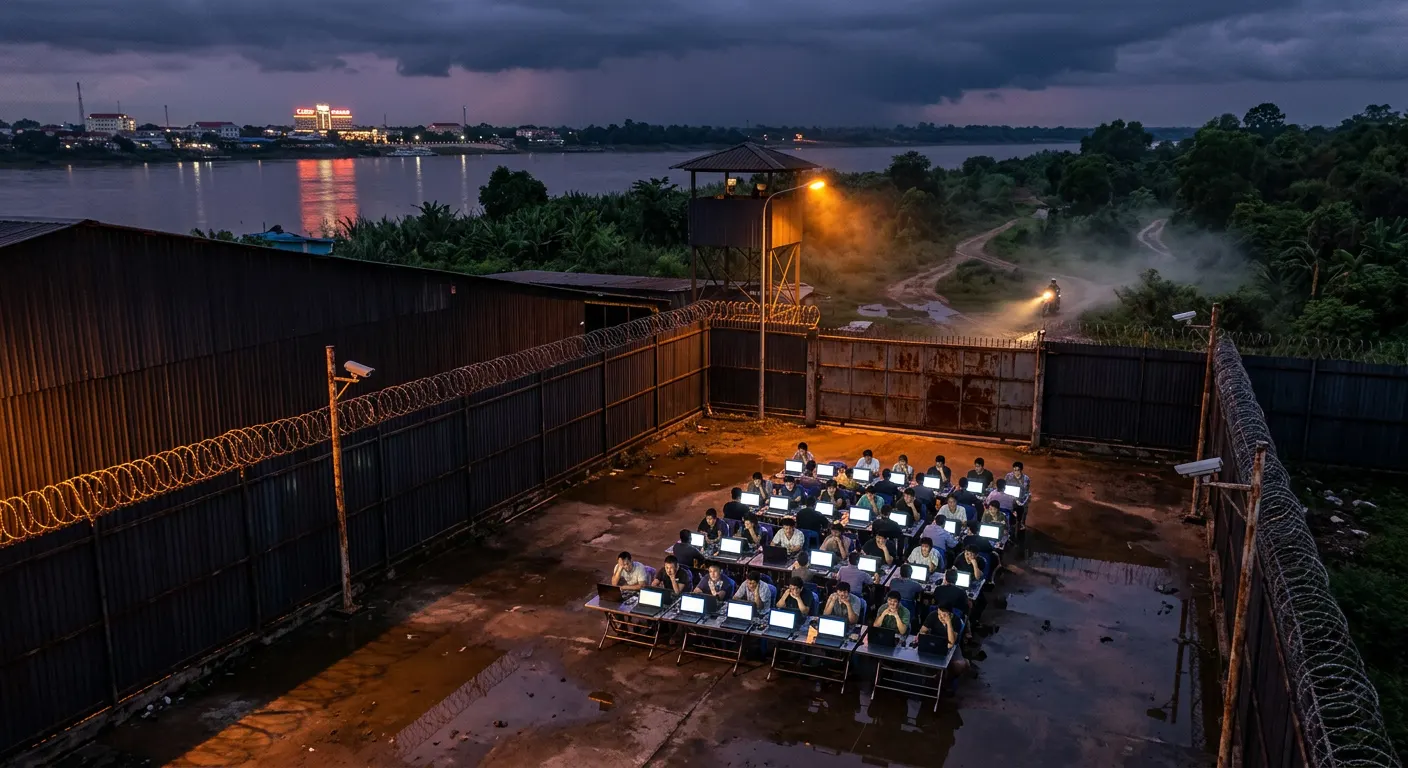
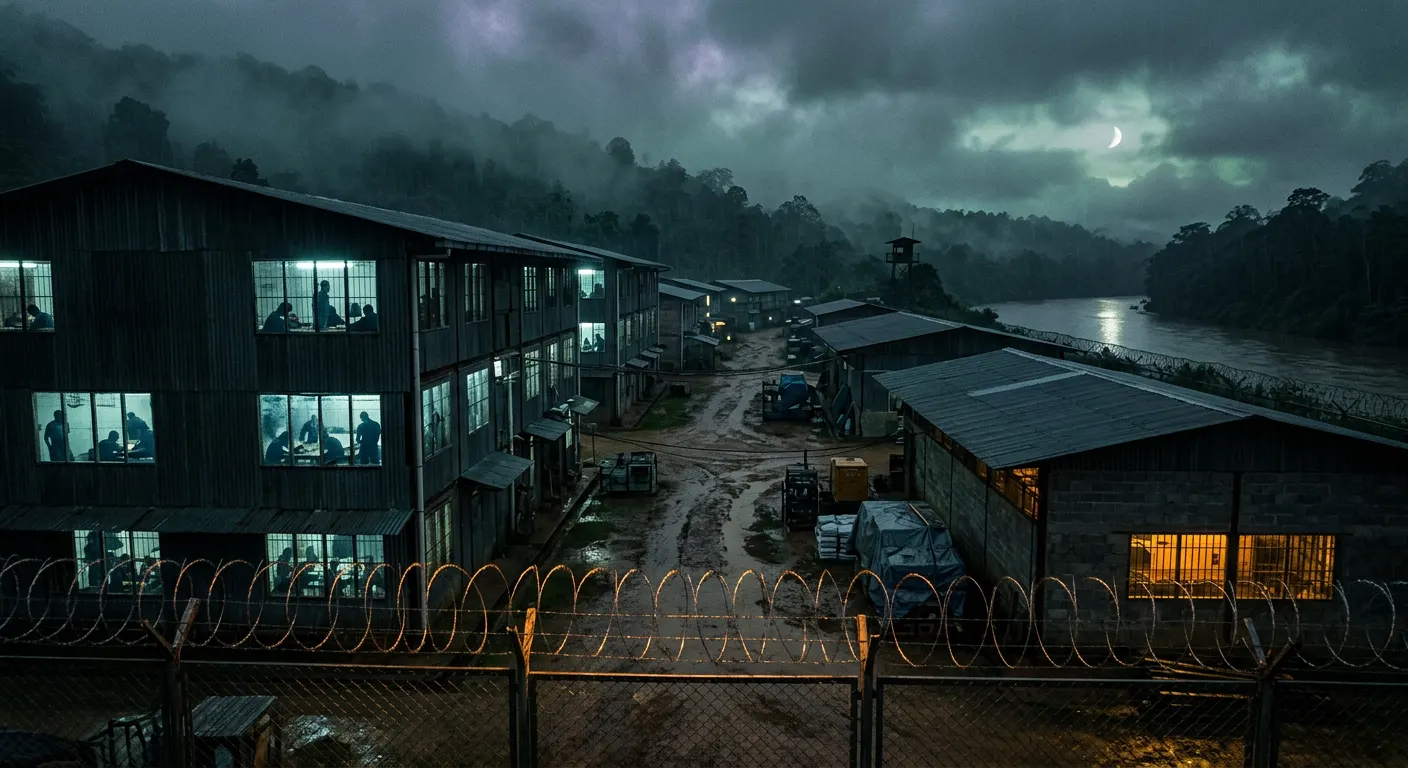
The captives are concentrated in militia-protected territory that raids have never truly reached. CSNHTV says many of the trapped foreign nationals are being held at four locations inside areas controlled by the Democratic Karen Buddhist Army (DKBA), one of the armed groups that governs slices of Myanmar’s Karen State along the Thai border.
That detail matters. Myanmar’s border scam zones — Myawaddy, KK Park, Shwe Kokko and their satellites — sit in territory where the central government’s writ barely runs and where armed groups tax, protect, and in some cases co-own the compounds. Crackdowns in these areas happen when the militias allow them to happen, and end when the cameras leave.
Who Is Still Inside
The nationality list reads like a map of the syndicates’ recruitment pipeline — and it now spans four continents. According to CSNHTV’s figures, an estimated 1,600 of those trapped are Chinese nationals and about 200 are from Myanmar itself, with roughly 20 Thais. The rest come from the Philippines, Taiwan, Malaysia, Brazil, Russia, Kenya, Uganda, Rwanda, Zimbabwe, Ghana, Cameroon, Tanzania, Sierra Leone, and Nepal, among others.
Two years ago, compound rosters were dominated by Chinese and Southeast Asian workers. The 2026 roster shows recruiters casting a far wider net — fake job advertisements now harvest workers from East and West Africa, South America, and South Asia, funneling them through Bangkok on tourist visas before smuggling them across the Moei River into compound territory. It’s the same globalization we flagged in Amnesty International’s Cambodia research this month, where interviewed survivors came from 16 countries including Ecuador, Eritrea, Liberia, and Madagascar.
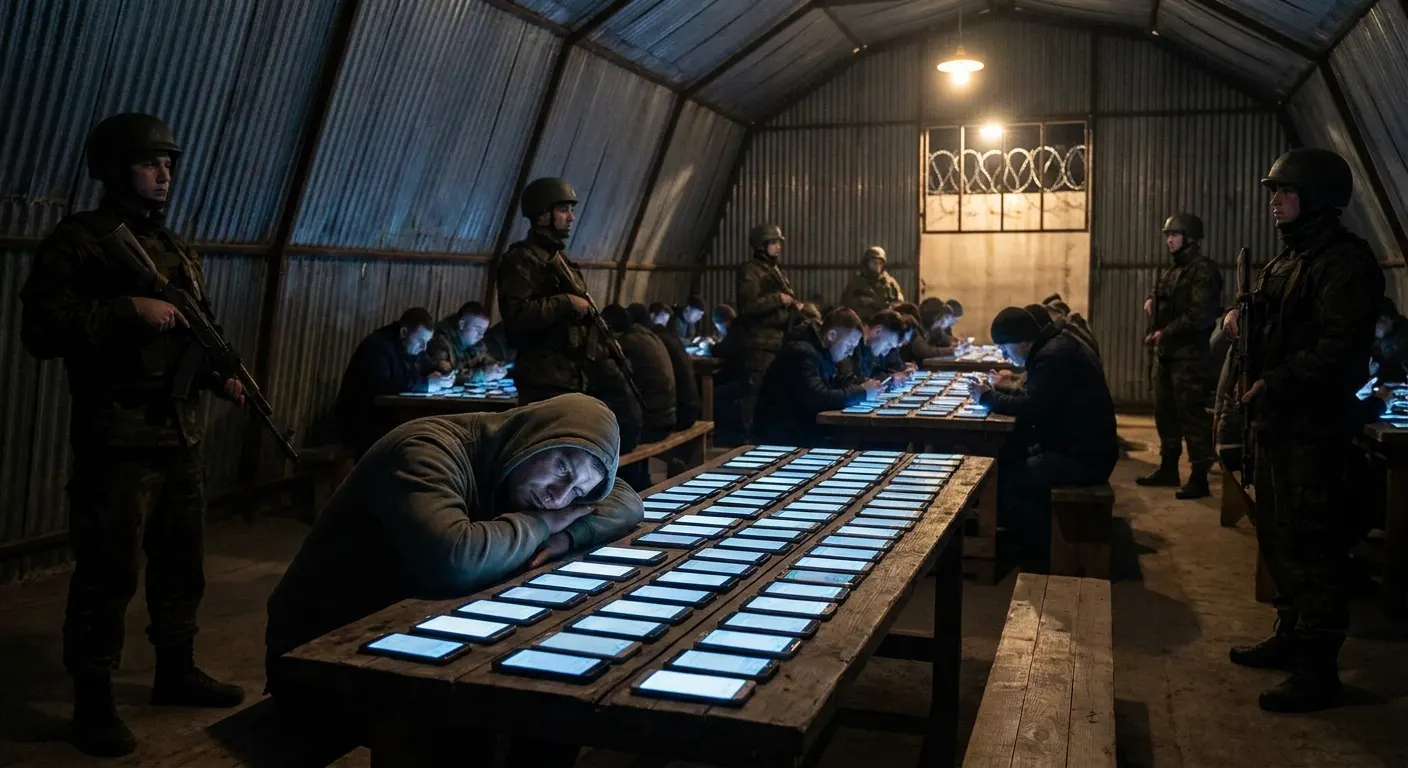
Once inside, the arithmetic is unchanged: passports confiscated, quotas for pig-butchering and romance-investment fraud, beatings or torture for missing targets, and “release fees” billed to families as ransom.
A Year of Crackdowns — and 5,300 Left Over
The past twelve months were the most aggressive enforcement period in the scam industry’s history, which is what makes the number so damning. Consider what has already been thrown at Myanmar’s compounds:
- Mass raids and arrests. Myanmar’s military claimed nearly 1,600 arrests in five days during its late-2025 sweep of Myawaddy-area operations, which we covered in November.
- Infrastructure warfare. Thailand cut power, fuel, and internet links to border scam zones, and the U.S. Department of Justice moved against the Starlink terminals that compounds used to stay online — a case we analyzed in February.
- Repatriation waves. Thousands of freed workers — at one point more than 7,000 stranded on the border — were processed home through Thailand during 2025’s crackdowns.
- Executions. China has executed at least 11 people linked to Myanmar scam operations in January, with further executions in February — including members of the notorious border clans that built the industry.
And yet: 5,300 people, four compounds’ worth, still working the phones under guard. Rights monitors have long estimated that as many as 120,000 people were held in Myanmar’s scam centres at the industry’s peak, so the remaining captives represent operations that have consolidated, not collapsed. The syndicates treat each crackdown as a cost of doing business — relocate, rebrand, re-recruit.
Why the Compounds Survive
Scam centres persist because every actor with the power to close them profits from their existence. The armed groups collect protection money. Local brokers collect smuggling fees. Corrupt officials on both sides of the border collect bribes. And the syndicates themselves collect the output of an industry that UN and industry estimates put in the tens of billions of dollars a year — largely extracted from victims in the U.S., China, Europe, and increasingly the Global South.
Until that political economy changes — until militia leaders face the kind of personal consequences China imposed on the Kokang clans — the realistic ceiling on any crackdown is displacement, not eradication.
Protecting Yourself
The people trapped in these compounds were recruited with the same tricks still circulating today, and the scams they’re forced to run may already be in your inbox:
- Treat lucrative overseas job offers with suspicion — especially vague roles in Thailand, Myanmar, Laos, or Cambodia with paid travel, arranged visas, and interviews conducted entirely over Telegram or WhatsApp. This is the trafficking pipeline’s front door.
- Never hand over your passport to a recruiter or employer, and share your itinerary with family before traveling for any job abroad.
- Assume unsolicited investment “mentors,” romantic strangers, and crypto tipsters are compound scripts. Pig-butchering fraud remains these operations’ core product. Never move money to a platform someone you’ve only met online recommended.
- Report, don’t just block. Reports to the FBI’s IC3 (ic3.gov), the FTC, or your national fraud reporting service help investigators map the networks. Families of trafficked workers can contact the National Human Trafficking Hotline (1-888-373-7888 in the U.S.) or the International Justice Mission.
- If a loved one goes quiet after taking a job in Southeast Asia, contact your country’s embassy in Bangkok or Yangon immediately — early reports have gotten people out.
The syndicates are counting on the world deciding this story is over. Fifty-three hundred people on the Thai border are proof it isn’t.